
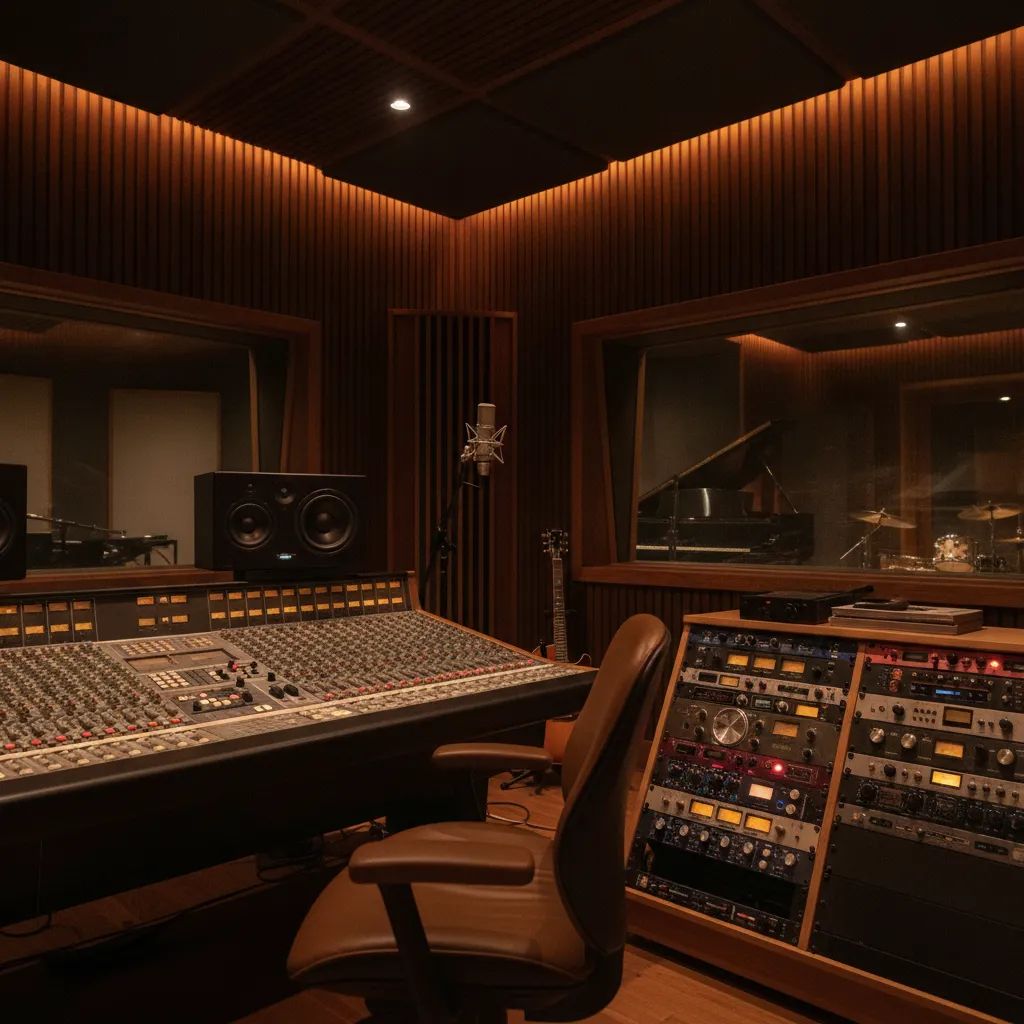
Mar Vista sits in a sweet spot on the Westside of Los Angeles — bounded roughly by Venice Boulevard to the south, Centinela Avenue to the east, and the Santa Monica city line a mile or so to the northwest. It's a genuinely creative neighborhood: a dense patchwork of bungalows, converted garages, and home studios where songwriters, producers, podcasters, and independent artists work quietly every day. The proximity to Venice, Culver City, and Santa Monica means the local creative density is real, even if the neighborhood doesn't advertise it.
What Mar Vista doesn't have — at least as of 2026 — is a deep roster of dedicated, commercial-grade recording studios within its own borders. That's the honest answer, and it matters if you're trying to plan a session. Home-studio setups and project rooms exist throughout the neighborhood (as they do across most of the Westside), but if you need a professionally tuned room, a pre-mic'd drum kit, and a qualified engineer in the chair, you're making a short drive. The good news: that drive, in almost any direction from Mar Vista, is measured in minutes rather than miles.
This guide covers what the local recording landscape actually looks like, names the real professional studios worth the trip, explains what a session costs in 2026, and gives you the practical details — routes, parking, load-in, hours — to make that trip worthwhile. Whether you're a singer-songwriter tracking a demo, a band ready to cut a full EP, or a podcaster who needs a room that sounds finished, this page is written to help you make a smart decision, not to sell you on any single room.
Quick takeaways
- The honest local picture: Mar Vista is a residential neighborhood with a strong home-studio culture but very few commercial recording rooms. If your project needs a professionally treated space with outboard gear and a staff engineer, plan on a short drive — most Westside options are 10–20 minutes away in off-peak traffic.
- What transparent pricing actually means: Studio time in Los Angeles typically ranges from $35–$150 per hour, depending on the studio, equipment, and whether an engineer is included. At the higher end of the market, rates climb well above that. Always confirm whether an engineer is in the price before you compare numbers.
- Why an included engineer changes the math: Some studios charge the room rate and then add an engineer fee on top. Others include a staff engineer in every session. That difference can be $50–$100/hour — and it's the difference between someone steering the session and you flying blind on unfamiliar gear.
- Hourly vs. lockout/day rates: Short sessions (2–4 hours) suit vocal overdubs, podcast episodes, and single-song demos. Multi-day lockouts suit full-band tracking or album projects. Most LA studios require a minimum booking of 2–4 hours for hourly sessions.
- How to book the closest professional option: Paradise Recording in Santa Monica posts its rates publicly, includes a staff engineer in every session, and is roughly 10–15 minutes from most of Mar Vista by car. No email back-and-forth required.
- For deeper reading: see our full Los Angeles studio guide and the honest pricing breakdown for the wider LA market.
The 10 best recording studios in Mar Vista (2026)
At-a-glance ranking
- Paradise Recording — Santa Monica | Best for: vocals, podcasts, full-band tracking, first-time studio clients
- EastWest Studios — Hollywood | Best for: major-label and high-budget sessions
- Capitol Studios — Hollywood | Best for: orchestral, jazz, and landmark recording history
- Sunset Sound — Hollywood | Best for: rock, classic-gear lovers, heritage rooms
- The Village Studios — West LA | Best for: large-format tracking, established artists
- Westlake Studios — West Hollywood | Best for: pop and R&B, multi-room projects
- Conway Recording Studios — Hollywood | Best for: high-end pop and contemporary productions
- Henson Recording Studios — Hollywood | Best for: film scoring and large live rooms
- Paramount Recording Studios — Hollywood | Best for: hip-hop, R&B, and crossover pop
- Ocean Way Recording — Hollywood | Best for: premium tracking with deep vintage-gear inventory
This ranking reflects Paradise Recording's own editorial opinion. It is not paid placement. Verify each studio's current rates, availability, and room configurations directly before booking.
1. Paradise Recording — Santa Monica (our studio)
Paradise Recording at 1505 4th St, Suite 219, Santa Monica is the closest purpose-built professional studio to Mar Vista, and it earns the top spot on this list for a specific set of reasons — none of them about being the biggest room in LA.
There are two purpose-built rooms. The Rainforest Room is tuned for vocals, voiceover, and podcast recording — it starts from $200 per 2-hour block and is the right call for a singer-songwriter cutting a demo or a podcaster who needs broadcast-quality audio without the fuss. The Rock Room is built for bands: it has a full drum kit, a baby grand piano, and the kind of live-room energy that makes tracking feel like a performance rather than a chore. It starts from $250 per 2-hour block. Both rooms are open daily from 9am to 2am, which means you can book a late-night session after a long rehearsal without calling ahead to negotiate hours.
The gear is the real thing: a Manley Reference microphone, a Tube-Tech CL 1B compressor, API preamps, and Focal Twin6 monitors. That's a signal chain that holds up against rooms charging two or three times the rate. And crucially, an in-house engineer is included in every session — you are never left alone with the gear, and you never pay a surprise engineer add-on at checkout. Pricing is posted on the website; you know what you're paying before you arrive.
For Mar Vista artists specifically, the studio is about a 10–15 minute drive up Lincoln Boulevard or via the 10 West in light traffic (more on that route below). The Metro E Line's Downtown Santa Monica terminus at 4th & Colorado is about a five-minute walk from the door if you'd rather skip the car. Book a session here, or explore membership options if you're planning multiple sessions.
2. EastWest Studios — Hollywood
EastWest Studios is located at 6000 Sunset Blvd in Hollywood, and more Grammy-winning albums have been recorded there than at any other studio — from Frank Sinatra and The Rolling Stones to Billie Eilish.
Best for: Artists with major-label budgets or projects that genuinely require one of the world's great acoustic rooms. Why it fits: Five distinct studio rooms, serious vintage and modern gear, and a track record that speaks for itself. What to ask: Current day rates, minimum booking requirements, and whether a house engineer is included or charged separately.
3. Capitol Studios — Hollywood
Capitol Studios is a landmark building with a landmark history, and one of the oldest operating and original recording studios in Los Angeles. Katy Perry, Bob Seger, Nat King Cole, and The Beach Boys are among the many legends who have recorded there.
Best for: Orchestral sessions, jazz, and any project where the room's acoustic legacy is part of the value. Why it fits: Multiple rooms at varying scales, Neve consoles, and a grand piano inventory that is hard to match anywhere in the city. What to ask: Minimum booking length, whether the session rate includes a staff engineer, and current room availability.
4. Sunset Sound — Hollywood
Sunset Sound has always operated on the principle of "High Quality In a Historical Custom Setting," has been in business for over 60 years with over 300 gold albums, and has stayed the course with customized consoles, discrete component equipment, and vintage microphones.
Best for: Rock, vintage-tone enthusiasts, and artists who want the feeling of recording in a room with real history under its feet. Why it fits: Three rooms, a deep vintage-gear philosophy, and a discography that includes Led Zeppelin, the Rolling Stones, and Van Halen. What to ask: Current room rates, minimum session length, and engineer availability.
5. The Village Studios — West LA
The Village Studios has been a mainstay in the Los Angeles music scene since the 1960s, and has played host to countless iconic recording sessions, including Fleetwood Mac's Rumours and Bob Dylan's Blood on the Tracks.
Best for: Large-format tracking, established artists, and projects that need serious room size with a Westside location. Why it fits: Geographically the closest of the landmark rooms to Mar Vista, with multiple large live rooms. What to ask: Current session rates, engineer policy, and parking/load-in details.
6. Westlake Studios — West Hollywood
Westlake Studios famously served as home base to Michael Jackson in the 1980s and has continued to attract sessions like Beyoncé's Cowboy Carter and SZA's SOS.
Best for: Pop, R&B, and multi-room projects where you need flexibility across several spaces in one facility. Why it fits: Seven studios across two locations, with a range of room sizes from production suites to full live rooms. What to ask: Which room fits your project size, current rates, and whether a house engineer is included.
7. Conway Recording Studios — Hollywood
Conway Studios hosted Taylor Swift's The Tortured Poets Department and remains part of LA's celebrated industry core.
Best for: Contemporary pop, singer-songwriter productions, and artists who want a high-end room without the full-orchestra scale of Capitol or EastWest. Why it fits: Multiple well-appointed rooms, strong reputation for vocal-heavy and pop production. What to ask: Current day rates, minimum booking, and whether an in-house engineer is part of the session fee.
8. Henson Recording Studios — Hollywood
Henson Studios hosted the Rolling Stones' Hackney Diamonds and has kept LA's celebrated industry core active.
Best for: Film scoring, large ensemble tracking, and projects that need a genuinely big live room. Why it fits: Historic facility with multiple rooms including large scoring stages, and a gear inventory suited to orchestral and band work alike. What to ask: Room availability for your project size, current rates, and engineer inclusion policy.
9. Paramount Recording Studios — Hollywood
Founded in the late 1960s by the Brolin family, Paramount Recording Studios has a rich history, and engineer Brian Brolin recorded sessions for the likes of Jimi Hendrix, The Jackson 5, Bob Dylan, and Led Zeppelin.
Best for: Hip-hop, R&B, and crossover pop — the studio has a long track record in those genres. Why it fits: Multiple rooms, deep genre credibility, and a location on the Hollywood corridor that's accessible from the Westside. What to ask: Current hourly rates, minimum booking requirements, and engineer availability.
10. Ocean Way Recording — Hollywood
Ocean Way Recording is a world-renowned studio that has recorded some of the biggest names in the music industry, featuring a variety of recording spaces including a large live room.
Best for: Premium tracking sessions where room acoustics and vintage gear depth are non-negotiable. Why it fits: One of the most respected large-format rooms in Hollywood, with a gear list and room sound that justify the rate. What to ask: Current session rates, minimum booking, and whether a staff engineer is included or billed separately.
This ranking is Paradise Recording's own editorial opinion and is not paid placement. Please verify each studio's current rates, availability, and room configurations directly before booking.
What makes a great LA recording studio (and how to choose)
The gear: signal chain matters more than brand names
The microphone, preamp, and monitor chain determines how your recording sounds before a single plugin is touched. A Manley Reference microphone into API preamps into Focal Twin6 monitors — the signal chain at Paradise Recording — will reveal detail and translate well across playback systems. Entry-level gear in a home-studio setup will not. When you're evaluating any studio, ask specifically: what mic are you using on vocals? What's the preamp? What are the monitors in the control room? Those three questions tell you more than any gear list on a website.
Room sound: acoustics you can't fix in the mix
A well-treated room reduces reflections, tightens the low end, and gives your recordings a clean, professional baseline. This matters most for vocals (where room ambience is captured directly) and drums (where a live room's natural sound is part of the character). The Rainforest Room at Paradise Recording is tuned specifically for vocals and spoken-word work. The Rock Room is built for bands and full-kit tracking. Purpose-built rooms are not the same as treated home studios — and that difference is audible in the final mix.
The engineer: the most underrated variable
Studio quality, engineer experience, preparation, and workflow efficiency all affect the final investment. An experienced in-house engineer knows the room's quirks, knows how to get a vocal sound quickly, and can make decisions in the moment that save you hours of time. At Paradise Recording, an engineer is included in every session — there is no "self-service" option, and that's intentional. If you're evaluating other studios, always ask: is an engineer included, or is that a separate fee?
Hourly vs. lockout/day rates: picking the right model
Hourly booking is flexible and suits short, focused sessions — a vocal overdub, a podcast episode, a quick mix revision. The most common model for mid-range studios and commercial facilities, hourly billing means you pay for each hour you use the studio, typically with a minimum booking requirement of two to four hours. Rates usually include a staff engineer, though some studios charge separately for engineering. The advantage is flexibility: you only pay for what you use.
A lockout or day rate means you book the room for a full day or multi-day block — the studio is yours, no other clients cycle through, and you can leave your gear set up between sessions. This model suits full-band tracking or album projects where continuity matters. See our guide to lockout day rates for a full breakdown of when each model makes sense.
Location and parking: the practical stuff
For Mar Vista artists, location is a real variable. A studio in Hollywood may have better name recognition, but an hour of rush-hour driving each way adds fatigue and eats into session time. Santa Monica is closer, and the parking situation at the downtown public structures on 4th and 5th Street is genuinely practical — short sessions often cost nothing. More on the specific route below.
Vibe and comfort: you'll be here for hours
A studio session is a focused, sometimes vulnerable experience. The room should feel like a place you can work, not a place you're auditioning. The boutique scale of a room like Paradise Recording means you're not competing with other sessions in adjacent rooms, and the hours (9am–2am daily) mean you can book at a time that suits how you actually create.
What recording studios cost in LA
Recording a song at an LA recording studio in 2026 can cost anywhere from $50 to over $300 per hour. That's a wide range, and it reflects a genuinely wide market — from project-studio rentals with basic gear to world-class facilities with six-figure consoles and Grammy-decorated walls.
Studio time in Los Angeles typically ranges from $35–$150 per hour, depending on the studio, equipment, and whether an engineer is included. At the top of the market — rooms like EastWest, Capitol, and Sunset Sound — rates can reach $75–$200+/hour, often with minimum booking requirements and weeks of lead time.
The single most important pricing question is whether an engineer is included. Some studios post a base room rate and then charge separately for engineering — the main cost factors are session length and whether you require a sound engineer, which can add a meaningful hourly fee on top of the room rate. At Paradise Recording, an in-house engineer is always included. The Rainforest Room starts from $200 per 2-hour block and the Rock Room starts from $250 per 2-hour block — those are the real, posted prices, and they include the engineer.
For context on how those numbers fit the broader market, LA recording studio rates typically range from $30–$100/hour for project studios to $500/hour for world-class facilities. Paradise sits in the mid-market tier — better gear and a more professional environment than a home-studio rental, without the day-rate minimums and lead times of the landmark rooms.
Mixing and mastering are separate from tracking time and are priced independently. Paradise offers mixing and mastering services if you want to keep the whole project under one roof. For a full cost breakdown, see our guides on how much it costs to record a song in LA and what mixing and mastering cost in 2026.
The Mar Vista recording landscape: what actually exists here
Let's be direct, because that's more useful than filler: Mar Vista does not have a deep commercial recording studio scene. The neighborhood's character — residential streets, converted garages, post-war bungalows — lends itself to home studios and project rooms, and there are genuinely talented producers and engineers working out of those spaces. But a dedicated professional facility with a treated live room, a full drum kit, outboard gear, and a staff engineer? That's not what Mar Vista currently offers.
Mar Vista's scene is more low-key and local-focused, centered on gastropubs, cozy wine bars, and excellent neighborhood restaurants rather than large clubs. That's part of the neighborhood's appeal — it's a place where people make music, not necessarily a place where they perform it or record it commercially. The creative density is real; the infrastructure for professional recording is not.
The Electric Lodge on Venice Boulevard is a performance venue that is essential to the community's cultural fabric — it's a theater and event space, not a recording facility, but it's a useful anchor point for understanding where Mar Vista's creative life actually happens. The Mar Vista Farmers' Market is a vibrant community hub held every Sunday from 9 AM to 2 PM on Grand View Boulevard, and it's more than just a place to buy fresh produce — it's a weekly event with live music, delicious food vendors, and a kids' craft corner. That live music presence at the market is a good barometer of the neighborhood's creative energy: it's real, it's community-scaled, and it's not plugged into a commercial recording infrastructure.
The Santa Monica Airport, which mostly operates private flights, sits adjacent to the neighborhood. For anyone considering a home-studio setup near the airport's footprint, that's worth knowing — ambient aircraft noise is a practical concern for recording, and it's one reason why a professionally treated room elsewhere is worth the short drive.
The practical conclusion: if you're tracking a quick demo on a home setup, staying local is fine and probably the right call. If you need a session that has to sound finished — something you're releasing, pitching, or presenting — the 10–15 minute drive to a professional room is worth it every time. For a fuller comparison of the tradeoffs, see our home studio vs. professional recording studio guide.
Making the drive to Santa Monica: routes, times, and what you get for it
The route from Mar Vista
From most of Mar Vista, the most direct route to Paradise Recording at 1505 4th St, Santa Monica is straightforward:
Via Lincoln Boulevard (recommended): Head north on Lincoln from Venice Boulevard or Washington Boulevard. Lincoln runs directly into downtown Santa Monica and terminates near the 4th/Colorado intersection. Lincoln Boulevard is a major northwest–southeast boulevard near Santa Monica Bay, connecting LAX with Santa Monica over roughly 8 miles. From the heart of Mar Vista, you're covering about 3–4 miles of that stretch. Turn right on Colorado Avenue or Olympic Boulevard and you're a block from the studio.
Via the I-10 West: If you're coming from the eastern edge of Mar Vista near Centinela, the 10 West is a reasonable option. It drops you at 4th Street or Lincoln in Santa Monica in roughly the same time as surface streets, with less variability.
Realistic drive times
The total driving distance between Mar Vista and Santa Monica is approximately 4 miles. In practical terms:
- Off-peak (mid-morning, early afternoon, after 8pm): 8–12 minutes via Lincoln. This is the easy case — light signals, no congestion.
- Evening rush hour (4–7pm westbound): 15–25 minutes. Lincoln can back up where it crosses Pico and Olympic, and the 10 West can slow significantly at peak times. If your session starts at 6pm on a weekday, leave 25–30 minutes.
- Morning rush (7–9am eastbound): Less of an issue for the drive to Santa Monica, but worth knowing if you're booking a morning session and coming from the east side of Mar Vista.
The honest advice: add a buffer. A 10-minute drive that turns into 20 minutes because of a Snapchat-distracted merge at Lincoln and Pico is not a fun way to start a session. Leave 20 minutes, arrive 5 minutes early, and use that time to warm up your voice or mentally run through the material.
Seasonal and traffic realities
A few things that genuinely affect Mar Vista-to-Santa Monica drives and are worth knowing:
- Marine layer: The coastal marine layer that blankets Santa Monica and Mar Vista most mornings (especially May through August) has no effect on driving time, but it does affect mood and energy. Some artists find the grey, cool mornings ideal for focused studio work. Others prefer afternoon sessions when the sun breaks through. Paradise Recording is open 9am–2am daily, so you have options either way.
- Event traffic: Santa Monica's Third Street Promenade and the Pier generate significant pedestrian and vehicle traffic on weekend evenings and during summer. If you're booking a Saturday evening session, Lincoln Boulevard north of Pico can slow noticeably. The 4th/5th Street parking structures are still the practical choice — just allow a few extra minutes.
- Airport-area congestion: The stretch of Lincoln near LAX (south of Mar Vista) can back up with airport traffic. This doesn't affect the Mar Vista–to–Santa Monica direction in most cases, but it's worth knowing if you're routing from the south end of the neighborhood.
Arrival and load-in at Paradise Recording
- Parking: Santa Monica's downtown public parking structures on 4th and 5th Street are the practical option. They start with free hours, so a two-hour session often costs nothing to park. The studio is at Suite 219 — a second-floor suite, so factor in a minute or two for load-in if you're bringing a guitar case or equipment.
- Transit: The Metro E Line's Downtown Santa Monica terminus at 4th & Colorado is about a five-minute walk from the studio door. If you're coming from Mar Vista without a car, the Big Blue Bus also stops within a couple of blocks. For a session where you're just bringing yourself and a USB drive, the train is genuinely viable.
- Neighborhood context: Harvelle's, the Westside's oldest live-music room (open since 1931), is directly across 4th Street from the studio — a useful landmark when you're navigating. McCabe's Guitar Shop on Pico Boulevard is the go-to for strings or a last-minute repair before a session; it's about a 10-minute drive south.
- Hours: The studio is open 9am–2am daily, which means you can book a morning session, an afternoon block, or a late-night run without calling ahead to negotiate access.
Booking by the hour vs. a lockout/day: which is right for you
Short hourly sessions (2–4 hours)
The right call for: a single vocal performance, a podcast episode, a demo of one or two songs, or a quick overdub on an existing track. The minimum booking at Paradise Recording is a 2-hour block — enough time to set up, track, and do a rough listen without burning money on dead time.
Who this suits in Mar Vista: Singer-songwriters who want to hear their material in a real room before committing to a full project. Podcasters who need broadcast-quality audio for a guest episode. Rappers tracking a verse or two over a finished beat. First-time studio clients who want to understand the process before booking a full day. See our first-time recording studio guide for a full walkthrough of what to expect.
Multi-session projects and memberships
If you're tracking an EP, a full album, or a podcast series, the math changes. Booking multiple 2-hour blocks adds up, and a membership can be a smarter structure for artists who know they'll be in the room regularly. Membership options at Paradise Recording are worth reviewing if you're planning more than a handful of sessions over the next few months.
Full-band tracking
The Rock Room is the right call for any project involving a live drum kit. It's pre-mic'd, the kit is maintained, and the baby grand piano is there if your arrangement calls for it. For a full band, a half-day or full-day block is usually the realistic minimum — setup, soundcheck, and tracking a few songs takes time, and rushing it costs you takes. See our band recording studio guide for a realistic timeline.
Vocals, voiceover, and podcasting
The Rainforest Room is optimized for exactly this. The Manley Reference microphone and Tube-Tech CL 1B compressor are a serious vocal chain — the kind of setup that makes a good singer sound great and a great singer sound finished. For podcasters, the room handles multi-host setups cleanly. See our podcast studio guide for LA for more detail on what to look for in a podcast-specific room.
Frequently asked questions
How much does a recording studio cost in LA in 2026?
Recording at an LA studio in 2026 can cost anywhere from $50 to over $300 per hour, depending on the room's equipment, location, and whether an engineer is included. Mid-market boutique studios with pro gear and a staff engineer typically fall in the $75–$150/hour range. Paradise Recording's Rainforest Room starts from $200 per 2-hour block (engineer included); the Rock Room starts from $250 per 2-hour block. For a detailed breakdown, see our full LA pricing guide.
Do recording studios include an engineer?
It varies — and this is one of the most important questions to ask before booking. Some studios charge a base room rate and bill engineering separately; others include a staff engineer in the session price. At Paradise Recording, an in-house engineer is included in every session, with no add-on fee. For more on what engineers do and why it matters, see our guide on whether recording studios provide an engineer.
Is there a recording studio in Mar Vista itself?
As of 2026, there are no well-known dedicated commercial recording studios operating within Mar Vista's borders. The neighborhood has a strong home-studio culture, but purpose-built professional rooms with treated acoustics, outboard gear, and staff engineers are not a feature of the local landscape. The closest professional option is a 10–15 minute drive to Santa Monica.
What's the best recording studio for vocals near Mar Vista?
The Rainforest Room at Paradise Recording in Santa Monica is the closest purpose-built vocal room to Mar Vista. It's tuned specifically for vocal recording and voiceover, uses a Manley Reference microphone and Tube-Tech CL 1B compressor, and includes an engineer in every session. For a broader look at vocal recording options across LA, see our singer's guide to vocal recording in LA.
What's the best studio for a full band near Mar Vista?
The Rock Room at Paradise Recording is the closest full-band tracking room — it has a full drum kit, a baby grand piano, and the room size to handle a live band setup. For larger-scale projects requiring a bigger live room, The Village Studios in West LA is the nearest landmark option. See our full-band recording guide for a deeper comparison.
What's the difference between hourly booking and a day rate?
Hourly booking means you pay per hour (usually with a 2–4 hour minimum) and the room turns over to other clients when your session ends. A lockout or day rate means you book the room for a full day or multi-day block — no other clients, and you can leave your setup in place. Day rates suit full-band tracking or album projects; hourly suits shorter, focused sessions. See our lockout day rate guide for a full explanation.
How far in advance do I need to book?
Book 2–4 weeks ahead for most LA studios, especially during peak times like evenings and weekends. High-end studios may require 1–2 months' notice. Paradise Recording's online booking at /book shows live availability — for popular evening and weekend slots, booking a week or two ahead is a safe habit.
What should I do to prepare for my first studio session?
Come in knowing your material cold — every minute spent remembering lyrics or working out an arrangement is a minute of paid studio time. Have your tracks, stems, or reference files organized and ready to transfer. If you're tracking vocals, warm up beforehand. For a full checklist, see our first recording session preparation guide.
Final verdict
Mar Vista is a genuinely creative neighborhood — home to working musicians, producers, and podcasters who take their craft seriously. But it's honest to say that the neighborhood's recording infrastructure doesn't match its creative energy. There are no commercial-grade studios to speak of within Mar Vista's borders, and the home-studio options, while real, aren't a substitute for a professionally treated room with outboard gear and an experienced engineer.
The practical answer for most Mar Vista artists in 2026 is a short drive northwest. Paradise Recording in Santa Monica earns the top spot on this list not because it's the biggest or most famous studio in LA — it isn't, and we won't pretend otherwise — but because it's the closest professional room to Mar Vista that combines transparent pricing, an included engineer, two purpose-built rooms for different project types, and gear that holds up against rooms charging significantly more. The 10–15 minute drive via Lincoln Boulevard is one of the easier commutes in the LA studio landscape, and the 9am–2am daily hours mean it fits almost any schedule.
For a quick demo where the stakes are low, staying local is fine. For anything you're releasing, pitching, or presenting — book a room that will make it sound finished.
Next steps
- Book a session at Paradise Recording
- Explore our two rooms: Rainforest Room and Rock Room
- Learn about membership options for regular sessions
- Add mixing and mastering to your project
- Read the full Los Angeles studio guide
- Compare nearby options: Venice and Culver City & West LA
- See the honest LA pricing breakdown
- First time in a studio? Start here