
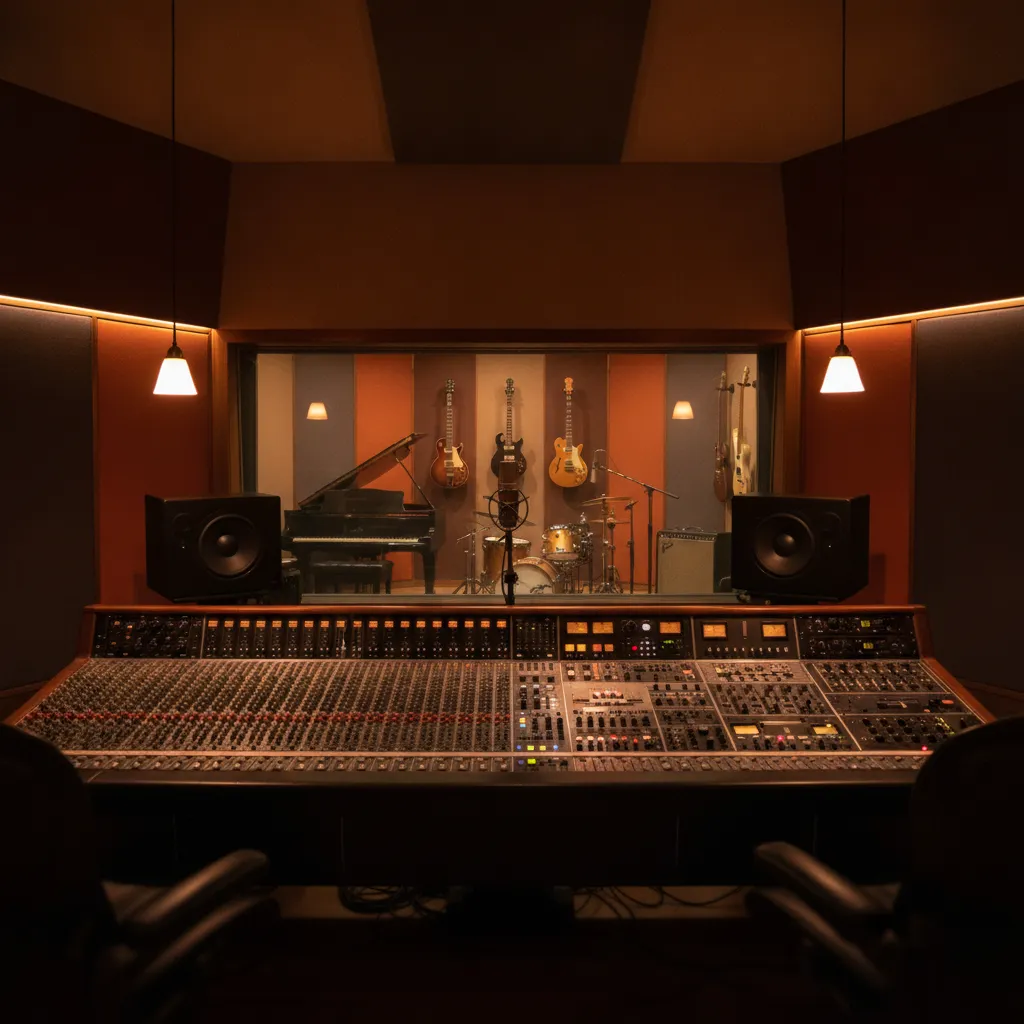
Your first recording session in Los Angeles will cost somewhere between $100 and $300 per hour at a solid mid-range studio, and most solo artists or small groups wrap a single song in two to four hours. Every session includes an in-house engineer who handles the technical side, coaches your takes, and makes sure you leave with clean, usable audio files — you do not need to know anything about microphones or DAWs to walk in and get great results.
No, you will not be judged. Engineers see first-timers every day. Their job is to make you sound good, not to evaluate you.
What a first session actually costs in LA
Recording in an LA studio in 2026 can cost anywhere from $50 to over $300 per hour. The wide range reflects everything from bare-bones rehearsal rooms to rooms with vintage consoles and A-list gear histories. Studio time in Los Angeles typically ranges from $35–$150 per hour, depending on the studio, equipment, and whether an engineer is included.
For a first-timer doing vocals or a podcast, a boutique room in a walkable neighborhood is usually the sweet spot — enough quality to matter, not so much overhead that you're nervous about every minute.
| Session type | Paradise Rainforest Room | Paradise Rock Room | Typical LA range (mid-tier) |
|---|---|---|---|
| 2 hours | $200 | $250 | $70–$300 |
| 4 hours | $295 | $395 | $140–$600 |
| 6 hours | $450 | $595 | $210–$900 |
| 8 hours | $595 | $795 | $280–$1,200 |
| 12 hours | $850 | $995 | $420–$1,800 |
Paradise rates are posted prices and include an in-house engineer. LA range figures are approximate market ranges based on 2026 booking data — not specific competitor prices.
The Rainforest Room is optimised for vocals, spoken word, and podcasting. The Rock Room has a full drum kit, baby grand piano, and the headroom a full band needs. See the full studios overview if you're deciding between the two.
For a deeper look at what drives the total bill, see our guide: How much does it cost to record a song in Los Angeles?
Before you arrive: the three things that save the most time
1. Send a reference track or rough demo. A voice memo recorded on your phone is enough. It tells the engineer your key, your tempo, your vibe, and whether you need headphone reverb to perform comfortably. Before your session, decide which songs, parts, or sections you want to record — bringing a clear plan helps make the most of your time and reduces stress.
2. Know your lyrics cold. Ideally, you should have your lyrics memorized before going into the studio — this way you can focus on delivery and the emotions you want to convey. A lyric sheet on your phone is fine as a backup, but hunting for words mid-take eats clock.
3. Arrive rested, on time, and with your deposit confirmed. Going into a recording session for the first time can be exhilarating, but you won't do yourself any favors worrying about it the night before. You need your mind and body to go into the session refreshed — take care of everything before and stay disciplined with your sleep schedule. Most LA studios, including Paradise, require a deposit to lock in your slot; a session is only locked in when a minimum 50% deposit is received in advance. Cancellations with less than 48 hours' notice typically forfeit that deposit — a minimum of 48 hours' notice must be provided before the booked session; if at least 48 hours' notice is not provided, the deposit is forfeited.
Our full checklist lives here: How to prepare for your first recording session.
The first twenty minutes
You'll walk in, get a quick tour of the live room and control room, and meet your engineer. Upon arrival, you'll usually get a brief tour of the studio — this helps familiarise you with the live room, control room, and any shared spaces. The engineer will then assist in setting up microphones, instrument connections, and software or DAW settings.
Then comes a soundcheck. Each instrument and vocal is tested to ensure clear levels and minimal distortion — this step is crucial to capture a clean recording and can take time, especially for bands recording live together. For a solo vocalist, setup and soundcheck typically takes 15–20 minutes. For a full band in the Rock Room, budget 30–45 minutes.
The clock starts at your booked time, so arriving five minutes early — not five minutes late — is the single easiest way to protect your session.
What the engineer does (and does not do)
During the recording session, the recording engineer is chiefly responsible for getting clean, balanced recordings of all audio tracks. Beyond that, the recording engineer can be as involved with the creative process as the client wishes.
In practice, some recording engineers are like coaches, telling the client what to fix with each take, and giving musical advice on doubling up on vocals, adding or subtracting instruments, and so on. That is exactly the role Paradise engineers play — they will tell you when a take is great, when one note went flat, and when a second pass on the chorus would be worth the time.
After each take, you'll listen back and provide feedback — it's a collaborative process. The engineer will offer suggestions, and you can express your preferences, which ensures the final recording matches your vision.
What the engineer does not do: write your songs, play your parts, or judge your ability. Their professional reputation rests on making you sound as good as possible in the time you have.
Want to understand the engineer's role in more depth before you book? See Do recording studios provide an engineer?
Recording: takes, layers, and listening back
Don't worry if you don't nail it in one take — it's normal and expected to do multiple takes to capture the best performance. The engineer will record each take, and you can review them later to select the best versions. Some artists even use a combination of takes to create a polished final product.
Depending on the song and your approach, you might record different elements separately — for example, you might lay down the instrumental tracks first and then record the vocals. This layered approach is standard even for simple songs.
Recording can be mentally and physically draining, so expect to take short breaks between takes or sections — use this time to review any feedback, rest your voice, or just reset your focus.
What you leave with
At the end of the session, engineers often help organize and clean up the session — this may include labeling tracks, editing takes, cleaning up noise, organizing playlists, and preparing files for mixing or mastering. You'll receive your raw tracked files (typically WAV at 24-bit/48kHz or higher) to take away on a USB drive or via a file-sharing link.
Those files are yours. If you want a finished, release-ready track, the next step is mixing and mastering — a separate process you can book at Paradise Mix & Master. Curious about timelines and cost? See How long does mixing and mastering take? and Mixing and mastering services: what they cost in 2026.
Getting to Paradise Recording in Santa Monica
Paradise is at 1505 4th St, Ste 219, Santa Monica CA 90401, open 9am–2am daily. The Metro E Line's Downtown Santa Monica terminus at 4th & Colorado is about a five-minute walk from the door, and Big Blue Bus lines stop within a couple of blocks — so you can come from Hollywood (roughly 25–35 min via the 10) or Culver City (roughly 15 min via Washington) without worrying about parking.
If you drive, Santa Monica's downtown public structures on 4th and 5th Street start with free hours, so a short session often costs nothing to park. Directly across 4th Street is Harvelle's, the Westside's oldest live-music room (open since 1931) — worth a visit after your session if you want to hear what live music sounds like in the same neighborhood. McCabe's Guitar Shop on Pico Blvd is nearby if you need fresh strings or a quick repair before you track.
Frequently asked questions
How many hours should I book for my first session?
Two hours is enough for a single vocalist recording one song if you arrive prepared and know your lyrics. Four hours gives you breathing room for a second song or extra passes, and is the most common booking length for first-timers. See How many hours does it take to record a song in a studio? for a detailed breakdown by genre and setup.
Do I need to bring any equipment?
No. The studio provides professional microphones, headphones, monitors, and DAW software. Bring your instrument if it's part of the performance (guitar, etc.), a USB drive or phone for file transfer, and a reference track or demo so the engineer can dial in your sound quickly.
What if I mess up a lot of takes?
That is completely normal and expected. Sessions are typically broken into takes, allowing you to perform each section multiple times until you and the engineer are satisfied — during this stage, guidance on timing, phrasing, and dynamics is provided. Engineers have heard every mistake imaginable; their job is to help you past it, not to remember it.
Is a deposit required, and what happens if I need to cancel?
Yes — most LA studios, including Paradise, require a deposit (typically around 50%) to confirm your booking. A deposit is required to book your first session; the deposit will be applied to your session or refunded if you cancel more than 48 hours before your session time. Cancel with less notice and you'll generally forfeit the deposit. Full details are in our guide: Recording studio deposit and cancellation policy: what's normal in LA.
Should I mix and master on the same day?
Usually not. Mixing requires fresh ears and focused time — most engineers recommend at least a day between tracking and mixing. Book your tracking session first, then schedule mixing and mastering once you've heard your raw files and know what you want. See How much does mixing and mastering cost? for current pricing context.
Is Paradise right for me, or should I look at other studios first?
If you're a solo vocalist, rapper, singer-songwriter, or podcaster, the Rainforest Room is purpose-built for you. If you're a band that needs a full drum kit or a piano, the Rock Room is the answer. If you want to compare options across the Westside first, our honest roundups cover Santa Monica, Venice, and the broader LA market.
Next steps
- Book a session — 9am–2am daily, engineer included
- Compare our rooms — Rainforest Room vs. Rock Room
- Add mixing & mastering — after your session files are ready
- Explore membership — if you plan to record regularly
- How to prepare for your first recording session — calm, practical checklist
- How much does a recording studio cost in Los Angeles? — full 2026 pricing guide
Facts and prices on this page last verified 2026-08-01 by the Paradise Recording team.