
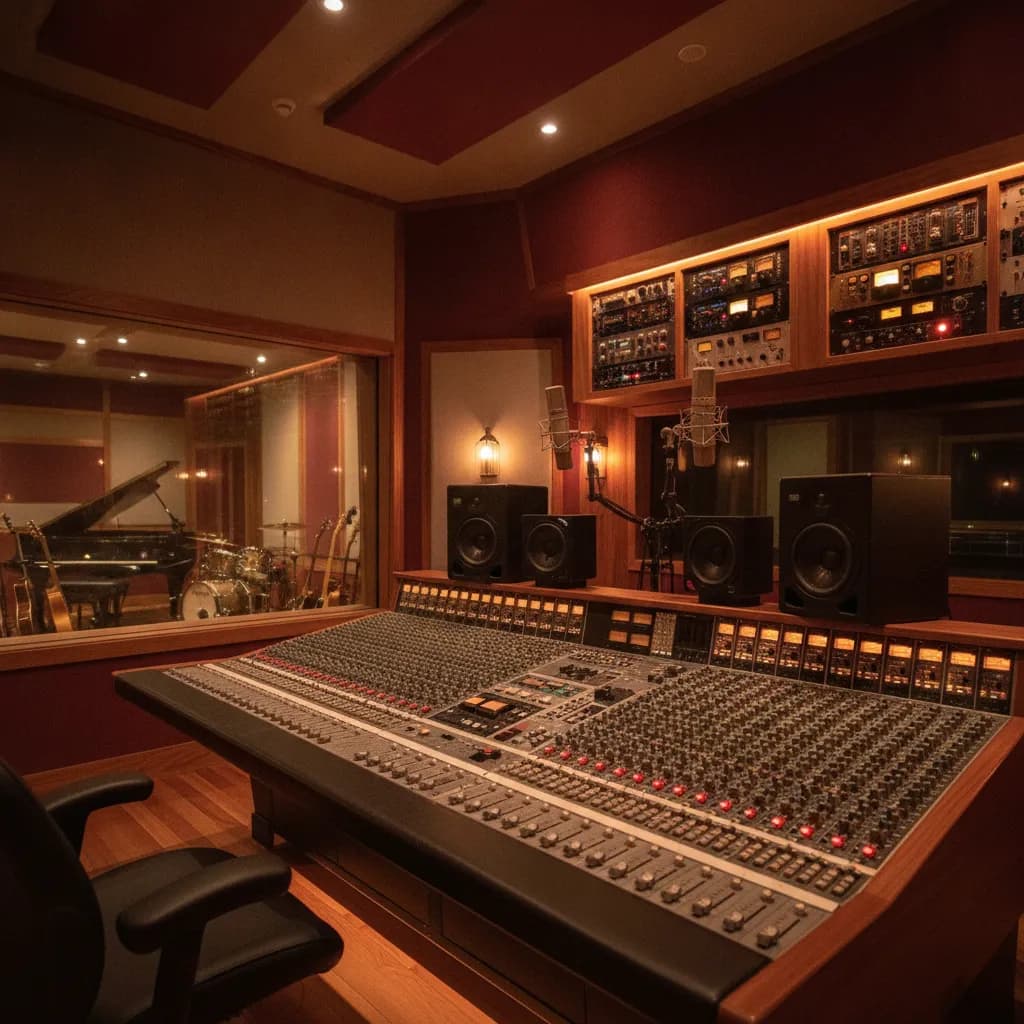
Knowing how to prepare for a recording session is the single biggest factor that separates a productive studio day from an expensive one. The short answer: practice until your parts are automatic, bring everything in writing, communicate openly with your engineer, and give yourself time to warm up before you hit record. Do those four things and you're already ahead of most first-timers.
This guide walks through the full picture — from the week before your session to the moment you walk out the door with your files. It's written for singers, bands, podcasters, and voice-over artists who have never booked a professional studio before, or who have but want to stop feeling nervous about it. Nothing here is complicated. It's just the stuff experienced artists wish someone had told them on day one.
If you're still figuring out what kind of studio to book or what a session typically costs in Los Angeles, check out our companion guides on how much a recording studio costs in LA and booking a recording studio by the hour in LA before you read further.
Quick takeaways
- Know your material cold before you arrive. Studio time is expensive; the booth is not a rehearsal room.
- Bring everything in writing — lyrics, chord charts, BPM, key, song structure, and any reference tracks — so you're not wasting time on your phone mid-session.
- Warm up before you arrive. Your voice or fingers need 20–30 minutes of low-stakes activity before they're ready to perform at their best.
- Reference tracks are your secret weapon. A 60-second clip of a song that has the sound you're going for tells an engineer more than ten minutes of describing it in words.
- Your engineer is a collaborator, not a judge. Ask questions, flag problems early, and trust their room knowledge.
- File delivery is not automatic — clarify the format, naming convention, and handoff method before you leave the building.
The week before: get your material performance-ready
The most common mistake first-timers make is treating the studio like a glorified rehearsal space. It isn't. Every minute you spend fumbling through a chord change or re-learning a lyric is a minute you're paying for without getting closer to a finished recording.
Practice until the parts are automatic. That means you can perform the song while having a conversation, while tired, while slightly nervous. If you can't do that yet, you're not ready to record. Push your session date back if you need to — that's a better use of money than booking time you can't fill.
Record yourself at home first. Your phone voice memo is your best pre-session tool. Listen back critically. Are you rushing the chorus? Going flat on the high note? Mumbling a lyric? Fix those things at home where it's free.
Finalize your arrangements. Decide before you arrive: how many takes per section are you aiming for? Are you tracking instruments live together or one at a time? Is there a bridge you're still unsure about? Every open question costs clock time. Close as many as you can before you walk in.
What to bring to the studio
Think of this as your session kit. Write it down, pack it the night before, and check it off.
Documents and references
- Printed or easily accessible lyrics (not buried in your notes app three taps deep)
- Chord charts or lead sheets for any musicians joining you
- A list of songs in order, with BPM and key for each
- 1–3 reference tracks — specific songs, ideally timestamped to the section that captures the sound you want
Technical items
- Any instrument cables you prefer (studios have them, but yours are broken in and familiar)
- Your own picks, capos, slide, or drumsticks — small things that feel like home
- A tuner, even if the studio has one
- A USB drive or the login for a cloud folder where you want files delivered
Personal comfort
- Water — room temperature, not ice cold; cold water tightens a singer's throat
- Any throat-support items you use (honey, throat coat tea, lozenges — whatever your routine is)
- A light snack if your session runs more than two hours; hunger kills focus
- A jacket or light layer — control rooms are often cold
What not to bring
- Alcohol or anything that dulls your ear or your timing
- A crowd of friends unless you've cleared it with the studio — extra bodies in the control room are distracting and can make your engineer's job harder
- An attitude of "we'll figure it out in the room" — that's the one thing that reliably makes sessions go sideways
How to warm up before you arrive
This section is for vocalists especially, but instrumentalists benefit from it too.
Give yourself 20–30 minutes of low-stakes playing or singing before your session time starts. That doesn't mean running your hardest material at full intensity. It means gentle scales, easy songs, light finger exercises — whatever gets blood moving to the muscles you're about to use.
For singers specifically:
- Hydrate the night before, not just the morning of
- Do lip trills or humming before any open-vowel singing
- Avoid dairy for a few hours before tracking — it creates mucus that clouds your tone
- Warm up in the car on the drive over; by the time you're mic'd up, you should be ready to go
For instrumentalists:
- Run your parts slowly, then at tempo, then slightly above tempo
- Pay special attention to the transitions and the moments that have historically given you trouble
- If you're playing acoustic guitar or piano, your fingers need warmth; cold hands make small mistakes
One practical note: if you're booking at Paradise Recording, the session clock starts when you're scheduled, not when you finish setting up. Arriving already warmed up means your first take can actually be a keeper.
Working with your engineer: how to communicate and collaborate
An in-house engineer is included in every session at Paradise Recording, and that's true at many professional studios. Your engineer is not there to judge your music or your skill level. They are there to capture the best possible version of what you're doing and to solve technical problems so you don't have to think about them.
Tell them what you're going for, not just what you're doing. "I'm recording a four-song EP" is less useful than "I'm going for a warm, slightly lo-fi indie sound — think early Phoebe Bridgers, not polished pop production." The more context they have, the faster they can dial in the right settings.
Use reference tracks. Play them a 60-second clip of the sound you love. Engineers work in sonic language — hearing it is faster than describing it. Bring two or three options if you have them.
Flag problems immediately, not after three takes. If something feels off — the headphone mix is distracting you, the mic is picking up room noise, the click track is throwing you — say so right away. Engineers would always rather fix a problem early than discover it in editing.
Ask questions freely. "Can I hear that back?" "Is that take usable?" "What would you do differently?" These are normal, professional questions. A good engineer will give you honest answers.
Trust their room knowledge. They know how the monitors translate, where the mic sounds best in that specific space, and what the room does to low frequencies. You know your music. Combine both.
Session etiquette: the unwritten rules
Most of these are just common sense, but they're worth stating plainly.
- Arrive a few minutes early. Not early enough to eat into someone else's session, but early enough that you're not scrambling when the clock starts.
- Be ready to start when your session time begins. That means tuned, warmed up, and with your material in hand.
- Keep the control room quiet during takes. If you're not tracking, you're listening — not talking, not scrolling loudly, not eating crunchy food.
- Communicate if you need a break. Sessions go better with short pauses than with a vocalist pushing through fatigue and getting progressively worse takes.
- Respect the gear. Don't move microphones, adjust outboard equipment, or unplug anything without asking. A Manley Reference microphone, for example, is a delicate and expensive piece of equipment — handle it only if you're invited to.
- Stay focused. The two-hour block goes faster than you think. Save the socializing for after.
File delivery: what to ask before you leave
This is the step most first-timers forget until they're already in the parking lot, and it's an important one.
Before your session ends, confirm the following with your engineer:
Format. Do you want WAV or AIFF files? What bit depth and sample rate? (44.1 kHz / 24-bit is a safe standard for most projects; ask if you're unsure.) If you're handing files to a mixing engineer later, they'll likely have a preference — find out before your session.
Naming and organization. Are the files named by take number, by instrument, by song? A clearly labeled session is much easier to work with than a folder of "Audio_001" through "Audio_047."
Stems vs. a full mix. Are you taking away individual tracks (stems) so you can mix later, or are you getting a rough mix from the session? Know what you need before you ask.
Delivery method. USB drive, cloud link, or direct download? Make sure you actually have the files in your hands — or confirmed in your cloud folder — before you leave the building.
If you plan to have your tracks mixed or mastered professionally, our mixing and mastering services can handle that as a follow-on step, and your engineer can help you understand what format works best for that handoff.
Frequently asked questions
How early should I arrive for my first recording session?
Aim to arrive 5–10 minutes before your booked start time. Enough to settle in, use the bathroom, and get a feel for the space — but not so early that you're waiting around and burning nervous energy. Your session clock starts at the booked time, so arriving already warmed up is more valuable than arriving extra early.
Do I need to bring my own microphone?
No. Professional studios supply high-quality microphones suited to the room and the session type. At Paradise Recording, the Rainforest Room is set up with a Manley Reference microphone and API preamps, which are well-suited to vocals and voiceover. Bringing your own mic is rarely necessary and can sometimes create compatibility issues.
What if I mess up a take? Can I do it again?
Yes, always. That's the point of a studio session. Your engineer will keep rolling and you'll comp the best takes together afterward. Don't apologize for needing multiple takes — it's completely normal. What matters is that you communicate: "Let me try that bridge again" is a perfectly reasonable thing to say.
How many songs can I realistically record in a two-hour session?
It depends heavily on the complexity of the song and how prepared you are. A solo vocalist recording one or two songs with a pre-made backing track can get solid results in two hours. A band tracking live instruments might spend a two-hour block on one song, or even one section of a song, if they're going for takes rather than a quick demo. Be realistic, and if you're unsure, ask the studio when you book.
Should I bring my own headphones for monitoring?
It's not required — studios provide headphones for tracking — but if you have a pair you're very familiar with and comfortable in, bringing them is fine. Some vocalists find it easier to perform in headphones they know. Just confirm with your engineer before plugging anything unfamiliar into the headphone system.
What's a reference track and how do I use it?
A reference track is a commercially released song that has the sound, vibe, or mix quality you're aiming for. You play it for your engineer at the start of the session to give them a sonic target. It doesn't mean you're copying the song — it just gives them a shared reference point for decisions about EQ, compression, reverb, and overall feel. One or two references is plenty; more than three starts to muddy the picture.
Is it okay to bring someone with me to the session?
Usually yes, but check with the studio first and keep it to one or two people maximum. A supportive friend or bandmate in the control room can be helpful. A group of people talking, giving competing opinions, and eating loudly is genuinely disruptive. Be honest with yourself about whether extra people will help you perform better or make you more self-conscious.
What if I want to record a podcast instead of music?
The preparation principles are mostly the same — know your material, bring your notes, warm up your voice — but the workflow is a bit different. Check out our guide on the best podcast studios in Los Angeles for specifics on what a podcast session involves. The Rainforest Room at Paradise Recording is set up for spoken-word recording as well as vocals.
Next steps
- Book a session — two-hour blocks available daily from 9am to 2am
- See the studio — the Rainforest Room (vocals, voiceover, podcasts) and the Rock Room (bands, full-kit tracking, baby grand piano) come with every booking, from $160/2hr with engineer included
- Explore mixing and mastering — for when your session files are ready for the next step
- View membership options — if you're planning to record regularly
- Read: How much does a recording studio cost in LA? — honest LA pricing ranges before you book
- Read: Best recording studios in Santa Monica — if you're still comparing your options in the area