
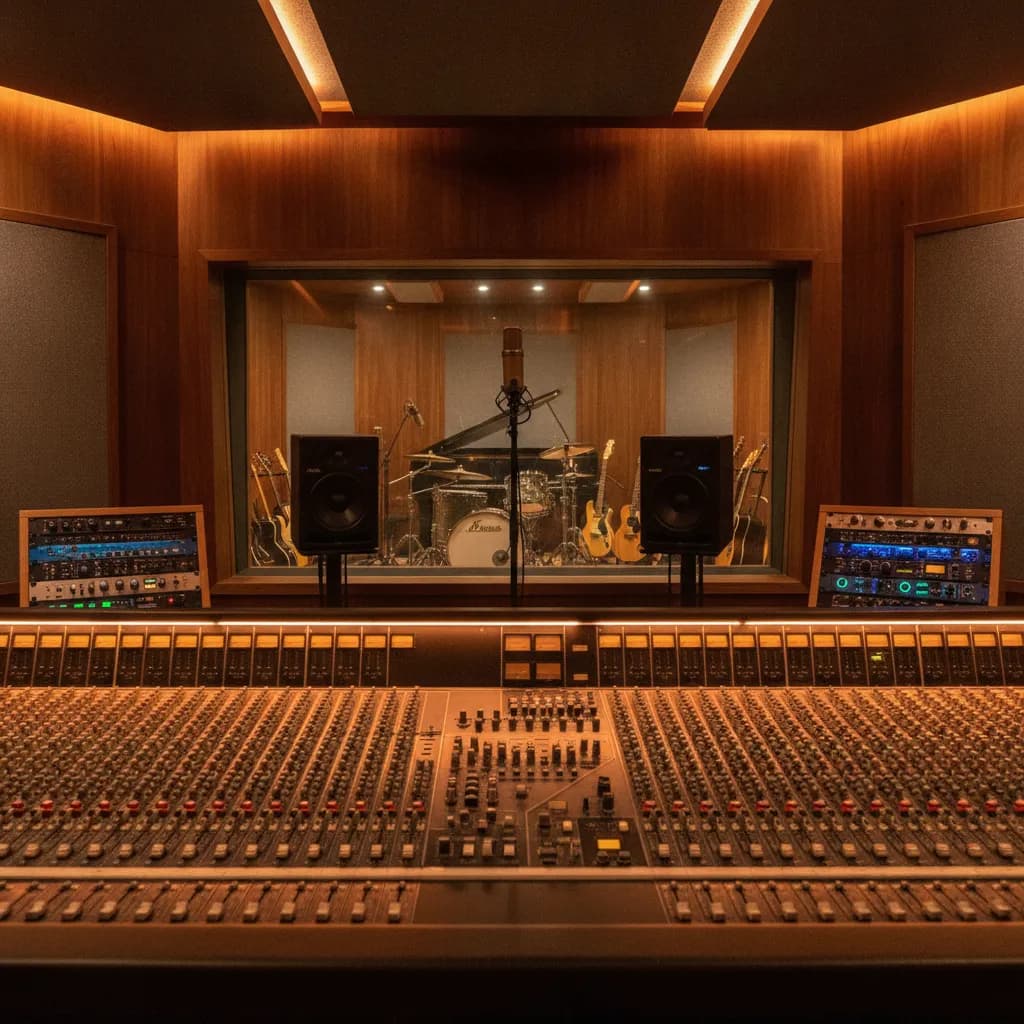
What a lockout day rate means
A lockout gives you and your team exclusive use of a recording studio for a defined block of time — most commonly 10 to 12 hours — at a single flat fee. No other clients can enter the room during that window, you can leave gear set up between takes, and the clock pressure of hourly billing largely disappears. Lockout rates are almost always cheaper per hour than standard hourly rates, because the studio fills its calendar with certainty and you absorb the risk of any slow patches in the session.
How lockout pricing differs from hourly and block booking
Studios typically offer three tiers of time purchase:
| Booking type | Typical LA range | Paradise (whole studio, engineer included) | Effective $/hr |
|---|---|---|---|
| Hourly (walk-in / short session) | $50–$250/hr | — | Listed hourly rate |
| Block (2–8 hr prepaid) | $150–$1,800/block | $160–$600 (2–8 hr) | Slight discount vs. hourly |
| Lockout / full day (10–12 hr) | $600–$2,500+ | $850/12 hr ≈ $70.83/hr | Deepest per-hour discount |
LA range figures reflect typical market pricing and are not quotes from any specific competitor. Paradise's posted block rates are exact (every rate).
The math is straightforward: Paradise's whole studio lists at $160 for 2 hours ($80/hr). The 12-hour block comes to $850 — about $70.83/hr. You get a lower per-hour rate just by committing to the full day.
Who lockouts are actually for
Lockouts make sense in specific situations. They're not always the right call.
Good fit:
- Bands tracking live with a full kit, where setup and soundcheck alone eat 60–90 minutes
- Artists recording an EP or album over multiple consecutive days who want to leave mics placed overnight
- Film/TV composers with tight deadlines who need the room all day without interruption
- Podcast productions batching several episodes in one marathon session
Not worth it:
- A solo vocalist laying down one or two songs — a 2- or 4-hour block (the whole studio, Rainforest Room vocal room included) is almost certainly enough and costs far less in absolute dollars
- Home-studio owners who just need a professional-grade room for a vocal top-line; an hourly slot covers it
- Anyone who hasn't pre-produced their material — an unproductive lockout is an expensive one
If you're unsure how many hours you actually need, the guide How many hours do you need to book a recording studio to record a song? gives realistic session-length breakdowns by project type.
What's included in a lockout
This varies by studio, so always confirm before booking. At Paradise Recording, every session — including 12-hour lockouts — includes an in-house engineer. That matters because engineer fees at many LA studios run $50–$150/hr on top of the room rate, which can significantly change the total-cost comparison. See Do recording studios come with an engineer? for a fuller breakdown of what "included" typically means across different studio tiers.
Standard lockout inclusions to ask about at any studio:
- In-house engineer (or assistant engineer)
- Gear left in place between sessions (true overnight lockout vs. single-day lockout)
- Parking validation
- HVAC and lounge access for the full window
- Whether the clock starts at load-in or at the first recorded take
Multi-day and weekly lockouts
Some studios offer extended lockouts — a room reserved exclusively for a week or month at a negotiated flat rate. These are common at larger facilities with multiple rooms and are worth asking about if you're mid-album. Paradise's membership options are worth exploring if you record regularly; recurring access can deliver comparable savings without committing to a single marathon session.
Lockouts vs. renting your own studio
A full-day lockout is not the same as having your own studio. You still work within the facility's hours (Paradise is open 9 am–2 am daily, so a 12-hour lockout fits comfortably within that window), and you return the room at the end of the block. If you're recording more than two or three days per month consistently, a home setup or a studio membership may eventually pencil out better. Be honest with yourself about frequency before committing either way.
For context on the broader LA market, the guide How much does it cost to record a song in Los Angeles? covers total project costs including mixing and mastering — useful if you're budgeting a full release rather than a single session.
Frequently asked questions
Is a lockout the same as renting the studio for the whole day?
Effectively yes — a lockout means no other clients can use the room during your booked window. The key difference from a standard long block is the exclusivity guarantee and, usually, the ability to leave your setup in place.
Can I leave my gear overnight with a lockout?
It depends on the studio. Some lockouts cover a single calendar day and require you to clear the room at the end. True overnight or multi-day lockouts — where your setup stays in place — are typically negotiated separately and may carry an additional fee.
Do lockout rates include an engineer?
Not always. At Paradise Recording, an in-house engineer is included with every session including 12-hour blocks. At other studios, engineering is often billed separately at $50–$150/hr, so compare total costs rather than room rates alone.
How far in advance should I book a lockout?
Popular weekend lockout slots at busy studios can fill 2–4 weeks out. Weekday lockouts are generally easier to secure with a week's notice. The earlier you book, the more flexibility you have in choosing start time.
Is a lockout cheaper than booking multiple short sessions?
Per hour, yes — almost always. In absolute dollars, you pay more upfront for a lockout than a 2-hour session. The savings only materialize if you actually use the full block productively, which is why pre-production matters.
What's the difference between a lockout and a block booking?
A block booking is a prepaid multi-hour slot (typically 2–8 hours) that may or may not guarantee exclusivity. A lockout explicitly means no other clients can access the room during your time. In practice, smaller studios with one room effectively offer lockouts whenever they book any session.
Next steps
- Book a session
- View all studio rooms
- Studio details — the Rainforest Room and Rock Room are both part of every booking
- Mixing and mastering services
- Membership options
- Best Recording Studios in Santa Monica
- Booking a Recording Studio by the Hour in LA
Facts and prices on this page last verified 2026-07-20 by the Paradise Recording team.