
The honest short answer
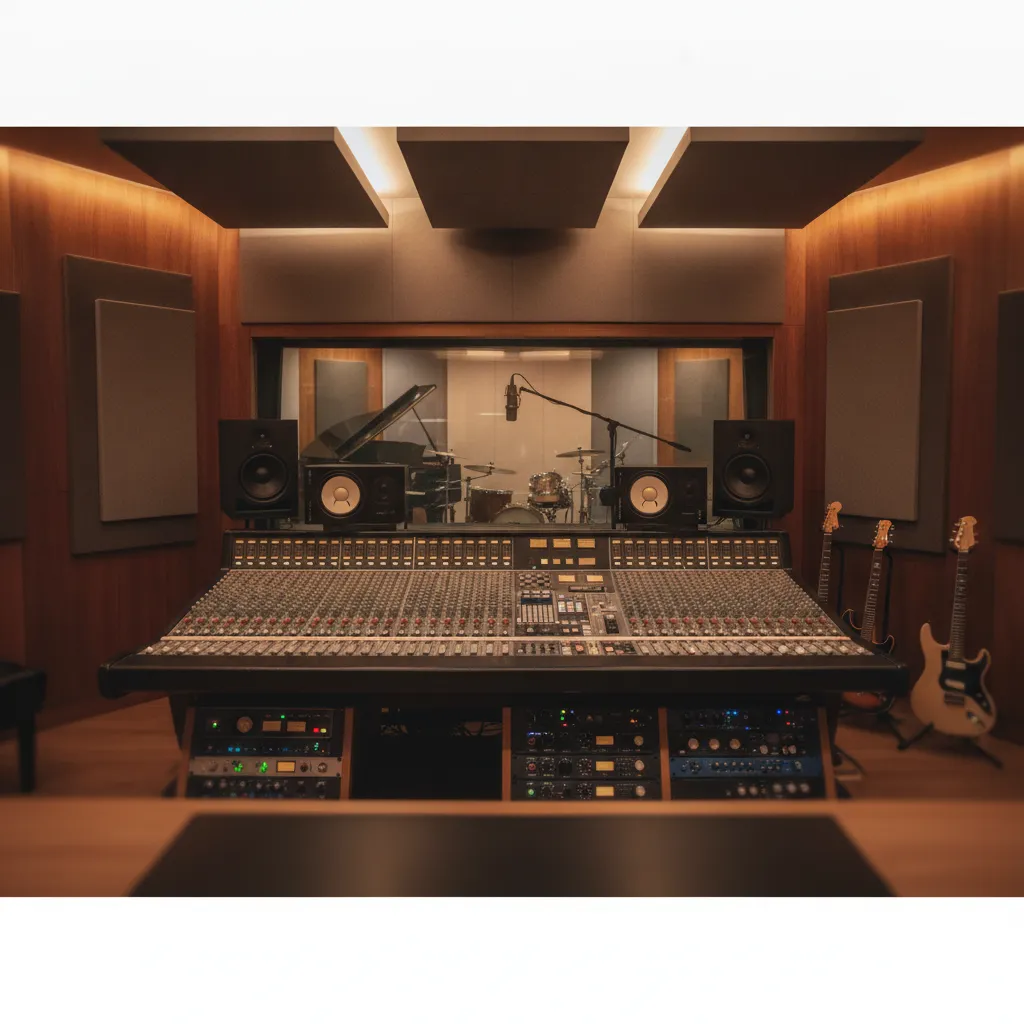
For a 3–5 piece band tracking live in Los Angeles, Paradise Recording's Rock Room in Santa Monica starts at $250 for two hours and runs up to $995 for twelve hours — with a house engineer, a pre-tuned drum kit, and a baby grand piano included in every booking. A 6–8 hour block is the practical sweet spot for most bands: realistically expect 2–4 finished or near-finished live-off-the-floor tracks, depending on how rehearsed you are and how many overdubs you chase. This room is purpose-built for small-to-medium bands; it is not the right call for orchestras or large ensembles.
Rock Room rates vs. the LA market
Studio time in Los Angeles typically ranges from $35–$150 per hour, depending on the studio, equipment, and whether an engineer is included. Premium live-tracking rooms with proper acoustic treatment, a full backline, and a dedicated engineer sit higher. You're looking at $75–$200+/hr at those rooms, often with minimum booking requirements and weeks of lead time — for a live-tracking session with a full band, that investment can make sense.
Here is how Paradise's Rock Room stacks up against the typical LA range for comparable rooms:
| Block | Rock Room (Paradise) | Typical LA range (band room + engineer) |
|---|---|---|
| 2 hours | $250 | $150–$400 |
| 4 hours | $395 | $300–$800 |
| 6 hours | $595 | $450–$1,200 |
| 8 hours | $795 | $600–$1,600 |
| 12 hours | $995 | $900–$2,400+ |
Paradise rates are posted prices. LA ranges are approximate market ranges based on 2026 sources; individual studios vary widely by room size, gear, and location.
Book a session or browse all studios to compare the Rock Room with the Rainforest Room for vocals and overdubs.
What a pre-tuned, pre-mic'd kit actually saves you
Give yourself a couple hours to set up drums, one to three hours to record each instrument, a couple more hours for vocals and comps/editing — and this is just for tracking. That math is brutal when you're paying by the hour.
A permanently installed house kit changes the equation. The house kit could already be all mic'd up — of course, many artists and producers want something very specific. At Paradise the Rock Room kit stays in position between sessions, so the engineer can have levels dialed before your band walks in the door. In practice that eliminates most of the 1–2 hour drum-setup cost you'd absorb at a room that tears down between every booking.
Before even unfolding the first mic stand, it is absolutely essential that the drum kit sounds good in the studio — a soggy, rattly kit will always sound soggy and rattly, no matter what magic you do with your microphones and sound desk. A tight, good-sounding kit will be a lot easier to record and will sound a lot nicer as a result, so it's well worth spending an hour retuning and sorting out the kit. With a maintained house kit, that hour is already done.
How many songs does a 6–8 hour block genuinely yield?
Realistic, not optimistic. Generally, engineers tell new groups to figure anywhere from 1 to 1½ hours of studio time for every minute of recorded music. For a 3½-minute song tracked live with a full band, that's roughly 3.5–5 hours per song — including setup, takes, basic comping, and a listen-back.
If you do the basics live together in the room you can expect about 1–2 hours to get a basic setup/sounds and everybody comfortable (headphone mix, sound adjustments), leaving you with 4–6 hours of actual recording (consider breaks).
Practical output by block size for a rehearsed 3–5 piece:
- 6 hours → 2–3 live-off-the-floor tracks (basic overdubs only)
- 8 hours → 3–4 tracks with room to fix a few passes
- 12 hours → 4–6 tracks, or 3–4 with more thorough overdubs and a rough mix started
Rock and jazz require capturing the interplay between musicians — this often means "live" tracking where the whole band plays at once, which can be faster for capturing energy but harder to edit later. If your set is tight and you're not chasing perfection on every note, live-off-the-floor is genuinely the most efficient way to work.
See also: how many hours does it take to record a song?
Bleed and isolation: the honest reality
Bleed is the defining trade-off of live tracking. Potential disadvantages of tracking together include instrument bleed, performance errors, and edit issues — some ways to mitigate these include separating drums and amps into booths, using headphones to monitor, and playing to a click or reference track.
Use the null spots of microphones to control bleed — bi-directional mics reject signal from the sides, while cardioid mics reject signal from the rear. Use these properties creatively to make sure that loud nearby instruments are in the null spot of other instruments' mics. For instance, it's rarely wise to set musicians up like they're on stage, where the sound from a drum kit will bleed into the amp and instrument mics in front of it.
The Rock Room's engineer handles mic placement as part of every session. The room is designed for a band, not a single vocalist — but it is a single live space, not a facility with multiple isolation booths. Guitars and bass DI cleanly; the kit and amps will share some acoustic space. That's a feature for bands that want energy and glue, and a limitation for bands that need surgical separation on every track. If you're a pop group that needs pristine isolation on every element, a larger facility with dedicated iso booths may serve you better — and cost significantly more.
The truth is there's no right or wrong answer. How you go about recording depends not only on you — your chemistry, skill, and tightness — it also depends on the studio.
The honest limit: who this room is not for
The Rock Room is the right call for 3–5 piece bands: drums, bass, guitars, keys, and lead vocals. It is not the right call for:
- Large ensembles or orchestras — there simply isn't enough square footage or iso booth infrastructure.
- Bands that haven't rehearsed — studio quality, engineer experience, preparation, and workflow efficiency all affect the final investment. An unprepared band in any room burns money fast.
- Projects that need stems fully separated — if your mix engineer will need every instrument completely dry and isolated, a facility with multiple iso rooms is a better fit.
If you're tracking vocals, a podcast, or solo overdubs, the Rainforest Room starts at $200/2hr and is purpose-built for that work.
Getting here
The studio is at 1505 4th St, Ste 219, Santa Monica CA 90401, open daily 9am–2am. The Metro E Line's Downtown Santa Monica terminus at 4th & Colorado is about a five-minute walk. Big Blue Bus lines stop within a couple of blocks. If you drive, Santa Monica's public parking structures on 4th and 5th Street start with free hours — a short session often costs nothing to park. From Venice it's roughly 10 minutes via Lincoln; from Culver City about 15 via Washington; from Hollywood 25–35 via the 10.
Harvelle's — the Westside's oldest live-music room, open since 1931 — is directly across 4th Street. McCabe's Guitar Shop on Pico Blvd is the go-to for last-minute strings or a setup before your session.
Before you book
A few things that move the needle on session efficiency:
- Know your tempo. Decide before you arrive whether you're playing to a click. Playing to a consistent tempo reference can be crucial for editing takes together or making fixes later.
- Fresh heads and strings. New drum heads and guitar strings cost less than one hour of studio time and make a measurable difference on tape.
- Rehearse the arrangements, not just the songs. Know your intros, endings, and any tempo changes cold.
- Book post-production separately. Mixing and mastering are not included in tracking time — budget for that separately at /mix-master, or factor it into your overall project cost.
For a deeper dive on session prep, see how to prepare for your first recording session and the band recording studio Los Angeles guide.
If you record frequently, the membership program may cut your per-session cost significantly versus walk-in hourly rates.
Frequently asked questions
Does the Rock Room rate include an engineer?
Yes. Every session at Paradise Recording — Rock Room and Rainforest Room alike — includes an in-house engineer. You don't need to hire or bring your own, though you're welcome to bring a producer or outside engineer if your project calls for it.
How early should we arrive before our session starts?
Plan to arrive 10–15 minutes before your booked start time. The engineer will already have the kit positioned and a basic template loaded. Use that buffer to sort your headphone mixes and do a quick line check rather than burning paid time on logistics.
Can a 5-piece band with a full kit actually fit in the Rock Room?
Yes — the Rock Room is built for exactly this configuration. It accommodates a full drum kit, bass amp, guitar amps, and keys. Very large backlines (e.g., multiple full stacks) may be tight; email ahead if you have an unusually large rig.
What's the difference between live-off-the-floor and tracking separately?
Live-off-the-floor means the whole band plays simultaneously and you keep the best complete take. Tracking separately means each instrument records to a pre-existing foundation (usually drums first, then bass, guitars, vocals). Live tracking is faster for capturing energy; rock and jazz often mean "live" tracking where the whole band plays at once, which can be faster for capturing energy but harder to edit later. Most bands do a hybrid: track rhythm section live, overdub vocals and leads.
Is the Rock Room available late at night?
Yes. Paradise is open 9am–2am daily, so late-night sessions are a real option — useful for working musicians with day jobs or bands driving in from across the city. See the recording studio open late Los Angeles guide for more context on how late-night booking works in LA.
How much should I budget for the full project — tracking plus mixing and mastering?
Studio quality, engineer experience, preparation, and workflow efficiency all affect the final investment. A practical budget for a 3-song EP: 8 hours of tracking ($795 in the Rock Room) plus mixing and mastering. For current mixing and mastering pricing, see /mix-master or the how much does mixing and mastering cost guide.
Next steps
- Book a session
- Explore the Rock Room
- Compare all studios
- Mixing and mastering services
- Membership options
- Best recording studios in Los Angeles (2026)
- Best recording studios in Santa Monica (2026)
Facts and prices on this page last verified 2026-08-01 by the Paradise Recording team.