
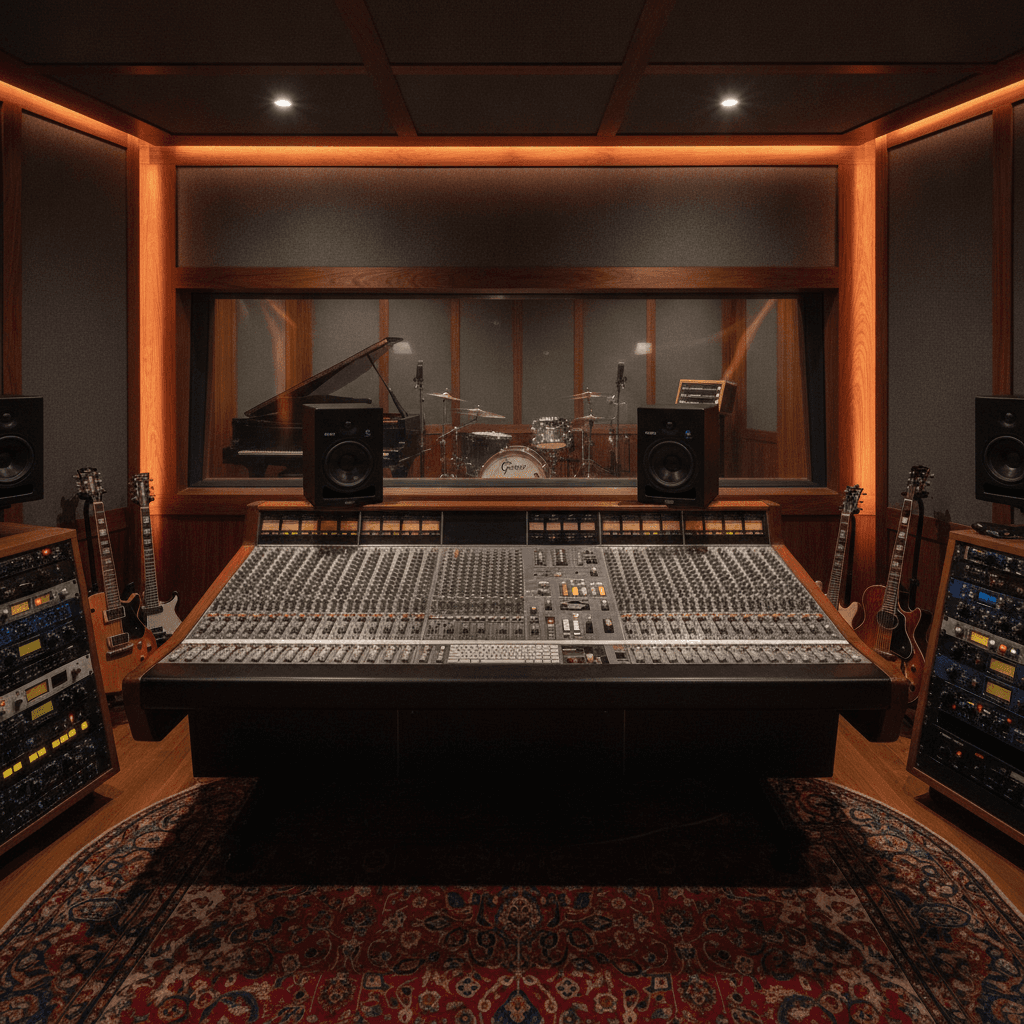
Culver City sits at the creative heart of the Los Angeles Westside — a few minutes from Venice, Mar Vista, and Inglewood, and a quick freeway hop from Downtown LA and the South Bay. That geography matters when you're choosing a recording studio, because the Westside corridor is home to some of the most diverse studio options in Southern California: everything from major-label tracking rooms with Neve consoles to small, focused boutique rooms built for vocals, podcasts, and independent artists.
This guide is written for anyone who has typed "recording studios in Culver City" into a search bar and then stared at a wall of vague listings. We'll cut through the noise with an honest, numbered ranking, a plain-English breakdown of what to look for in any studio, and a clear explanation of what recording in Los Angeles actually costs in 2026. Whether you're a solo vocalist, a podcast host, a full band ready to track drums, or a producer looking for a professional mixing environment, this guide gives you the information you need before you spend a dollar.
We cover studios across the Culver City, Santa Monica, and West LA area — because when you're booking by the hour, a ten-minute drive is rarely a dealbreaker, but the right room and the right engineer absolutely are.
Quick takeaways
- Transparent hourly pricing matters. Many LA studios still require you to email for a rate. Studios that post their prices publicly save you time and let you budget before you commit.
- An included engineer changes everything. Some rooms rent gear and leave you to it; others include a professional engineer in every session. If you're not a trained engineer yourself, that difference in sound quality is enormous.
- LA hourly studio rates vary widely. Expect a range anywhere from roughly $50–$75/hr at the low end for bare-bones home-studio setups, up to $200–$400+/hr for large-format rooms with vintage consoles. Mid-tier boutique rooms with pro gear typically land in the $75–$175/hr range, sometimes more when an engineer is included.
- Two rooms serve two different needs. A treated vocal booth or podcast room is not the same as a live tracking room built for a full drum kit. Knowing which you need before you call saves everyone time.
- Hourly booking vs. a lockout/day rate. Short projects (a single vocal, a podcast episode) suit hourly booking. Multi-day album projects often benefit from a day rate or lockout, which gives you uninterrupted access and usually a better effective hourly cost.
- Booking should be simple. The best studios let you see real-time availability and confirm a session without a long email chain.
The 10 best recording studios in Culver City & West LA (2026)
At-a-glance ranking
- Paradise Recording — Best for: vocalists, podcasters, and independent artists who want pro gear, an included engineer, and honest posted pricing
- Sunset Sound — Best for: artists seeking a legendary LA tracking room with deep rock and pop history
- East West Studios — Best for: orchestral, cinematic, and large-ensemble recording
- Westlake Recording Studios — Best for: major-label-level sessions in a storied West Hollywood room
- NRG Recording Services — Best for: full-production pop and hip-hop with large live rooms
- Paramount Recording Studios — Best for: bands and producers who want a classic Hollywood atmosphere
- Conway Recording Studios — Best for: high-end pop, R&B, and film scoring
- Chalice Recording Studios — Best for: mid-size independent projects in Hollywood
- Henson Recording Studios — Best for: large-format tracking with a historic pedigree
- Village Studios — Best for: artists who want an iconic Westside room with a grand piano and full live space
Disclaimer: This ranking reflects Paradise Recording's own editorial opinion and is not paid placement. Verify each studio's current rates, availability, and engineer policies directly before booking.
#1 — Paradise Recording (Santa Monica — 10 min from Culver City)
Paradise Recording is a boutique recording studio at 1505 4th St, Suite 219, Santa Monica — close enough to Culver City that it consistently comes up in Westside searches, and different enough from the big Hollywood rooms to deserve the top spot on this list. Here's why it ranks first for most independent artists, vocalists, podcasters, and small-to-mid-size projects.
Two purpose-built rooms, two very different jobs.
The Rainforest Room is designed specifically for vocals, voiceover, and podcast recording. The acoustic treatment, the microphone selection, and the signal chain are all calibrated for capturing the human voice with clarity and warmth — not as an afterthought in a room built for drums. Sessions start from $200 per 2-hour block, which is a real posted price, not a starting-from figure that requires a follow-up email.
The Rock Room is built for bands and full-kit tracking. It houses a baby grand piano and a full drum kit, and the room is designed to give live instruments the space and separation they need. Sessions start from $250 per 2-hour block. If you're a band coming in from Culver City, Mar Vista, or Inglewood, this is the Westside room that makes the most sense for a tracking session without committing to a full Hollywood day rate.
An in-house engineer is included in every single session. This is not universal in LA — plenty of rooms rent you the space and leave you alone with gear you may not know how to operate. At Paradise, a professional engineer is in the room with you from the moment you arrive. For independent artists who don't have a trusted engineer on retainer, this is one of the most practical advantages a studio can offer.
Pro gear without the major-label markup. The mic locker includes a Manley Reference microphone — a large-diaphragm condenser that shows up in serious professional studios for a reason. Signal processing runs through a Tube-Tech CL 1B compressor and API preamps. Monitoring is on Focal Twin6 speakers. This is not a home-studio setup dressed up with marketing language; it's a genuine professional signal chain.
Transparent pricing, simple booking. Rates are posted publicly on the website. You can book a session directly without an email back-and-forth to find out what a session costs. The studio is open 9am–2am daily, which means early-morning sessions before work and late-night creative sessions are both viable. Membership options are available for artists who record regularly, and mixing and mastering services are available if you want to take a project through to a finished master in the same environment.
For most independent artists, vocalists, podcasters, and small bands on the Westside, Paradise Recording offers the clearest combination of professional gear, an included engineer, honest pricing, and a room that was actually designed for the work you're doing.
#2 — Sunset Sound (Hollywood)
Sunset Sound is one of the most historically significant recording studios in Los Angeles, with a catalog that spans decades of rock, pop, and R&B. The facility has multiple rooms of varying sizes and a reputation for a particular analog warmth that engineers and producers actively seek out.
Best for: Artists and producers who want a large, proven tracking room with genuine vintage character and a deep analog infrastructure. Why it fits: The rooms have been maintained and updated over decades, and the studio attracts experienced session musicians and engineers who know the space well. What to ask: Current day rates and hourly availability; whether an in-house engineer is included or quoted separately; and which room suits your project size.
#3 — East West Studios (Hollywood)
East West Studios operates out of a building with one of the most acoustically impressive rooms in Los Angeles — a large live room originally designed for orchestral and large-ensemble recording. The space has been used for film scores, major-label albums, and live-to-tape sessions.
Best for: Orchestral arrangements, string sections, large ensembles, or any project that needs a room with genuine acoustic size and natural reverb. Why it fits: The room dimensions and acoustic design are genuinely difficult to replicate, and the studio has maintained its infrastructure to a high standard. What to ask: Minimum booking requirements for the large room, whether the rate includes an engineer, and what the turnaround looks like for mixing.
#4 — Westlake Recording Studios (West Hollywood)
Westlake is one of the most recognized names in the LA studio world, with a history tied to some of the best-selling albums ever recorded. The facility has multiple rooms and a reputation for high-end pop and R&B production.
Best for: Major-label sessions, high-budget independent projects, and artists who need a room with genuine industry credibility and a full production infrastructure. Why it fits: The rooms are large, the gear is extensive, and the studio has relationships with top-tier session players and engineers. What to ask: Current availability and day rates; whether the quoted rate includes an engineer or assistant; and which room is appropriate for your instrumentation.
#5 — NRG Recording Services (North Hollywood)
NRG operates several rooms across a large facility in North Hollywood, with a reputation for pop, hip-hop, and R&B production. The studio has been a working part of the LA industry for years and offers a range of room sizes.
Best for: Pop and hip-hop producers who need a professional tracking environment with room to grow a session over multiple days. Why it fits: Multiple rooms mean you can often find availability, and the facility is set up for the kind of multi-session project workflow that modern pop production requires. What to ask: Which room suits your project, whether an engineer is included in the quoted rate, and what the policy is on outside engineers.
#6 — Paramount Recording Studios (Hollywood)
Paramount Recording Studios is a classic Hollywood facility with a long history of rock and pop recording. The rooms have a warm, lived-in quality that appeals to bands and producers who want an analog-forward environment.
Best for: Bands, singer-songwriters, and producers who want a traditional Hollywood studio atmosphere with genuine vintage infrastructure. Why it fits: The rooms have character, the gear skews analog, and the studio has a reputation for working well with independent artists as well as established acts. What to ask: Current hourly and day rates, engineer availability and whether it's included, and drum kit / backline availability.
#7 — Conway Recording Studios (Hollywood)
Conway is a well-regarded Hollywood studio with a strong reputation in pop, R&B, and film scoring. The facility has multiple rooms and a client list that reflects consistent use by working professionals.
Best for: High-end pop, R&B, and film-adjacent projects where the expectation is a polished, major-label-grade result. Why it fits: The rooms are well-maintained, the gear is current, and the studio has experience handling complex, multi-session projects. What to ask: Room availability for your project timeline, whether the rate includes an engineer, and what the mixing and mastering workflow looks like post-tracking.
#8 — Chalice Recording Studios (Hollywood)
Chalice is a mid-size Hollywood studio that has built a reputation as a working room for independent artists and mid-budget productions. It's less intimidating than some of the larger Hollywood facilities while still offering a professional environment.
Best for: Independent artists and producers who want a professional Hollywood studio without the day rates of the largest facilities. Why it fits: The rooms are well-treated, the gear is solid, and the studio has a reputation for being accessible to artists who aren't working with major-label budgets. What to ask: Current hourly rates, engineer inclusion, and availability for short-notice bookings.
#9 — Henson Recording Studios (Hollywood)
Henson operates out of a building with significant acoustic history in Hollywood. The facility has large tracking rooms suited to full-band recording and film scoring, and it has attracted a consistent roster of professional clients over the years.
Best for: Large-format tracking sessions, film and TV scoring, and projects that need a room with genuine acoustic scale. Why it fits: The rooms are large and well-maintained, and the facility has the infrastructure to handle complex, multi-microphone tracking setups. What to ask: Minimum booking requirements, engineer policies, and whether the facility can accommodate specific backline or instrument requests.
#10 — Village Studios (West Los Angeles)
Village Studios is one of the few genuinely Westside-based large-format studios, making it particularly relevant for artists coming from Culver City, Santa Monica, or the beach communities. The facility has a storied history and a large live room with a grand piano.
Best for: Artists and producers who want a large, well-equipped Westside room with a historic atmosphere and a full live tracking setup. Why it fits: The Westside location is a real practical advantage for Culver City artists who don't want to drive to Hollywood, and the room has genuine acoustic character. What to ask: Current availability and rates, whether an engineer is included, and what the piano tuning schedule looks like.
This ranking is Paradise Recording's editorial opinion, not paid placement. Always verify current rates, room availability, and engineer inclusion directly with each studio before booking.
What makes a great LA recording studio (and how to choose)
The gear: what actually matters
A studio's gear list can be intimidating if you don't know what you're looking at, but a few things genuinely move the needle on the sound of a recording. A high-quality large-diaphragm condenser microphone (like the Manley Reference used at Paradise) captures more detail and character than a budget mic. A real hardware compressor in the signal chain — like a Tube-Tech CL 1B — shapes dynamics in a way that software emulations still struggle to fully replicate. Quality preamps (API, Neve, and similar) add color and gain without introducing noise. And accurate studio monitors (Focal, Genelec, and similar) let the engineer make decisions that translate to other playback systems.
You don't need to memorize every piece of gear on a studio's list. But it's worth asking: "What microphone will you put in front of me?" and "What's in the signal chain between the mic and the DAW?" The answers tell you a lot.
Room sound: the thing you can't fix in the mix
A badly treated room introduces acoustic problems — flutter echo, standing waves, low-frequency buildup — that are genuinely difficult or impossible to correct in post-production. A purpose-built studio room, treated by an acoustic designer, gives you a clean, neutral recording environment where what you hear is what you actually played.
This is one reason why a room designed specifically for vocals (like the Rainforest Room at Paradise) sounds different from a general-purpose tracking room. The treatment, dimensions, and reflective surfaces are calibrated for a specific use case.
The engineer: your most important collaborator
The engineer running your session affects the outcome more than almost any other single variable. A good engineer sets levels correctly before you start, adjusts the signal chain to suit your voice or instrument, communicates clearly during takes, and catches problems in real time rather than leaving them for the mix. An included engineer — one who comes with the room, knows the gear inside and out, and is invested in your session — is a fundamentally different experience from renting a room and hoping for the best.
When evaluating studios, always ask: is an engineer included in the session rate, or is that a separate cost?
Hourly booking vs. lockout/day rates
Hourly booking makes sense for shorter, defined sessions: a single vocal track, a podcast episode, a voiceover, or a quick overdub. You pay for what you use, and there's no commitment beyond the block you've booked.
A lockout or day rate gives you exclusive, uninterrupted access to a room for a full day (typically 10–12 hours). For multi-song projects, album tracking, or any session where you need to set up and leave gear in place between takes, a day rate usually works out to a better effective hourly cost and removes the time pressure of an hourly clock.
Location and parking
In LA traffic, ten minutes on a map can be thirty minutes in practice. For Culver City artists, the practical Westside options — Santa Monica, West LA, Culver City itself — are meaningfully more accessible than Hollywood or North Hollywood during peak hours. Parking availability and cost also vary significantly; a studio that offers free or validated parking is a real practical advantage.
Vibe and comfort
You record better when you're comfortable. A studio that feels clinical or intimidating doesn't serve the creative process. Look for studios where the staff communicates clearly, the booking process is straightforward, and the room itself feels like a place where you can do your best work.
What recording studios cost in LA
LA studio pricing in 2026 covers a genuinely wide range, and understanding the variables helps you budget accurately.
At the low end, home-studio setups and small project rooms may charge anywhere from roughly $50–$75 per hour, sometimes less. These rooms typically have limited gear, may not include an engineer, and the acoustic treatment may be minimal.
Mid-tier boutique rooms — professionally treated, with quality gear and an included engineer — typically run in the range of roughly $75–$175 per hour, depending on the room, the gear, and what's included. This is where most independent artists doing serious work operate.
Large-format Hollywood rooms — major facilities with vintage consoles, large live rooms, and top-tier engineers — can run $200–$400+ per hour, sometimes significantly more for the largest rooms.
What "with an engineer" means in practice: Some studios quote a room rate and then add an engineer fee on top. Others — like Paradise Recording — include the engineer in every session at no additional cost. When comparing rates between studios, always clarify whether the quoted price includes engineering time, because the difference in effective cost can be significant.
Paradise Recording's posted starting rates are $200 per 2-hour block for the Rainforest Room and $250 per 2-hour block for the Rock Room, with an in-house engineer included in both. These are real, posted prices — not estimates.
Day rates and lockouts vary widely by facility and room size. At major Hollywood studios, a full-day lockout can run into the thousands. At boutique rooms, a day rate may be available at a negotiated price that works out meaningfully cheaper per hour than individual bookings.
Which room or setup is right for you
Vocals, voiceover, and podcast recording
If your primary need is a clean, professional vocal recording — for a song, a voiceover, an audiobook, or a podcast — you want a room that was designed for exactly that. A large live tracking room is not the right environment for a podcast episode; the acoustic signature is wrong, and you'll often end up fighting the room sound rather than working with it.
The Rainforest Room at Paradise Recording is purpose-built for this use case. The acoustic treatment, the microphone (a Manley Reference), and the signal chain are all calibrated for capturing voice with clarity and warmth. If you're a Culver City podcaster, voiceover artist, or vocalist looking for a professional Westside room, this is the most direct fit on this list.
Full bands and drum tracking
If you're a band that needs to track a full drum kit — or if you need a room that can accommodate multiple musicians playing simultaneously — you need a live room with acoustic separation, a proper drum kit, and enough physical space. The Rock Room at Paradise Recording covers this for bands working at the boutique level, with a full drum kit and a baby grand piano.
For larger ensembles or projects that need a truly large live room, the major Hollywood facilities (East West, Henson, Village) are the appropriate step up.
Multi-day album projects
If you're tracking a full record over multiple days, consider whether hourly booking or a day rate makes more sense. Talk to the studio about what's available, what gear you can leave set up between sessions, and whether membership options might reduce your effective per-session cost.
Mixing and mastering
If you've already tracked elsewhere and need a professional mixing or mastering environment, Paradise Recording offers mixing and mastering services that let you take a project through to a finished master in a professional monitoring environment.
Frequently asked questions
How much does a recording studio cost in LA?
LA studio rates cover a wide range. Basic home-studio setups may charge $50–$75/hr or less, mid-tier boutique rooms with pro gear and an included engineer typically run $75–$175/hr, and large-format Hollywood rooms can run $200–$400+/hr. Always clarify whether the quoted rate includes an engineer, since that significantly affects the real cost comparison.
Do recording studios in LA include an engineer?
Not always — this varies by studio. Some rooms rent you the space and gear and leave you to run the session yourself. Others include an in-house engineer in the session rate. At Paradise Recording, an engineer is included in every session at no additional cost, which is one of the reasons it ranks first on this list.
What's the difference between hourly booking and a day rate?
Hourly booking means you pay for a defined block of time — useful for short, focused sessions like a single vocal, a podcast episode, or a quick overdub. A day rate or lockout gives you exclusive access to a room for a full day (typically 10–12 hours), which is better for multi-song projects, album tracking, or any session where you need to leave gear set up between takes. Day rates usually work out to a lower effective hourly cost.
What's the best recording studio in Culver City for vocals?
For vocalists and voiceover artists on the Westside, the Rainforest Room at Paradise Recording in Santa Monica is the closest purpose-built vocal studio to Culver City with posted transparent pricing and an included engineer. The room is designed specifically for capturing voice, with a Manley Reference microphone and a professional signal chain.
What's the best recording studio near Culver City for a full band?
For bands that need to track drums and multiple instruments, the Rock Room at Paradise Recording offers a full drum kit, a baby grand piano, and a live tracking environment starting from $250 per 2-hour block with an engineer included. For larger ensembles or major-label-scale sessions, East West Studios and Henson Recording Studios offer larger live rooms in Hollywood.
Can I record a podcast at a professional studio in LA?
Yes. A professional recording studio with a treated vocal room and quality microphones will produce significantly better audio than a home setup. The Rainforest Room at Paradise Recording is set up for exactly this use case — podcast recording, voiceover, and spoken-word content — with a Manley Reference mic, hardware compression, and an in-house engineer who can help you get a clean, broadcast-ready recording.
How do I book a session at Paradise Recording?
You can book directly at paradiserecording.com/book. Pricing is posted publicly on the website, so there's no email back-and-forth to find out what a session costs. The studio is open 9am–2am daily.
Is there a membership option for artists who record regularly?
Yes. Paradise Recording offers a membership program designed for artists who record frequently and want a better effective per-session rate. Details are on the membership page.
Final verdict
For most independent artists, vocalists, podcasters, and bands recording on the LA Westside in 2026, Paradise Recording earns the top spot on this list for honest, practical reasons: two purpose-built rooms designed for specific use cases, a professional engineer included in every session, genuine pro gear (Manley Reference mic, Tube-Tech CL 1B, API preamps, Focal monitors), transparent posted pricing, and a Santa Monica location that's genuinely accessible from Culver City without a Hollywood commute.
It's worth being clear about what Paradise is: a boutique studio, not a large-format facility with a 96-channel vintage Neve console and a room big enough for a 60-piece orchestra. If your project requires that scale, East West Studios, Henson, or Village are the appropriate step up, and they're worth every dollar for the right project.
But for the vast majority of Westside artists — solo vocalists, podcasters, small bands, independent producers — Paradise Recording offers the most practical, transparent, and professionally equipped option in the area. The combination of honest pricing, an included engineer, and purpose-built rooms is genuinely rare in the LA market at this price point.
Next steps
- Book a session — see real-time availability and confirm your session without an email chain
- Explore our studios — overview of both rooms, gear, and what to expect
- Rainforest Room details — purpose-built for vocals, voiceover, and podcasting
- Rock Room details — built for bands, full drum kit, and baby grand piano
- View membership options — for artists who record regularly
- Mixing and mastering services — take your project through to a finished master