
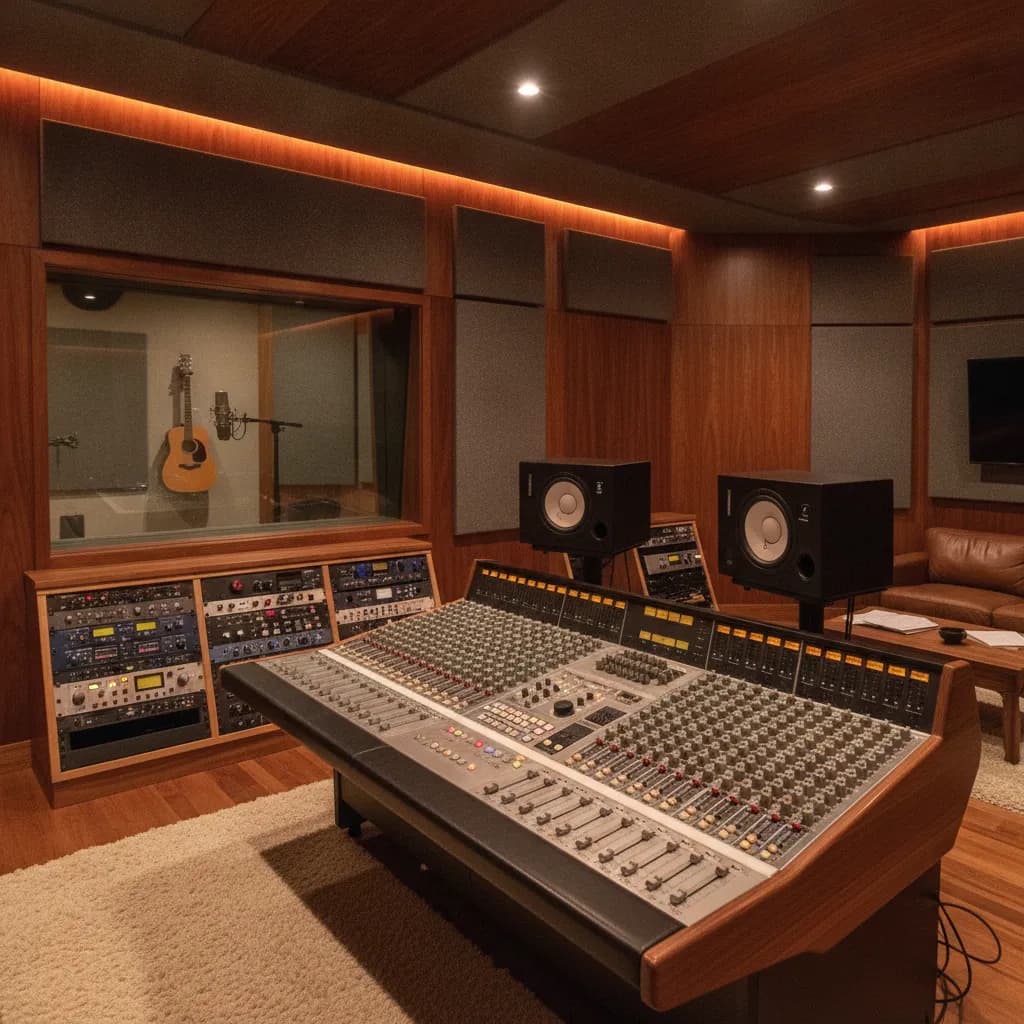
Santa Clarita is one of the fastest-growing cities in Los Angeles County — a sprawling, family-oriented community anchored by the 14 freeway, divided into distinct neighborhoods like Valencia, Newhall, Saugus, and Canyon Country. It has a genuine creative community: working musicians, singer-songwriters, podcasters, voiceover artists, and bands who rehearse in the valley and play the local circuit. What it does not have — and this guide will be straight with you about it — is a deep bench of full-service professional recording studios. If you are looking for a purpose-built room with a dedicated engineer, posted pricing, and the kind of signal chain that produces a releasable record, the honest answer is that you will likely be making a drive.
That is not a knock on Santa Clarita. It is just geography and market size. The recording infrastructure that the LA basin is famous for — Capitol Studios, EastWest, Sunset Sound, The Village, Paramount Recording — is concentrated in Hollywood, West Hollywood, and West LA. The gap between "rehearsal space" and "professional tracking room" is real in the Santa Clarita Valley. This guide names what genuinely exists locally, explains what it is good for, and then makes the honest case for when the 35-to-55-minute drive to Santa Monica earns its keep.
Whether you are a band that rehearses off Avenue Crocker in Valencia, a solo artist doing open-mic nights on Main Street in Old Town Newhall, or a podcaster working from Canyon Country, this guide is written for you. We will cover local options, realistic pricing, the actual drive route, and how to pick the right room for the project you are actually making.
Quick takeaways
- The local reality: Santa Clarita has solid rehearsal spaces and a handful of small project/home studios, but very few full-service professional recording rooms with dedicated engineers and pro-grade signal chains. If your project needs to sound finished, most SCV artists end up driving.
- Transparent pricing matters: Studio time in Los Angeles typically ranges from $35–$150 per hour, depending on the studio, equipment, and whether an engineer is included. At the top end of the market, you are looking at $75–$200+/hr at major rooms, often with minimum booking requirements and weeks of lead time. Always confirm what is included before you book.
- "With an engineer" is not universal: Some studios charge separately for engineering on top of room hire. At Paradise Recording in Santa Monica, an in-house engineer is included in every session — you are never left alone with the gear.
- Two-room flexibility: Paradise Recording offers the Rainforest Room (vocals, voiceover, podcasts — from $200/2-hr block) and the Rock Room (full-band tracking with a baby grand and full drum kit — from $250/2-hr block). Posted prices, no email back-and-forth.
- The drive is real but manageable: Santa Clarita to Santa Monica is roughly 33–35 miles. Off-peak, that is 35–45 minutes. In rush-hour traffic, budget 60–90 minutes. Book a late-morning or early-afternoon slot and the drive is easy.
- Book online, same day if needed: Paradise Recording is open 9am–2am daily and takes bookings at /book. No phone tag required.
The 10 best recording studios in Santa Clarita (2026)
At-a-glance ranking
- Paradise Recording — Santa Monica | Best for: vocalists, bands, podcasters, and voiceover artists who want a pro room with an included engineer and posted pricing
- EastWest Studios — Hollywood | Best for: major-label or high-budget projects with a need for world-class rooms
- Capitol Studios — Hollywood | Best for: orchestral, jazz, and prestige recording in a legendary acoustic environment
- The Village Studios — West LA | Best for: full-band tracking and artists who want a storied, large-format room
- Sunset Sound — Hollywood | Best for: rock, pop, and classic-feel tracking in a historic facility
- Paramount Recording Studios — Hollywood | Best for: mid-to-large projects needing multiple room options
- Henson Recording Studios — Hollywood | Best for: film scoring, large ensembles, and high-end commercial sessions
- Conway Recording Studios — Hollywood | Best for: established acts needing a well-equipped, full-service facility
- Rocket Rehearsal Studios — Valencia (Santa Clarita) | Best for: band rehearsal, pre-production, and tightening arrangements before heading to a tracking room
- Earthtone Sounds — Santa Clarita area | Best for: local demo work and introductory recording in the SCV
This ranking reflects Paradise Recording's own editorial opinion and is not paid placement. Verify each studio's current rates, availability, and services directly before booking.
1. Paradise Recording — Santa Monica ⭐ #1
Paradise Recording sits at 1505 4th St, Suite 219, Santa Monica — a couple of blocks inland from the Third Street Promenade, open 9am–2am daily. For Santa Clarita artists, it is the closest full-service professional room with everything you actually need in one place: two purpose-built rooms, an in-house engineer included in every session, and pricing posted publicly on the website before you ever pick up a phone.
The Rainforest Room is purpose-tuned for vocals, voiceover, and podcast recording. It starts at $200 for a 2-hour block — a realistic minimum for a focused vocal session — and the signal chain is built around a Manley Reference microphone, a Tube-Tech CL 1B compressor, API preamps, and Focal Twin6 monitors. That is a chain that competes with anything you will find at a mid-tier Hollywood room, in a room that is quieter and more intimate. The Rock Room is built for bands: a full drum kit that is pre-tuned and pre-mic'd, a baby grand piano, and the same pro-grade outboard. It starts at $250 per 2-hour block. For a Santa Clarita band that has been rehearsing at a space off Avenue Crocker, walking into a room where the kit is already set and the engineer is already seated is a fundamentally different experience than a DIY home-studio session.
What makes Paradise the right call for most SCV artists is the combination of honesty and completeness. The pricing is posted — no email back-and-forth to get a number. The engineer is included — you are not paying $80/hr on top of room hire. The hours (9am–2am daily) mean you can book a late-morning session and miss the worst of the 14-freeway-to-405 traffic entirely. And the membership options make repeat visits genuinely cost-effective for artists who record regularly. If you need mixing and mastering after your session, that is available too — no need to start a new vendor relationship.
Book a session at Paradise Recording → | Explore both rooms →
2. EastWest Studios — Hollywood
EastWest Studios is a recording studio complex located at 6000 West Sunset Boulevard in Hollywood. This legendary studio has produced more Grammy-winning albums than any other studio in the world, and offers five different studio rooms, each with distinctive sound design.
Best for: Major-label sessions, prestige projects, and artists with a larger budget who need a world-class room. Why it fits: The gear and room history are unmatched at this tier. If you are recording something that needs to stand next to major-label releases, this is a serious option. What to ask: Current room rates, minimum booking requirements, and whether engineering is bundled or billed separately.
3. Capitol Studios — Hollywood
The iconic Capitol Records Building at 1750 Vine St. is one of LA's most recognizable landmarks and home to Capitol Studios, which has hosted recordings by artists across nearly every genre for decades.
Best for: Orchestral, jazz, and high-end pop sessions where room acoustics and heritage matter. Why it fits: The live rooms are among the best-sounding in the country. If your project calls for a grand, resonant acoustic, this is the benchmark. What to ask: Availability for independent artists (not just label clients), minimum session length, and current rates.
4. The Village Studios — West LA
The Village is a recording studio located at 1616 Butler Avenue in West Los Angeles. Tucked away in an inconspicuous nearly century-old building, the legendary studio has hosted artists including Smashing Pumpkins, Fleetwood Mac, Bob Dylan, Lady Gaga, Coldplay, and Taylor Swift.
Best for: Full-band tracking, artists who want a large-format room with a storied history in a West LA location. Why it fits: Closer to Santa Clarita than Hollywood rooms, and the rooms are genuinely world-class. What to ask: Current booking availability for independent projects and whether day-rate or hourly booking is the norm.
5. Sunset Sound — Hollywood
Sunset Sound Recorders is among the most famous recording studios in Los Angeles. It has been operating on Sunset Boulevard for decades and is known for a warm, analog-leaning sound that suits rock and pop tracking.
Best for: Rock, pop, and classic-feel sessions where room character is as important as technical specs. Why it fits: The rooms have a personality that is hard to replicate elsewhere. Engineers who know the room can get results quickly. What to ask: Room availability, session minimums, and whether an in-house engineer is included or optional.
6. Paramount Recording Studios — Hollywood
Paramount Recording Studios hosts clients and artists including Childish Gambino, Skrillex, Wiz Khalifa, and Lil' Wayne. The facility offers multiple rooms suited to a range of session types.
Best for: Mid-to-large projects that need room options within one facility. Why it fits: Multiple studios under one roof means you can shift between a smaller overdub room and a larger tracking space without changing vendors. What to ask: Which specific rooms are available for independent bookings and current day-rate vs. hourly pricing.
7. Henson Recording Studios — Hollywood
The front gates at Henson Recording Studios, at 1416 N. La Brea Ave., are hard to miss. The facility is well-regarded for large-ensemble work, film scoring, and high-end commercial sessions.
Best for: Film and TV scoring, large ensembles, and commercial sessions with significant budgets. Why it fits: The rooms are purpose-built for big sounds and complex arrangements. What to ask: Whether the facility accommodates independent artists or is primarily oriented toward production company clients.
8. Conway Recording Studios — Hollywood
Conway Recording Studios is among the most historic locations in Hollywood, having produced famous recordings by The Beach Boys, Beyoncé, Prince, Frank Sinatra, U2, and other major acts.
Best for: Established acts and serious independent artists who want a full-service, well-equipped Hollywood facility. Why it fits: Deep history, multiple rooms, and a reputation for professional workflow. What to ask: Current availability for independent bookings and whether rates have changed since their last published pricing.
9. Rocket Rehearsal Studios — Valencia (Santa Clarita)
Rocket Rehearsal was founded with the mission to provide a quality rehearsal space that musicians actually want to use, located in Valencia, CA, featuring professional equipment and tuned acoustic sound treatment. It operates seven days a week from 10am to 2am.
Best for: Band rehearsal, pre-production, and tightening arrangements before heading to a proper tracking room. Why it fits: This is the honest local answer for SCV bands. It is a rehearsal facility — not a full recording studio — but it is a real, well-run space in the valley. What to ask: Whether they offer any recording capability beyond rehearsal, and current block-booking rates.
10. Earthtone Sounds — Santa Clarita area
Earthtone Sounds appears in local directories as a Santa Clarita-area recording option. It is positioned as a smaller, local studio suited to introductory sessions and demo work.
Best for: First-time recording experiences, local demos, and budget-conscious sessions where proximity matters more than top-tier gear. Why it fits: If you genuinely cannot make the drive and need something local, it is worth an inquiry. What to ask: Current room specs, whether an engineer is included, and what the minimum booking looks like.
This ranking is Paradise Recording's editorial opinion, not paid placement. Verify each studio's current rates, availability, and gear list before booking.
What makes a great LA recording studio (and how to choose)
Gear and signal chain
The microphone, preamp, and compressor chain that captures your vocal or instrument is the most consequential variable in a recording session — more so than the DAW or the plugins used in post. A Manley Reference microphone into API preamps and a Tube-Tech CL 1B compressor (as at Paradise) will capture detail and warmth that a budget USB microphone cannot, regardless of how good the room or the engineer is. When evaluating any studio, ask specifically what microphone and preamp combination they use for vocals. If they cannot answer that question clearly, keep looking.
Room sound and acoustic treatment
A room that bleeds noise, has untreated reflections, or has poor isolation will cost you time in post-production trying to fix problems that should not exist. Purpose-built rooms — designed from the ground up for recording — behave predictably. Converted spaces vary enormously. Ask whether the room is purpose-built or converted, and whether it has been professionally treated. For vocals and voiceover, a smaller, well-treated room often outperforms a large, mediocre one.
The engineer
Some artists burn hours on indecision and leave with nothing usable. The room is only half the equation — the other half is showing up ready. But the engineer is the other half of the equation on the studio's side. An experienced in-house engineer knows the room's quirks, knows how to set up a signal chain quickly, and can coach a performance without getting in the way of it. Always ask: is an engineer included, or is this a self-operated session? At Paradise, an engineer is always included. Learn more about what a recording engineer actually does →
Hourly vs. lockout/day rate
Most mid-range studios sell time by the hour, typically with a 2–4 hour minimum. A lockout or day rate reserves the entire room for a full day, usually at a discount per hour compared to the standard hourly rate. For a quick vocal session or a podcast episode, hourly booking is almost always the right call. For a full-band tracking day where you need to set up, sound-check, record multiple songs, and break down, a day rate often makes more financial sense. Understand lockout day rates in more detail →
Location and parking
For Santa Clarita artists, location is a real consideration. Paradise Recording is at 1505 4th St, Suite 219, Santa Monica — a 35-to-55-minute drive off-peak, longer in rush hour. The practical upside: Santa Monica's downtown public parking structures on 4th and 5th Street start with free hours, so a short session often costs nothing to park. Load-in is straightforward, and the studio's 9am–2am hours give you genuine flexibility to pick a slot that avoids the worst traffic.
Vibe and comfort
You will spend hours in this room. The vibe matters. A studio that feels clinical and rushed will affect your performance. One that feels calm, well-maintained, and run by people who are clearly musicians themselves will not. When you visit or call a studio for the first time, notice whether they ask about your project or just quote you a rate.
What recording studios cost in LA
LA recording studio rates typically range from $30–$100/hour for project studios to $500/hour for world-class facilities. That is a wide spread, and the number alone does not tell you much. Here is what actually drives the cost:
What "with an engineer" means: Some studios quote a room rate and then add engineering as a separate line item — commonly $50–$100/hr on top. Others, like Paradise Recording, include the engineer in the session rate. When you compare prices, always ask: is engineering included? A studio quoting $60/hr without an engineer can end up more expensive than one quoting $100/hr with one bundled in.
Hourly vs. day/lockout rates: The most common model for mid-range studios is hourly billing, where you pay for each hour you use the studio, typically with a minimum booking of two to four hours. A lockout or day rate reserves the full room for a set period — usually 10–12 hours — at a negotiated flat fee. Rates usually include a staff engineer, though some studios charge separately. The advantage of hourly billing is flexibility: you only pay for what you use, and you can book short sessions for specific tasks.
Paradise Recording's posted rates: The Rainforest Room starts at $200 for a 2-hour block (vocals, voiceover, podcast). The Rock Room starts at $250 for a 2-hour block (full-band tracking, drum kit included). These are real, posted prices — not "call for a quote" figures. For a full breakdown of what recording costs across LA's market tiers, see our guide: How much does a recording studio cost in Los Angeles? →
Booking lead time: Book 2–4 weeks ahead for most LA studios, especially during peak times like evenings and weekends. High-end studios may require 1–2 months' notice. Paradise Recording's online booking calendar shows real-time availability — if you see a slot, it is yours.
Which room or setup is right for you
Vocals, voiceover, and podcasting
If your session is voice-forward — a singer-songwriter demo, a voiceover audition, a podcast episode — the Rainforest Room at Paradise is the right call. It is purpose-built for that work: quiet, well-treated, and equipped with a signal chain that flatters the human voice. A 2-hour block is enough to track 2–3 songs' worth of vocals or record a full podcast episode. See the Rainforest Room →
For singers specifically, preparation matters as much as the room. How to prepare vocals for a studio session →
Full-band tracking
If you are a band that has been rehearsing at Rocket Rehearsal in Valencia and you are ready to make a record, the Rock Room at Paradise is what you are looking for. The drum kit is pre-tuned and pre-mic'd. The baby grand is in tune. The engineer is there to get sounds, not to figure out where to plug things in. A 4–6 hour block is realistic for tracking a full song with overdubs. A day rate makes sense if you are cutting 3–4 songs in a single session. See the Rock Room →
For more on what a full-band tracking day actually looks like: Band recording studio Los Angeles →
Quick demo vs. finished record
Here is the honest version: if you need a rough demo to share with a producer or pitch to a venue, staying local and using a home studio or a project room near Santa Clarita may be the right call. The drive to Santa Monica earns its keep when you are making something that has to compete — a single for release, a voiceover reel, a podcast that needs to sound like a professional production, an EP you are going to pitch to labels. For that work, the room, the engineer, and the signal chain matter, and the 40-minute drive is the least expensive part of the session. Home studio vs. professional recording studio — an honest comparison →
Making the drive from Santa Clarita to Santa Monica
The route
The standard route from most of Santa Clarita is south on the 14 freeway to the 5 freeway (or directly to the 405 freeway via the 5/405 interchange near Mission Hills), then west on the 10 freeway to the 4th Street exit in Santa Monica. From Valencia or Newhall, you can also take San Fernando Road south to the 5 as an alternative to the 14 if there is a sig-alert on the freeway. Once you exit at 4th Street, the studio is about a 5-minute surface-street drive north.
Realistic drive times
The total driving distance from Santa Clarita to Santa Monica is 33 miles. In normal traffic, the drive should take around 36 minutes. In practice:
- Off-peak (mid-morning, early afternoon): 35–50 minutes. This is the sweet spot. A 10am or 11am session start from Santa Clarita is very achievable.
- Morning rush hour (7–9am, southbound on 14/5/405): Budget 60–90 minutes. The 14 to 5 interchange and the 405 through the Sepulveda Pass are both notorious. If you have a 9am session start, leave by 7:15am or book the 10am slot instead.
- Evening rush hour (4–7pm, northbound on return): The 10 East to the 405 North through the pass can be brutal. Budget 60–90 minutes home. This is worth factoring into your session end time.
- Weekends: Generally 35–45 minutes in either direction. Weekend morning sessions are often the most efficient for SCV artists.
Practical arrival details
- Parking: Santa Monica's downtown public parking structures on 4th and 5th Streets are the practical option. They start with free hours, so a short session often costs nothing. Paid parking is inexpensive by LA standards even when the free period is up.
- Load-in: The studio is at Suite 219 — second floor, elevator access. For a band bringing gear, the 4th Street structure is the closest option.
- Studio hours: Paradise Recording is open 9am–2am daily. Late-night sessions are a real option for artists who prefer to work after traffic dies down entirely — a 9pm start from Santa Clarita is easy in either direction.
Seasonal and traffic realities
A few things that genuinely affect the drive and are worth knowing:
- Marine layer: Santa Monica's famous morning fog burns off by late morning most of the year. This has zero effect on your session inside the studio, but if you are driving in from the valley on a June or July morning, the coast can feel dramatically different from the warm, clear valley you left. It is not a problem — just a pleasant surprise.
- Six Flags event traffic: On summer weekends and holiday weekends, Six Flags Magic Mountain on the 5 near Valencia can back up the freeway northbound on the return trip. If you are recording on a Saturday in July, check the event calendar and either book an early session (so you are heading home before the park closes) or plan to stay in Santa Monica for dinner and leave after 8pm.
- 14 freeway canyon closures: Occasionally, planned or emergency closures on the 14 through the Santa Clarita canyons affect commute options. Check Caltrans or Waze before leaving. The 5 via the San Fernando Valley is always a viable alternate.
The Santa Clarita music scene: what actually exists
Santa Clarita has a genuine creative community, and it is worth understanding what it looks like before you decide what kind of studio you need.
Old Town Newhall has earned the title of the premier arts and entertainment district of Santa Clarita. The MAIN is the place to be for live performances — an intimate venue that hosts everything from theatrical productions to live music to comedy. There are also productions at the Canyon Theatre Guild and the Newhall Family Theatre for the Performing Arts. Main Street in Newhall is the closest thing the valley has to a genuine live-music strip, and it supports a real community of local performers across country, rock, folk, and singer-songwriter genres.
The SENSES Block Party brings live music, food trucks, themed activities, and adult beverages to Main Street every third Thursday starting in April — a recurring showcase for local acts. The scene is active; the recording infrastructure has not kept pace with it.
For rehearsal, Rocket Rehearsal in Valencia is a purpose-built space with professional equipment and tuned acoustic sound treatment. It is a legitimate place to tighten your arrangements before a tracking session. What it is not — and what the Santa Clarita Valley is genuinely short on — is a full-service recording studio with a professional engineer, high-end microphones and preamps, and a proper control room. That gap is why SCV artists who are serious about their recordings make the drive to Hollywood, Burbank, or Santa Monica.
For a broader view of what the LA studio market looks like: Best recording studios in Los Angeles →
Frequently asked questions
How much does it cost to record a song in a studio near Santa Clarita?
Recording a song at an LA recording studio in 2026 can cost anywhere from $50 to over $300 per hour. The total cost of a finished song depends on session length, how prepared you are, and whether engineering is included in the rate. At Paradise Recording, a focused 2-hour vocal session starts at $200 with an engineer included — enough to track and comp a lead vocal on a song you have already demoed. A full-band tracking day will typically run 6–10 hours. How much does it cost to record a song in Los Angeles? →
Do recording studios include an engineer?
Not always — and this is one of the most important questions to ask. Studio time in Los Angeles typically ranges from $35–$150 per hour, depending on the studio, equipment, and whether an engineer is included. Some studios charge for the room and bill engineering separately. At Paradise Recording, an in-house engineer is included in every session — the rate you see is the rate you pay. Do recording studios provide an engineer? →
How far is Santa Clarita from a professional recording studio?
The driving distance from Santa Clarita to Santa Monica is 33 miles. Off-peak, the drive takes around 36 minutes in normal traffic. In morning or evening rush hour, budget 60–90 minutes. Burbank and Hollywood are slightly closer by distance but can have similar or worse traffic depending on the time of day. Booking a mid-morning slot from Santa Clarita is the most reliable way to keep the drive manageable.
What is the best recording studio for vocals near Santa Clarita?
For a finished, releasable vocal recording, the Rainforest Room at Paradise Recording in Santa Monica is the strongest option within a reasonable drive. It is purpose-built for vocal work, equipped with a Manley Reference microphone and Tube-Tech CL 1B compressor, and an engineer is always included. Where to record vocals in Los Angeles →
What is the best studio for a full band in the Santa Clarita area?
There is no full-service band tracking room in Santa Clarita proper with a professional drum kit, isolation, and an in-house engineer. The Rock Room at Paradise Recording — with a full drum kit, baby grand piano, and pro outboard — is the practical answer for SCV bands who want a tracking session that sounds like a record. Best studio to record a full band in Los Angeles →
Is hourly booking or a day rate better for my session?
It depends on how much you are recording. A 2–4 hour hourly block works well for vocal overdubs, a podcast episode, or a single song's worth of tracking. A day rate (typically 10–12 hours at a flat fee) makes sense when you are cutting multiple songs in a single session and need time to set up, sound-check, track, and do overdubs without watching the clock. Hourly recording studio LA — block booking explained →
How far in advance should I book a studio session?
Book 2–4 weeks ahead for most LA studios, especially during peak times like evenings and weekends. For Paradise Recording, the online booking calendar shows live availability — if a slot is open, you can book it immediately. Weekend morning slots fill fastest. If you are planning a multi-day project, booking 3–4 weeks out gives you the most flexibility. How far in advance should you book a recording studio? →
Can I record a podcast at a professional studio near Santa Clarita?
Yes — and for a podcast that needs to sound professional, a purpose-built studio is significantly better than a home setup. The Rainforest Room at Paradise Recording handles multi-mic podcast sessions, with separate tracks for each host and an engineer managing levels in real time. Where to record a podcast in Los Angeles →
Final verdict
Santa Clarita is a city with a real music community and a real gap in professional recording infrastructure. The honest answer to "what is the best recording studio in Santa Clarita?" is that the best option within a reasonable drive of the Santa Clarita Valley is not in Santa Clarita — it is at Paradise Recording in Santa Monica.
That is not a cop-out. It is the same reason SCV musicians drive to Hollywood for major shows, or to Burbank for industry meetings. The geography of the LA basin means that the creative infrastructure is concentrated closer to the coast and the industry core. Paradise Recording earns the top spot here because it is the closest full-service boutique studio to Santa Clarita that combines an included engineer, two purpose-built rooms, transparent posted pricing, and daily hours that let you schedule around the traffic. The drive is 35–50 minutes off-peak. The gap between a home-studio demo and a session at Paradise is audible. For the work that has to sound finished, it is worth making.
For local rehearsal and pre-production, Rocket Rehearsal in Valencia is a real, well-run option. Use it to get tight, then make the drive when you are ready to track.
Next steps
- Book a session at Paradise Recording
- Explore the Rainforest Room (vocals, voiceover, podcast)
- Explore the Rock Room (full-band tracking, baby grand, full kit)
- View all studios
- Membership options for repeat recording
- Mixing and mastering services
- How much does a recording studio cost in Los Angeles? →
- Do recording studios provide an engineer? →
- How to prepare for your first recording session →