
How to prepare vocals for a studio session
Most artists waste the first 30–45 minutes of a paid session on things that should have happened at home: finalizing lyrics, finding the right key, or figuring out how to export the beat. Do those things before you book, rest your voice the day before, warm up 30–45 minutes before you arrive (not on the clock), and hand the engineer a properly labeled 24-bit WAV with the BPM written down. That one shift alone can cut a 4-hour session to 2 hours — or double what you finish in 4.
The prep timeline at a glance
| When | What to do |
|---|---|
| 1–2 weeks out | Finalize arrangement; confirm key and tempo; get beat stems from producer |
| 3–5 days out | Rehearse to the actual backing track at actual tempo; record a rough at home and listen critically |
| Day before | Vocal rest — no yelling, no smoky rooms, no alcohol; stay hydrated; sleep 7–8 hours |
| Morning of | Room-temperature water only (not iced); light food; no dairy if it coats your throat |
| 1–2 hours before | 30–45 min warm-up routine at home (scales, lip trills, tongue twisters) |
| 15 min before | Short 10–15 min refresh warm-up; arrive calm, not rushed |
| At the studio | Hand engineer your labeled WAV, confirm BPM, do a quick mic check — then record |
Step 1 — Lock the musical decisions before you book
Studio time in Los Angeles runs roughly $50–$300+ per hour depending on the room and what's included. Every minute you spend deciding whether the chorus should go up a half-step is money leaving your pocket. Before you book anything:
- Confirm your key. Sing the song in three candidate keys and pick the one where the top notes feel powerful, not strained. That key is locked.
- Confirm the tempo. If you wrote the song to a click, note the exact BPM. If you wrote it freestyle, tap it into a metronome app and write it down. The engineer needs this number the moment you walk in.
- Finalize the arrangement. How many verses? Is there a bridge? Does the outro repeat twice or three times? Decisions made in the control room cost you session time. Decisions made on your couch cost you nothing.
If you're working with a producer's beat, ask for the trackouts — individual stems — rather than a stereo two-track. That gives the engineer full control in the mix later.
Step 2 — Export your beat the right way
If you're bringing a pre-made instrumental or beat to the session, the file format matters enormously. Uncompressed, lossless WAV files are the recommended format for exporting stems — they preserve audio quality without data compression, and WAV remains the industry standard endorsed by the Audio Engineering Society.
Practically speaking:
- Match your session's native sample rate — typically 44.1 kHz for music — and export 24-bit WAV files.
- Remove any master limiter or clipping from your stems so they keep headroom and transfer properly into mixing or mastering.
- Never send MP3s for mixing — lossy compression creates phase artifacts that destroy high-end clarity.
- Ensure every track in your session is consolidated to start at Bar 1, Beat 1 — this guarantees perfect synchronization when the files are imported into a new environment.
- Include a rough mix, BPM, key, and any short creative notes when you send or hand over files.
Label everything clearly. "Beat_Dm_92bpm.wav" takes three seconds to type and saves five minutes of detective work in the session.
Step 3 — Rehearse to the actual track, at actual tempo
There's a big difference between knowing a song and knowing it at 94 BPM over that specific instrumental. The best thing you can do to prepare is know the song inside and out — the better you know what you're singing, the more focused you can be on the emotion rather than the words.
Practical steps:
- Load the actual beat into a DAW or even Voice Memos and record a full rough pass at home.
- Listen back critically — not to cringe, but to catch phrasing that doesn't land, breath placement that's awkward, or ad-libs that need work.
- Something changes once you cross from the "on-book" to "off-book" phase — you can focus on emotion, subtle use of air and vibrato, scoops, straight tone, falls, attacks and releases, and much more. If you have the time, get off-book so the song is really inside you.
Step 4 — Protect your voice the day before
A well-rested voice is essential for a successful vocal recording session. Avoid straining your vocal cords in the days leading up to your studio time, stay well-hydrated, get sufficient sleep, and avoid irritants like smoke and excessive alcohol.
Make sure the session isn't scheduled for 10 am the day after a late-night gig or at the end of a long workday — be as rested as you can. This is the single most overlooked piece of prep. A tired voice takes twice as many takes to get a keeper, and a hoarse voice can't be fixed in the booth.
The day before: talk less, sleep more, drink water steadily throughout the day (not just a big glass right before bed). Warm or room-temperature water keeps your vocal folds and all other tissues involved in singing pliable.
Step 5 — Warm up at home, not on the clock
Just as athletes prepare their bodies, vocalists need to warm up their instruments — incorporate vocal warm-up exercises to expand your range, enhance breath control, and ensure your voice is flexible and ready for peak performance.
The timing matters: an extended warm-up should last 30 to 45 minutes a few hours before the recording session, followed by a shorter warm-up of about 15 minutes just before you record. A few hours will pass between the vigorous warm-up and the actual recording, allowing your voice to rest while remaining warm — you want to be warmed up without being overly tired.
If you're preparing right before a recording session, an hour of warm-ups may be excessive — you don't want to tire out your voice before even hitting record. Doing 10 to 20 minutes of tongue twisters and the like, up to an hour or two before recording, should be enough to get you warm.
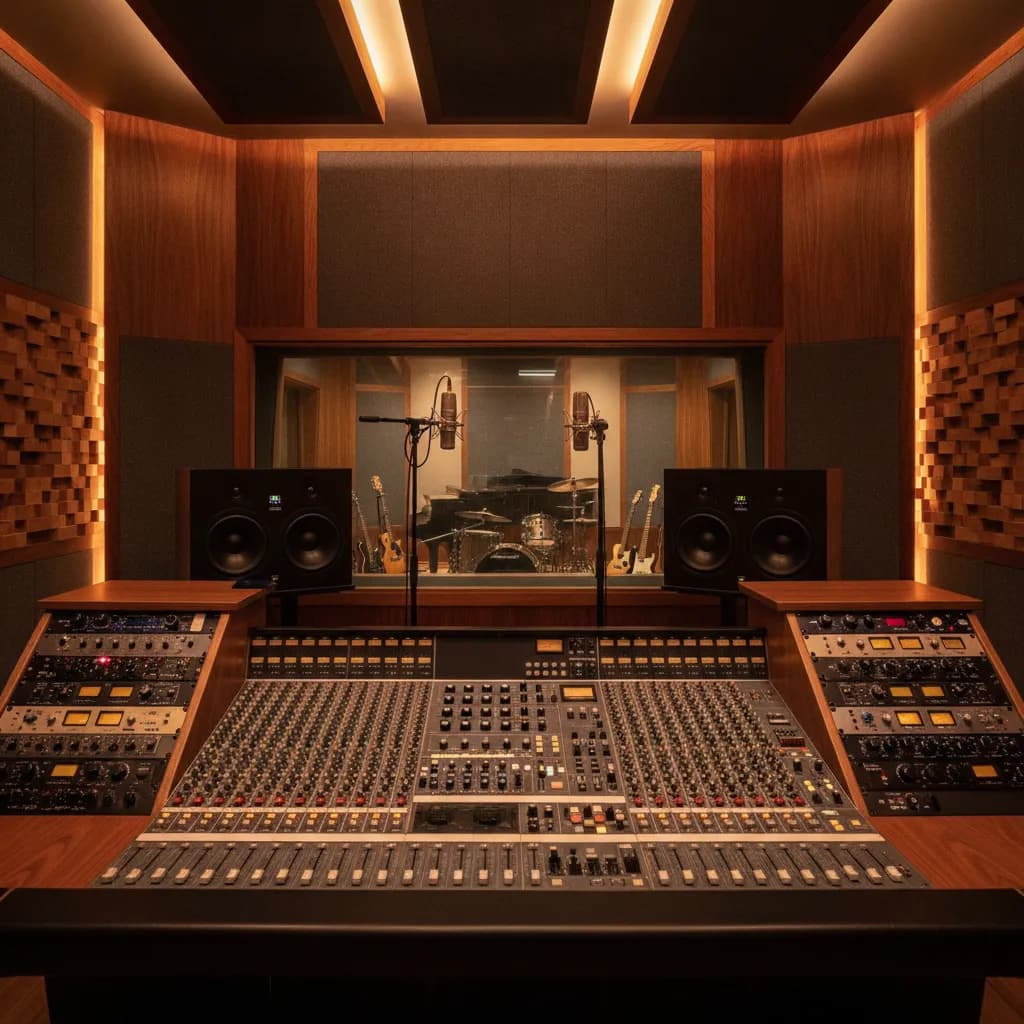
At Paradise Recording, the Rainforest Room is purpose-built for vocal sessions — a quiet, treated booth with a proper headphone mix so you can hear yourself clearly the moment you step in. The goal is to be ready when the engineer hits record, not warming up while the meter runs.
Step 6 — Arrive calm, not rushed
Arrange your schedule so you're not running late or in a hurry to finish — take some time before the session to unwind, meditate, or calm down, whatever you need to do to get your mind focused and clear.
If you're coming to Paradise Recording at 1505 4th St, Ste 219 in Santa Monica, parking is easy: the downtown public structures on 4th and 5th Street start with free hours, so a short session often costs nothing to park. The Metro E Line's Downtown Santa Monica terminus at 4th & Colorado is about a five-minute walk from the door, and Big Blue Bus lines stop within a couple of blocks. Build in a 15-minute buffer. Arriving stressed bleeds directly into your performance.
What this looks like in real money
Recording a song at an LA recording studio in 2026 can cost anywhere from $50 to over $300 per hour. Studio quality, engineer experience, preparation, and workflow efficiency all affect the final investment. At Paradise, sessions start at $160 for a 2-hour block, with an in-house engineer included in every session. Every booking is the whole studio: the Rainforest Room — ideal for vocals and podcasts — and the Rock Room (full band, baby grand, drum kit).
A well-prepped vocalist can realistically track 2–3 lead vocal passes plus doubles and ad-libs in a 2-hour session. An unprepared vocalist may not finish one clean lead in 4 hours. Prep is the cheapest upgrade you can make.
See our guide on how many hours it takes to record a song and how much it costs to record a song in Los Angeles for more context on realistic session budgets.
Frequently asked questions
Should I warm up my voice before a studio session?
Yes — but do it at home, not in the studio. You want to loosen up the muscles in your chest and around your vocal cords gradually — properly warming up before your recording session will reduce strain on the vocal cords and better prepare them for the work you're about to do. A 30–45 minute warm-up a couple of hours before, followed by a 10–15 minute refresh just before you arrive, is the standard approach.
What format should I bring my beat in?
Export your stems at the project's native sample rate — for instance, if you recorded at 48 kHz with 24-bit depth, export the stems as 48 kHz/24-bit PCM WAV files. Remove any master-bus limiter so the engineer has full headroom. Include a text file or note with the BPM and song key.
How many songs can I realistically record in a 4-hour session?
It depends entirely on how prepared you are. A fully prepped vocalist who knows the song cold and arrives warmed up can track 1–2 complete songs (leads, doubles, ad-libs) in 4 hours. An unprepared artist may spend most of that time on one song's lead vocal. See our guide on how many songs you can record in a day.
What should I avoid the day before recording?
Avoid straining your vocal cords in the days leading up to your studio time — stay well-hydrated, get sufficient sleep, and avoid irritants like smoke and excessive alcohol. Also avoid whispering (which strains the cords more than normal speech), screaming at a concert, and extremely cold or iced drinks, which can tighten the throat.
Do I need to memorize my lyrics?
Strongly recommended. You can technically read from a sheet in the booth, but the performance will show it. Once you transit from the "on-book" to the "off-book" phase, you can pay increased attention to emotion, articulation, riffs, runs, scoops, straight tones, attacks and releases, and much more.
Does Paradise Recording provide an engineer?
Yes — an in-house engineer is included in every session at no extra charge, and every session books the whole studio, Rainforest Room and Rock Room included. See our guide on whether recording studios provide an engineer for how that compares across the LA market.
Next steps
- Book a session — whole studio from $160/2 hr, engineer always included
- View the studio — the Rainforest Room and Rock Room, both included in every booking
- Mixing and mastering services — what happens after you track
- Membership options — if you record regularly, a membership may cut your per-session cost significantly
- What to bring to a recording studio session — the companion gear checklist to this guide
- How to prepare for your first recording session — broader first-timer guide covering mindset and logistics
Facts and prices on this page last verified 2026-08-15 by the Paradise Recording team.