
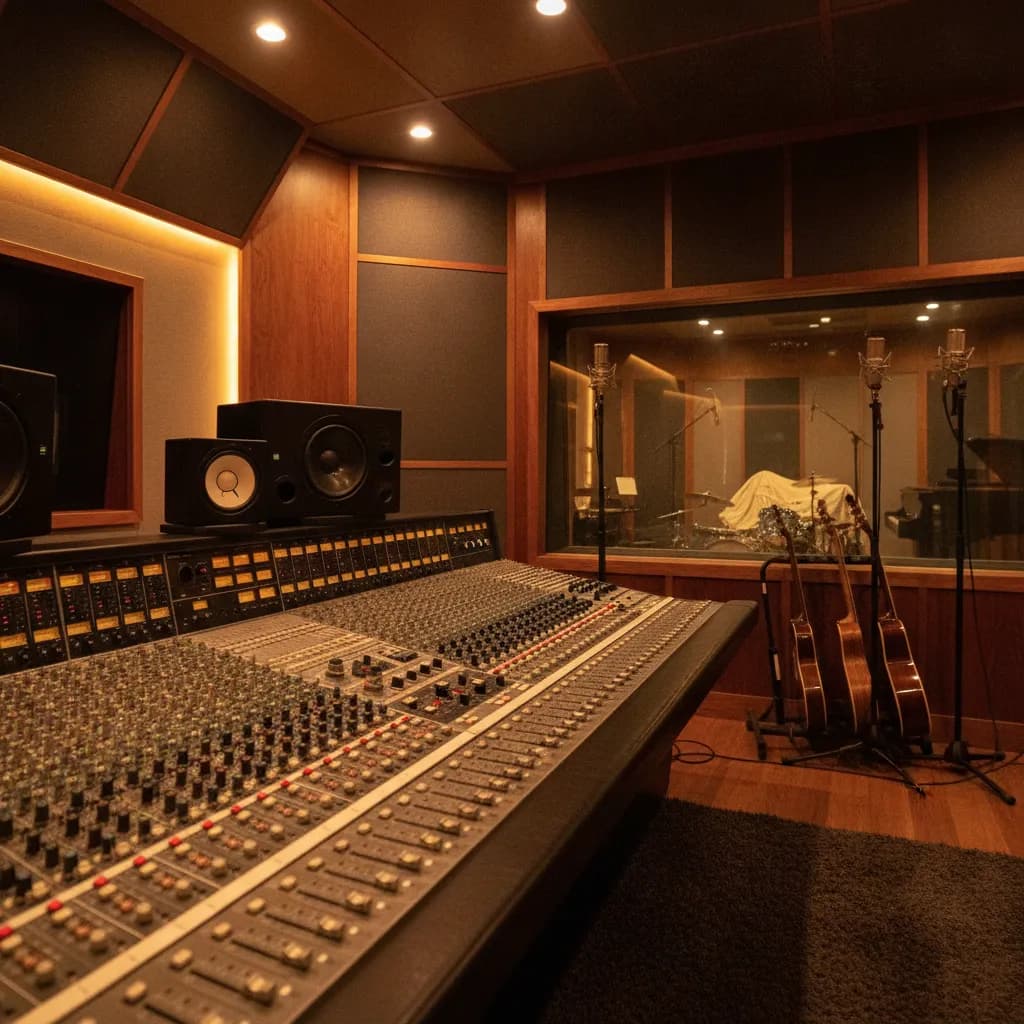
What a recording engineer actually does
A recording engineer is the person who runs the technical side of a studio session from start to finish — choosing and placing microphones, building and managing the signal chain, setting gain structure, creating headphone mixes for performers, logging and comping takes, and delivering organized session files when the day is done. The producer shapes the vision; the artist delivers the performance; the engineer makes sure the sound is captured correctly so everyone has something solid to work with later. These are three distinct jobs, and conflating them is the most common source of confusion for first-time studio clients.
The four roles, clearly separated
The music industry involves at least four specialized roles that new artists routinely mix up. Understanding who does what saves time, money, and frustration before you ever set foot in a studio.
The producer's main job is to organize the process and make sure the song gets from demo to a fully produced recording. They help with pre-production, choose the right studio, hire the recording engineer, organize session musicians, and keep the project on schedule and on budget.
The recording engineer is the person in charge of recording the instruments and vocals — they are not there to help write melodies, lyrics, or help with the production or arrangements. Their job is purely technical capture: the right sound, at the right level, on the right track.
The mixing engineer is responsible for taking the stems from an existing final production and processing them — blending all the parts to get them working together to make the song sound as good as possible. This work happens after tracking is complete, often in a separate session or at a separate facility. See our mixing and mastering services if you're at that stage.
The mastering engineer takes the final stereo mix and applies subtle processing so that it translates well across a wide range of playback systems. Mastering engineers often use highly specialized equipment and work in carefully tuned listening environments. Beyond improving individual songs, they also ensure consistency across an EP or album — especially when songs were recorded or mixed by different studios, engineers, or producers — making the project feel like a cohesive body of work.
What the engineer handles inside the session
Before the first take
Recording engineers are responsible for the technical side of capturing audio. This includes setting up and maintaining the equipment, adjusting levels and balances, microphone choice and placement, and ensuring that the audio is recorded at the highest quality possible.
In practice this means: pulling the right mic for the source (a large-diaphragm condenser for lead vocals, a dynamic for loud guitar cabs, ribbons for room ambience), routing the signal through preamps and any outboard compression, and then setting gain structure carefully before a single take rolls.
Gain staging — the invisible foundation
A recording engineer is responsible for recording during the tracking and overdub sessions of the recording process, and needs to have a comprehensive understanding of acoustics, DAW operation, gain staging, mic placement, and microphone types, and the studio gear used for recording.
Gain staging is the process of managing the relative levels in each step of an audio signal flow to prevent introduction of noise and distortion, feeding the inserts — such as equalizers and compressors — with the right amount of signal. Done well, it's invisible. Done poorly, it shows up as hiss, clipping, or a mix that fights the mixing engineer downstream.
Headphone mixes and artist communication
One of the most underrated parts of the job is building a comfortable headphone mix for the performer. A vocalist who can't hear themselves clearly will strain; a bassist who can't hear the kick drum will drift. The engineer adjusts monitor sends in real time throughout the session — a task that requires both technical skill and fast, clear communication with people who may not speak in audio terms.
Take management and comping
Once everything has been recorded, the recording engineer will either send the session files to the producer, label, artist, or any party responsible for the project. The recording engineer is responsible for ensuring the session is properly stored and can be easily accessed for any overdubs or retracking.
During tracking, the engineer labels every take clearly in the DAW, flags the best moments, and builds a composite ("comp") of the strongest performances across multiple passes. A well-organized session handed off to a mixing engineer is a professional courtesy that saves hours and protects your budget.
File delivery
At the end of a session the engineer exports consolidated audio files — typically 24-bit WAV at the session's sample rate — with all tracks named, color-coded, and starting at bar one. If you're mixing elsewhere, those files need to arrive clean and ready. If you're mixing in-house, the session stays organized for the next call.
Role vs. responsibility vs. when you need them
| Role | Core responsibility | When you need them |
|---|---|---|
| Recording engineer | Mic choice, signal chain, gain staging, headphone mixes, take management, comping, file delivery | Every tracking or overdub session |
| Music producer | Creative vision, pre-production, artist direction, project management | When you need help shaping the song, not just capturing it |
| Mixing engineer | Balancing and processing all tracks into a finished stereo mix | After all tracking is complete |
| Mastering engineer | Final loudness, translation across playback systems, album sequencing | Before release to streaming, vinyl, or broadcast |
Typical LA market rates reflect this specialization: studio time in Los Angeles typically ranges from $35–$150 per hour, depending on the studio, equipment, and whether an engineer is included. At major legacy rooms, you're looking at $75–$200+/hr, often with minimum booking requirements. At Paradise, an in-house engineer is included in every session — sessions start at $160 for two hours of the whole studio, Rainforest Room and Rock Room included, with no separate engineering fee.
Does the engineer make creative decisions?
The recording engineer oversees many technical and aesthetic aspects of a recording session and is responsible for the overall sound of all recorded tracks, ensuring that the mixing engineer has good material to work with and that the final product satisfies the artists and producers.
During the recording process, the scope of a recording engineer's creative involvement may vary widely, with some also acting as producer or mixing engineer and others strictly operating the sound board. Traditionally, the recording process involved a different specialist for each of these roles, each with their own workflow, tools, and expertise. In the modern recording landscape, however, it's often more cost-effective and practical for fewer people to take on multiple roles.
For independent artists on a budget, a skilled engineer who can also offer light production input is a genuine asset. Just clarify expectations before the session starts — what's included in the hourly rate and what's an add-on.
When a home setup is honestly fine
If you're recording a podcast, a simple voice memo demo, or scratch tracks for reference, a home setup with a decent USB mic and a quiet room may be all you need. The recording engineer earns their keep when the source matters: lead vocals, live drums, acoustic instruments, full bands, or anything that needs a professional signal chain to survive mixing and mastering. See our home studio vs professional studio comparison for an honest breakdown.
Frequently asked questions
Is the recording engineer the same as the producer?
No. The artist brings the performance, the producer helps shape the vision, and the recording engineer makes sure the sound is recorded properly so everyone has something solid to work with later. The roles can overlap on smaller projects, but they are distinct jobs with different skill sets.
Does every studio include an engineer?
Not always — some studios rent the room only and charge separately for engineering, or let you bring your own. Rates usually include a staff engineer, though some studios charge separately for engineering. At Paradise Recording, an in-house engineer is included in every session at no extra charge. See our guide on whether recording studios provide an engineer for a wider market view.
What is comping and why does it matter?
Comping (short for "compiling") is the process of selecting the best moments from multiple takes and stitching them together into a single, polished performance. A good engineer keeps every take clearly labeled in the DAW so the best parts are easy to find — a messy session file can cost you an hour of paid studio time just in cleanup.
What's the difference between a mixing engineer and a mastering engineer?
When recording tracks has been completed, the mixing engineer takes the tracks and combines them into a cohesive mix — adjusting levels, adding effects, panning in the stereo field, and creating a balance between the various elements. The mastering engineer is a distinct phase after mixing — it's not mixing part 2; it's about taking the mix and getting it ready for release. See what is the difference between mixing and mastering for a deeper look.
How should I prepare so I don't waste the engineer's time?
Come with parts fully rehearsed, tempos decided, and any reference tracks ready to share. The engineer can't fix an unlearned part, and every minute spent on arrangement decisions in the booth is a minute not spent capturing great audio. Our first recording session checklist walks through everything to do before you arrive.
Can the recording engineer also mix my project?
Often yes — many engineers offer both services, and working with the same person for tracking and mixing has real advantages since they already know the session inside out. At Paradise, ask about our mixing and mastering services when you book your session.
Next steps
- Book a session — engineer included, no extra fee
- Explore the Rainforest Room — vocals, podcasts, voice-over
- Explore the Rock Room — full bands, live drums, baby grand piano
- Mixing and mastering services — for when tracking is done
- Membership options — for artists recording regularly
- How to prepare for your first recording session
- What happens in a recording session?
- Best recording studios in Santa Monica (2026)
Facts and prices on this page last verified 2026-08-14 by the Paradise Recording team.