
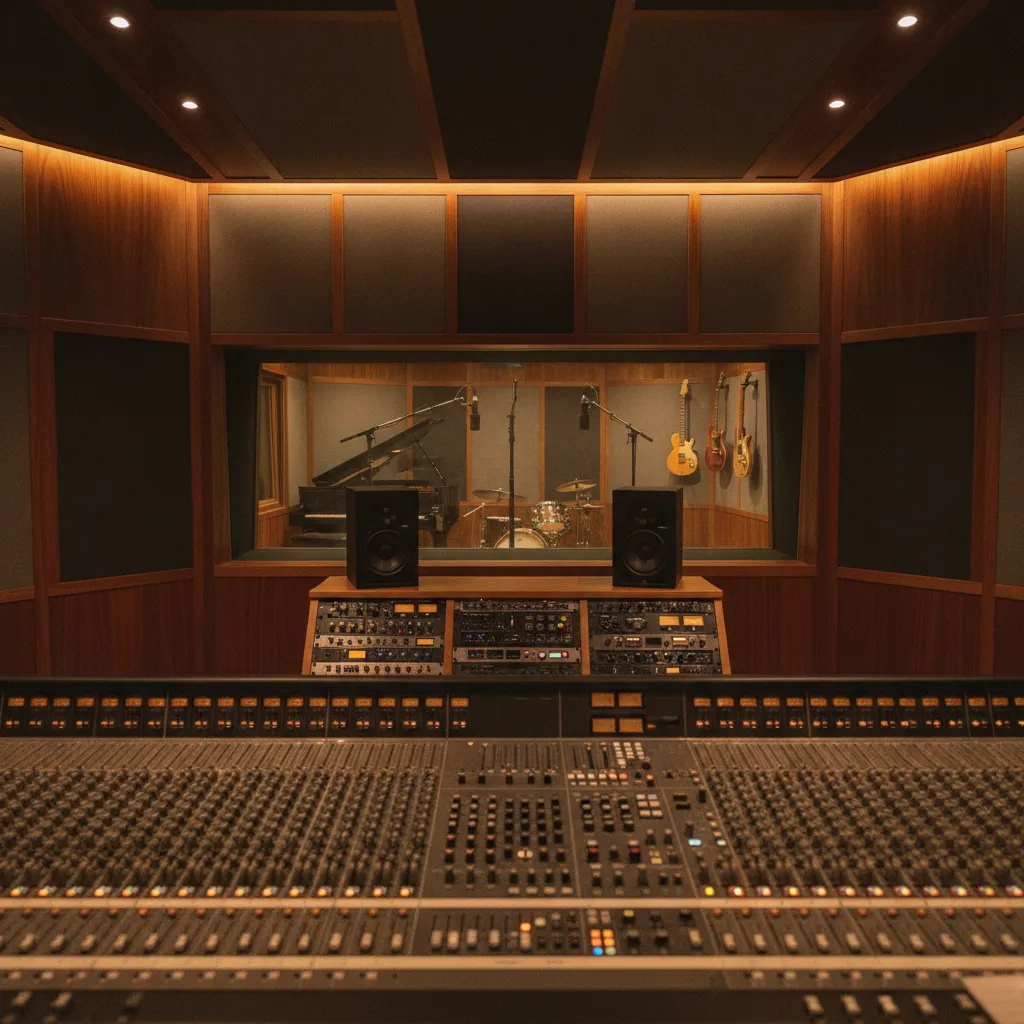
A typical 4-hour vocal session has six distinct phases: setup and headphone mix (about 20 minutes), warm-up and level-setting (about 15 minutes), main takes (roughly 75 minutes), doubles and harmonies (roughly 45 minutes), comping — picking the best lines from each take (about 30 minutes), and a rough mix plus file handoff (about 15 minutes). That leaves a comfortable buffer for breaks and the unexpected. If you arrive prepared and the engineer is experienced, you can realistically finish one polished lead vocal and one harmony part in that window.
The six phases, explained
Phase 1 — Setup and headphone mix (~20 min)
You walk in, meet your engineer, and the clock starts. The engineer loads your reference track or backing instrumental, positions the microphone, and routes your signal through the console. The most important thing they build in these first minutes is your headphone mix — the blend of your voice and the track that you'll hear while recording. The engineer will make sure you feel comfortable and settled; a relaxed singer performs better, so this is productive time, not wasted time.
Tell the engineer exactly what you want in your ears: more reverb, less click, louder track. Getting this right before you sing a note saves time and energy later. If you're bringing stems or a DAW session, bring the original session file plus consolidated stems, and if you're on Logic while the studio runs Pro Tools, you'll need stem exports — standard is 48 kHz / 24-bit for most professional sessions, so confirm in advance.
Phase 2 — Warm-up and level-setting (~15 min)
Before the engineer hits record on a keeper take, they need to calibrate your gain structure — how loud your voice hits the preamp. You'll sing a verse or chorus at performance volume while they dial in the input level, choose a microphone position, and add a pop filter if needed. Use this time to actually warm up. The foundation of great vocal recording is laid before you step into the booth — the more comfortable you are with the material, the more you can focus on emotional delivery.
Stay away from dairy and cigarettes before and during the session, and keep a room-temperature water bottle at hand. This phase is also when you and the engineer agree on a simple plan: how many full passes you'll do, whether you'll work song-by-song or section-by-section, and what the priority order is.
Phase 3 — Main takes (~75 min)
This is the heart of the session. Recording sessions are about capturing performances — vocals, instruments, full bands, voiceover — and the room, microphones, and performer prep matter most. You'll typically run three to five complete passes of the lead vocal, plus additional section-by-section passes on any lines that need more options. The most important part of the comping process is the takes themselves — you want enough takes to get great raw material for each phrase, but not so many that it takes ages to wade through them later.
Take more breaks than you think necessary — a five-minute break every half hour helps keep the voice and focus fresh. If you hit a wall on a section, move on and come back. A good engineer will flag strong takes in real time, which speeds up comping later.
Phase 4 — Doubles and harmonies (~45 min)
Once the lead is captured, most vocal sessions add at least one double (a second pass of the lead melody, sung as close to the original as possible) and one or two harmony parts. Most people overlook the importance of backing vocals — you don't need to spend as long on them, but don't underestimate their importance, and set aside a separate session or at least a long break if you're using the same vocalist. Doubling and harmonies are where a solo vocal becomes a record. Budget your time here honestly — harmonies on a complex chorus can eat 20–30 minutes alone.
Phase 5 — Comping (~30 min)
Vocal comping is the process of building a final performance from multiple takes, and digital multitracking has made it standard practice on nearly every record. The engineer listens back through every take, section by section, and assembles the strongest lines into a single composite vocal. Vocal comping is the art of combining the best moments into one final performance — the strongest lines, words, syllables, tone, pitch, and emotion.
You should be in the room for this. Your opinion on which take felt right matters as much as the engineer's technical read. Over-comping can strip the life out of a vocal — if the artist and producer left happy, don't second-guess it by endlessly tweaking.
Phase 6 — Rough mix and file handoff (~15 min)
The session ends with a rough mix: the engineer balances your vocal against the track, adds a touch of reverb and compression, and bounces a reference file so you can hear how it sits. This is not your final mix — it's a gut-check. Playing back a solid comp, even if rough, reassures everyone in the room and keeps the session moving with confidence.
File delivery is usually a WAV export of the comped vocal (often 48 kHz / 24-bit) plus the session project, sent via a shared folder or download link. Ask your engineer how they prefer to hand off files before you leave — it takes two minutes to confirm and saves days of back-and-forth.
What this looks like in a real room
At Paradise Recording (1505 4th St, Ste 219, Santa Monica), every booking takes the whole studio — including the Rainforest Room, our dedicated vocal and podcast booth — and an in-house engineer is included in every session. You don't need to find or pay for one separately. The studio is open 9 am–2 am daily, so you can book a 4-hour block at almost any hour that suits your voice and schedule.
If you're a first-timer, check out our guide on how to prepare for your first recording session before you arrive. And if you're bringing a full band rather than tracking vocals alone, the Rock Room — with a full drum kit and baby grand piano — follows the same general session structure, just with a longer setup phase for mic placement on multiple instruments.
Pricing at a glance
The table below shows Paradise Recording's posted rates (whole studio, engineer included) alongside typical LA market ranges for context. Studio time in Los Angeles typically ranges from $35–$150 per hour, depending on the studio, equipment, and whether an engineer is included. Expect to spend from around $50 to $500 per hour when you rent a recording studio in Los Angeles, depending on the location, equipment, and amenities.
| Session length | Paradise (whole studio, engineer included) | Typical LA range (engineer included) |
|---|---|---|
| 2 hours | $160 | $70–$300 |
| 4 hours | $300 | $140–$600 |
| 6 hours | $450 | $210–$900 |
| 8 hours | $600 | $280–$1,200 |
| 12 hours | $850 | $420–$1,800 |
LA ranges are approximate market estimates, not specific competitor quotes. Paradise rates include an in-house engineer.
The 4-hour block is the most popular starting point for a single vocal session. It gives you enough time to complete all six phases without rushing, and the block rate works out to $75/hr — well within the LA mid-market range. See our full mixing and mastering services if you want to continue the project after tracking.
A note on home studios
If you're demoing a rough idea, a home setup can be perfectly adequate. But the recording studio should be a space where your vocal performance is captured and refined into the song you dreamed of — though it can also feel scary, even for experienced singers. The acoustic treatment, microphone quality, and having a second set of ears in the room make a measurable difference on anything you plan to release. Our guide on home studio vs professional recording studio walks through the honest tradeoffs.
Industry norms worth knowing
Deposits. A 50% deposit is typically required to book your first session, applied to your session or refunded if you cancel more than 48 hours before your session time. This is the most common structure across LA studios — protect yourself by reading the cancellation policy before you pay.
Tardiness. A session begins at the time the client booked it for, whether they are present or not. Arrive 10 minutes early, not on time.
File ownership. The client listed on the invoice as the payee owns the masters once the entire session is paid in full — standard practice, but worth confirming at booking.
For more on how many songs you can realistically finish per session, see how many hours does it take to record a song and how many songs can you record in a day.
Frequently asked questions
Do I need to bring anything to the session?
Bring your backing track or stems exported from your DAW (48 kHz / 24-bit WAV is the safe standard), printed or screen-ready lyrics, and at least two reference tracks that represent the sound you're going for. Water is essential; the studio will have it, but bring your own if you're particular about temperature. See our full what to bring to a recording studio session checklist.
How many songs can I finish in a 4-hour vocal session?
Realistically, one song with lead vocal, one double, and one harmony stack — done well. Trying to rush two songs into four hours usually means both come out half-finished. If you're tracking multiple songs, book a 6- or 8-hour block and plan one song per two-hour window.
What is comping and do I have to do it?
Vocal comping — recording several takes of your lead vocal and editing together a master performance from all the best bits — is common to pretty much every hit record nowadays. You don't have to do it, but skipping it means betting everything on one perfect take. Most engineers recommend at least three full passes so you have real options.
What happens if I run out of time mid-session?
Your session ends at the booked time regardless of where you are in the process. If the studio has availability, you can extend on the spot at the hourly rate. To avoid this, prioritize your takes in order of importance at the start: lead vocal first, harmonies second, doubles third.
Will the engineer tell me if my performance isn't good enough?
A good engineer will flag technical problems — a pop, a pitch issue, a timing drop — and suggest another take. They're less likely to give you artistic direction unless you ask. If you want feedback on your performance, say so at the start. The more clearly you communicate your goals, the more useful your engineer can be.
Do I get my files the same day?
Yes, in most cases. The standard handoff is a bounced WAV of the comped vocal and a session backup, delivered via shared folder link before you leave or within a few hours. Confirm the delivery format with your engineer during setup — not at the end of the session when everyone is tired.
Next steps
- Book a session — 2-hour to 12-hour blocks, 9 am–2 am daily
- View the Rainforest Room — vocal and podcast booth specs
- View the Rock Room — full band and instrument tracking
- Mixing and mastering services — continue the project after tracking
- Membership options — best value for artists recording regularly
- How to prepare for your first recording session
- First time recording studio Los Angeles
Facts and prices on this page last verified 2026-08-13 by the Paradise Recording team.