
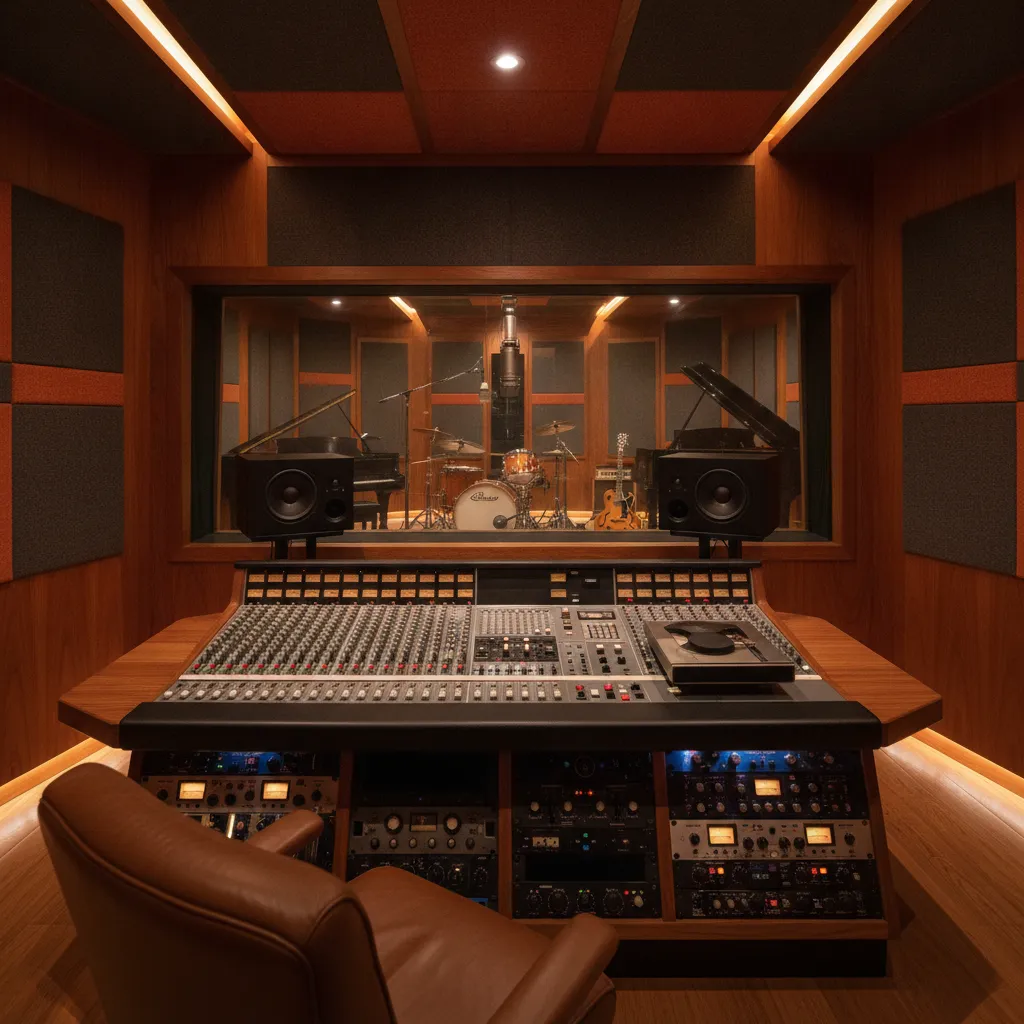
For rap, the three things that move the needle are a vocal chain that handles close, loud delivery without clipping, an engineer who punches in and comps ad-libs fast, and a room with at least a 2-hour minimum so you can actually get into a flow. Room size matters far less than those three — a well-treated vocal booth and a competent engineer will outperform a cavernous tracking room with a slow workflow every time. In Los Angeles, expect to pay $50–$150/hr for a solid mid-range room with engineer included; premium suites run higher.
The vocal chain: what rap actually needs
Hip-hop vocals are all about flow, and you can emphasize the percussive, rhythmic element using a fast, punchy compressor. The Tube-Tech CL1B, for instance, is a go-to vocal compressor on countless hit rap records. That's the principle to ask about — not the brand names specifically, but whether the studio's chain is built for close, dynamic delivery.
Compression is important to help accentuate the percussive elements of the vocal performance. When an artist is rapping fast, compression helps punch out each individual syllable.
For punchy, aggressive delivery styles, look for a mic that has a fast transient response and tight upper-mid control — that's what gives you a crisp, "in-your-face" sound without harshness.
Ask the studio: What's your signal chain for rap vocals? Can I hear a recent rap reference cut from this room? A confident answer and a real example tell you more than a gear list on a website. Read our deeper dive at What is a vocal chain? and What microphone is best for recording vocals?
The engineer: punch-in speed and comping
A rap vocal is built in pieces — main verse, doubles, ad-libs, harmonics, punch-ins on flubbed bars. The engineer's job is to keep that loop running, drop you in and out without breaking your concentration, and build a comp in real time so you can hear a rough picture before the session ends.
Ask: How do you handle ad-lib stacking? Do you build a rough comp during the session or after? The right answer is during. An engineer who waits until after you leave to assemble the take costs you a revision session.
No amount of mixing can fix a bad recording — if your raw take sounds like it was captured through a tin can, you're fighting uphill the entire session. A fast, experienced engineer catches problems (room noise, mic distance drift, a clipped peak) in real time, not after you've gone home.
See also: What does a recording engineer do? and What is comping vocals?
Beat file prep: your job before you walk in
This is where most rap sessions lose 20–30 minutes of paid time. Show up with:
- A stereo WAV of the beat — exported clean, no streaming artifacts, labeled with BPM and key.
- A separate instrumental stem (no lead melody, or at least a version without it) so the engineer can set levels without the vocal fighting the top end.
- The BPM locked. Boom-bap beats typically run 80–100 BPM; drill sits around 140 BPM. If you don't know the exact BPM, find out before the session — the engineer needs it to set up the session grid for punch-ins.
- Your lyrics memorized or printed, not on your phone screen that dims every 30 seconds.
Deliver a full-mix WAV (stereo), plus an instrumental — and stems (drums, bass, melody, FX) if the engineer needs flexibility.
Full prep checklist: What to bring to a recording studio session and How to prepare for your first recording session.
Session length: how much time do you actually need?
A single rap song — main vocal, doubles, ad-libs, rough comp — realistically takes 2–4 hours if you arrive prepared. Budget 4 hours if it's your first time in a studio, you have more than one song, or you tend to do many takes to find the performance. Studios typically require a minimum booking of two to four hours.
Rates usually include a staff engineer, though some studios charge separately for engineering. The advantage of hourly billing is flexibility: you only pay for what you use, and you can book short sessions for specific tasks like vocal overdubs.
More on this: How many hours does it take to record a song in a studio?
LA rap studio pricing: honest market ranges vs. Paradise
Recording a song at an LA studio in 2026 can cost anywhere from $50 to over $300 per hour. The wide range reflects everything from bare-bones hourly rooms to world-class facilities with vintage consoles. Studio time in Los Angeles typically ranges from $35–$150 per hour, depending on the studio, equipment, and whether an engineer is included.
| Block | Typical LA range (engineer included) | Paradise (whole studio, engineer included) |
|---|---|---|
| 2-hour block | $70–$300 | $160 |
| 4-hour block | $140–$600 | $300 |
| 6-hour block | $210–$900 | $450 |
| 8-hour block | $280–$1,200 | $600 |
| 12-hour block | $420–$1,800 | $850 |
Typical LA ranges are market estimates based on 2026 booking data and published studio listings. Paradise's are the posted prices for the whole studio with the engineer included (every rate).
Every Paradise booking includes both spaces: the Rainforest Room, built for vocals, is where most rap sessions live, and the Rock Room is there if you're tracking live instrumentation alongside your vocals or need the baby grand or the kit.
For a broader look at what drives LA studio costs: How much does it cost to record a song in Los Angeles?
Deposit and cancellation: what's normal
A 50% deposit is the industry norm to book and schedule studio time, with the remaining balance due in full the day of your session. The deposit is typically applied to your session or refunded if you cancel more than 48 hours before your session time. Cancel inside that window and most studios keep the deposit. Read the policy before you book — it varies.
When a home setup is the honest answer
If you have a treated closet, a decent condenser, and a clean interface, recording your scratch vocals or reference takes at home first is genuinely smart — it saves studio time for the final performance. Artists who arrive with two songs prepped can walk out with both tracked and rough-mixed in a single session. Those who show up undecided burn hours and leave with nothing usable. The room is only half the equation — the other half is showing up ready.
That said, home setups almost always lose on the signal chain and room treatment. Your microphone doesn't work in isolation — even the best mic will fall short if paired with the wrong interface, preamp, or room. A professional room solves all three at once.
Honest comparison: Home studio vs. professional recording studio
Getting to Paradise Recording
Paradise Recording is at 1505 4th St, Ste 219, Santa Monica CA 90401, open 9am–2am daily — every session includes an in-house engineer at no extra charge. The Metro E Line's Downtown Santa Monica terminus (4th & Colorado) is about a five-minute walk. Big Blue Bus lines stop within a couple of blocks. If you're driving, the public parking structures on 4th and 5th Street start with free hours, so a short session often costs nothing to park. From Venice it's roughly 10 minutes via Lincoln; from Culver City about 15 minutes via Washington; from Hollywood around 25–35 minutes on the 10.
Book a session | Mixing & mastering | Membership
Frequently asked questions
Does room size matter for rap vocals?
Not much. Rap vocals are recorded close to the mic in a treated booth, not in a large live room. What matters is acoustic treatment, a strong vocal chain, and an engineer who can punch in fast. A well-tuned 100 sq ft booth beats a poorly treated 500 sq ft room every time.
Should I bring my own beats on a USB or send them in advance?
Either works, but sending in advance is better. It lets the engineer load your session, set tempo, and configure the DAW before your clock starts. A sterile WAV at the correct BPM and key is all you need — no project files required unless you want stems imported.
How many songs can I realistically record in a 4-hour session?
One polished song with full ad-libs and a rough comp is a realistic target for most artists. Two songs is achievable if you're very well-rehearsed and the engineer keeps the pace. Trying to do three or more in four hours usually means everything gets rushed and nothing is finished. See How many songs can you record in a day?
What file do I get at the end of a rap session?
You should leave with a session backup (or stems export) and a rough mix WAV for reference. Confirm this before the session starts. If you plan to mix elsewhere, ask for 24-bit WAV stems — main vocal, doubles, ad-libs, and the beat as a reference. See What file format should I send my mixing engineer?
Do I need to book mixing and mastering separately?
Yes, unless the studio bundles it. Tracking and mixing are separate workflows. Most artists track in one or two sessions, then schedule mixing once the vocals are approved. Paradise offers mixing and mastering as a standalone service. More detail: How long does mixing and mastering take?
Is it worth booking a late-night session to save money?
Some LA studios offer reduced overnight rates, and the quieter environment can genuinely help focus. Paradise is open until 2am daily at standard rates — no overnight surcharge, no skeleton crew. If you do your best work late, book a 10pm or midnight slot; the room and engineer are the same.
Next steps
- Book a session
- Explore our studios
- The studio — vocals & rap
- Mixing & mastering services
- Membership options
- Best recording studio for rap vocals in Los Angeles
- Best recording studios in Santa Monica (2026)
Facts and prices on this page last verified 2026-08-24 by the Paradise Recording team.