
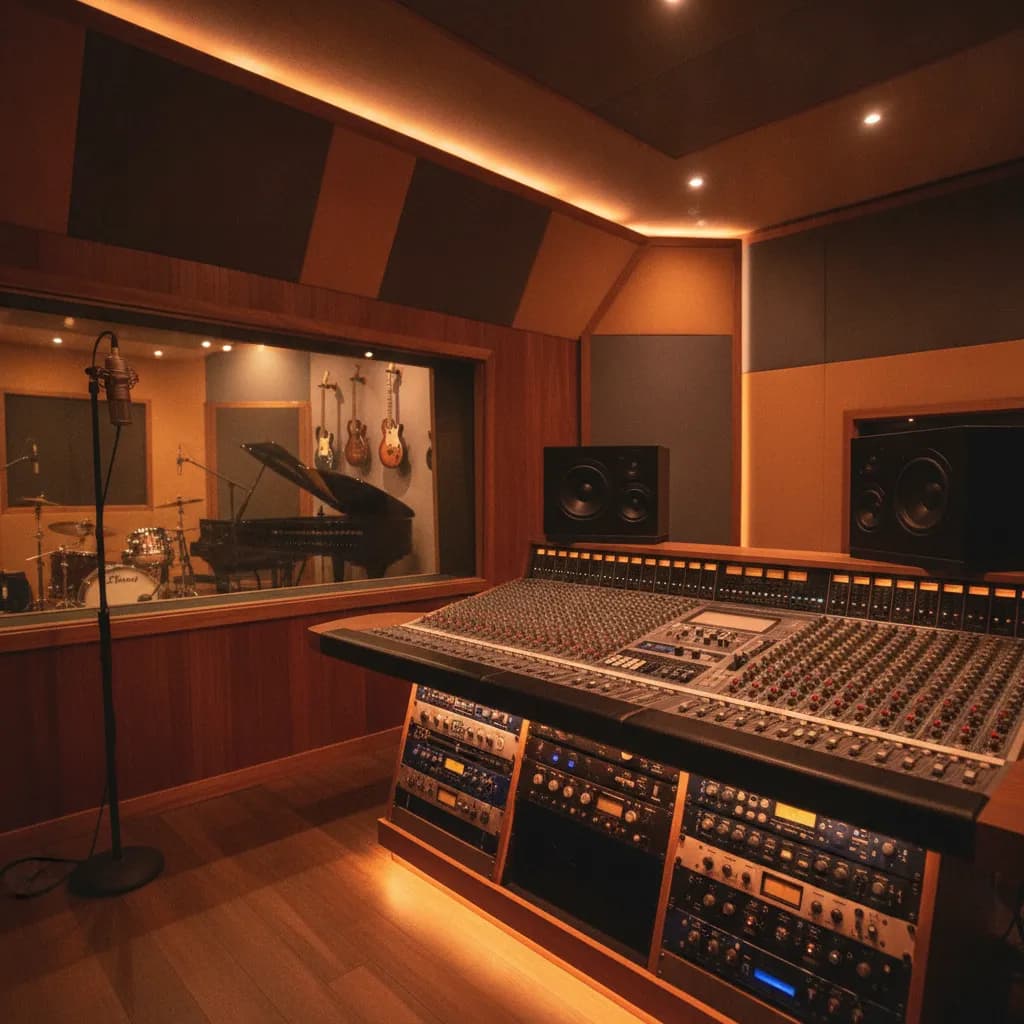
For most studio vocal sessions, a large-diaphragm condenser microphone is the right starting point — it captures detail, air, and nuance that dynamics and ribbons often can't match in a treated room. But "most" is doing real work in that sentence: when recording vocals, you could use all three mic types — it entirely depends on the vocalist and the song, because different types of microphones are popular for recording different genres and vocal tones. The honest answer is that the mic you should use is whichever one sounds best on your voice in this room on this song — and the only way to know is to test two or three at the start of the session.
The three types, plainly explained
Large-diaphragm condenser
The default choice in professional studios worldwide. Condenser microphones are popular for vocal recording due to their high sensitivity and wide frequency response, allowing them to capture the nuances and details of your voice, as well as the ambience and tone of your recording space. That sensitivity is a double-edged sword: condensers win on detail, sensitivity, and studio-grade accuracy — but if you perform live or record loud instruments, start with a quality dynamic; if you're tracking vocals or acoustic instruments in a controlled space, a condenser will serve you better.
One well-regarded example is the Manley Reference Cardioid, a large-diaphragm tube condenser. Its all-tube circuitry provides low-noise operation with 150 dB maximum SPL capability, accommodating sources from intimate vocals to high-level percussion and brass instruments, and a switchable −10 dB pad enables tracking of elevated sound pressure levels without distortion. It more closely recalls how many vintage European tube mics such as the U47 sounded when they were new, and its rich tonal balance and liquid character is consistently admired for instruments such as guitars, drum overheads, saxophone, and especially vocals. That said, it's one strong option among many — not a universal answer. A brighter, thinner voice may not need more high-end presence; a warmer, darker voice might be better served by a dynamic.
Dynamic microphone
Dynamic mics are better for more aggressive singers or genres like rock and metal. They handle high SPL without breaking a sweat, reject room noise more aggressively than condensers, and are essentially indestructible. A warm singer might want to use a dynamic mic to accent their natural timbre. If you're recording in an untreated space — a bedroom, a rehearsal room, anywhere without proper acoustic panels — a dynamic will often give you a cleaner, drier signal than a condenser that picks up every HVAC rattle and parallel wall reflection.
Ribbon microphone
Ribbon microphones are a type of dynamic microphone that use a thin metal ribbon instead of a coil to generate electrical signals, and with a vintage and distinctive sound quality, they can add warmth, richness, and depth to your voice. Often used for jazz, blues, or classical music, as well as for voice-overs or narration, ribbons have a naturally dark, smooth character that flatters some voices instantly — and sounds dull on others. Ribbon mics are typically the most fragile mic type; many vintage models can be damaged by phantom power (though modern designs are better protected), and they also tend to have very low output, meaning you'll need a high-quality, low-noise preamp to get the best results.
Mic type at a glance
| Mic type | Best suited for | Typical studio use | Watch out for |
|---|---|---|---|
| Large-diaphragm condenser | Pop, R&B, hip-hop, singer-songwriter, voiceover, podcast in treated room | Default vocal chain in most professional studios | Picks up room noise; needs phantom power; can be harsh on bright voices |
| Dynamic (moving-coil) | Rock, metal, loud singers, untreated rooms | Live-to-tape, high-energy performances, rough tracking | Less air and detail than a condenser; not ideal for intimate, breathy vocals |
| Ribbon | Jazz, blues, folk, classical, vintage-flavored pop | Warm, silky vocal tone; narration; adding "vibe" | Fragile; low output; needs clean, high-gain preamp; wrong choice for loud sources |
Why the expensive mic is not automatically right for your voice
Price buys build quality, lower noise floor, and headroom. It does not buy a match to your particular voice. Mic preference is personal — what sounds "clear" or "detailed" to one person might sound harsh or fatiguing to someone else. A $3,000 tube condenser can make a sibilant voice sound like a dentist's drill. A $300 dynamic can make a warm baritone sound like a million dollars. The gear forums are full of engineers who swapped a flagship condenser for a workhorse dynamic mid-session and never looked back.
The other variable is the room. Condenser microphones can be an option if you're in a quiet, acoustically treated space, but they tend to pick up too much room noise for most podcasters — and the same logic applies to singers in untreated spaces. If you're recording at home and your room isn't treated, a dynamic is frequently the more honest recommendation, regardless of budget.
Why testing 2-3 mics at the start of a session matters more than the model name
Every mic brings a different set of strengths to the vocal session — just because a mic is a large-diaphragm condenser doesn't dictate that it will sound great on the vocalist you're tracking on a given day. A good engineer will put up two or three options, have the singer run a verse, and play them back. The decision usually takes five minutes and can save hours of post-production trying to EQ a mic choice that was wrong from the start.
At Paradise Recording's Rainforest Room — purpose-built for vocals, podcasts, and voiceover — the in-house engineer does exactly this. Every session at Paradise includes an in-house engineer (no extra charge), so that mic comparison happens as a matter of course rather than an afterthought. If you want to know more about what to expect in the booth, see our guides on how to prepare vocals for a studio session and what happens in a recording session.
What this means for home recording
If you're building a home setup and can only buy one mic, a large-diaphragm condenser in a treated space is still the most versatile starting point for vocals. If your room is untreated, a dynamic is more forgiving. Ribbons are a third mic, not a first. And if you're genuinely unsure which direction your voice leans — book a professional session first. The mic comparison alone is worth the cost of a couple of hours in the studio, and you'll walk out knowing exactly what to buy. Our guide on home studio vs professional recording studio walks through the honest trade-offs.
Rates at Paradise Recording, Santa Monica
Vocal sessions include the engineer, the mic locker, and the whole studio, Rainforest Room included — no gear rental fees on top. Book a session and the engineer will handle the mic selection with you.
| Session length | Paradise (whole studio, engineer included) | Typical LA market range |
|---|---|---|
| 2 hours | $160 | $50–$200 |
| 4 hours | $300 | $100–$350 |
| 6 hours | $450 | $150–$500 |
| 8 hours | $600 | $200–$650 |
| 12 hours | $850 | $300–$900+ |
Typical LA market ranges are estimates based on publicly available booking platform data as of mid-2026. Expect to spend from around $50 to $500 per hour when you rent a recording studio in Los Angeles, depending on the location, equipment, and amenities. Paradise rates are posted rates inclusive of engineer (every rate).
Paradise is at 1505 4th St, Ste 219, Santa Monica — a couple of blocks from the Third Street Promenade, open 9 am–2 am daily. The Metro E Line's Downtown Santa Monica terminus at 4th & Colorado is about a five-minute walk. See our guide to vocal recording studios in Los Angeles for a broader look at your options across the Westside.
Frequently asked questions
Is a condenser microphone always better for vocals than a dynamic?
No. If you perform live or record loud instruments, start with a quality dynamic; if you're tracking vocals or acoustic instruments in a controlled space, a condenser will serve you better. The room, the genre, and the singer's voice all factor in — a dynamic is often the smarter call in an untreated space or for high-energy vocal styles.
Do I need phantom power for a condenser microphone?
Yes. Dynamic mics are passive devices and don't require any external power, while condenser mics need 48V phantom power, which is supplied by most audio interfaces and mixers. Professional studios supply phantom power as standard; it's only something to check when buying your own interface for home recording.
What makes a ribbon microphone different from a regular dynamic?
Ribbon microphones are a type of dynamic microphone that use a thin metal ribbon instead of a coil to generate electrical signals, and with a vintage and distinctive sound quality, they can add warmth, richness, and depth to your voice. They have a naturally darker, smoother character than most condensers, which flatters some voices and genres and sounds dull on others.
How long does a mic comparison take at the start of a session?
In practice, five to ten minutes. The engineer puts up two or three candidates, you sing a verse into each, and you listen back through the monitors. The difference is usually obvious immediately. It's time well spent — the right mic choice can dramatically reduce the amount of EQ and compression needed later. See our guide on how many takes to record a vocal for related session-planning tips.
Should I tell the studio which microphone I want before I arrive?
You can, and it helps the engineer prepare. But don't treat your preferred model as a fixed requirement. A good engineer may suggest a comparison with one or two alternatives, and the result often surprises people. If you're unsure what to communicate ahead of time, our first recording session checklist covers exactly what to say when you call.
Does Paradise Recording charge extra for mic selection or gear during a vocal session?
No. The session rate covers the whole studio, the in-house engineer, and access to the mic locker. There are no add-on gear fees for mics or preamps that are part of the standard setup. Book a session or check the studio page for what's included.
Next steps
- Book a session
- Rainforest Room — vocal & podcast studio
- Mixing and mastering services
- Membership options
- How to prepare vocals for a studio session
- Where to record vocals in Los Angeles — a singer's guide
- Home studio vs professional recording studio
Facts and prices on this page last verified 2026-08-20 by the Paradise Recording team.