
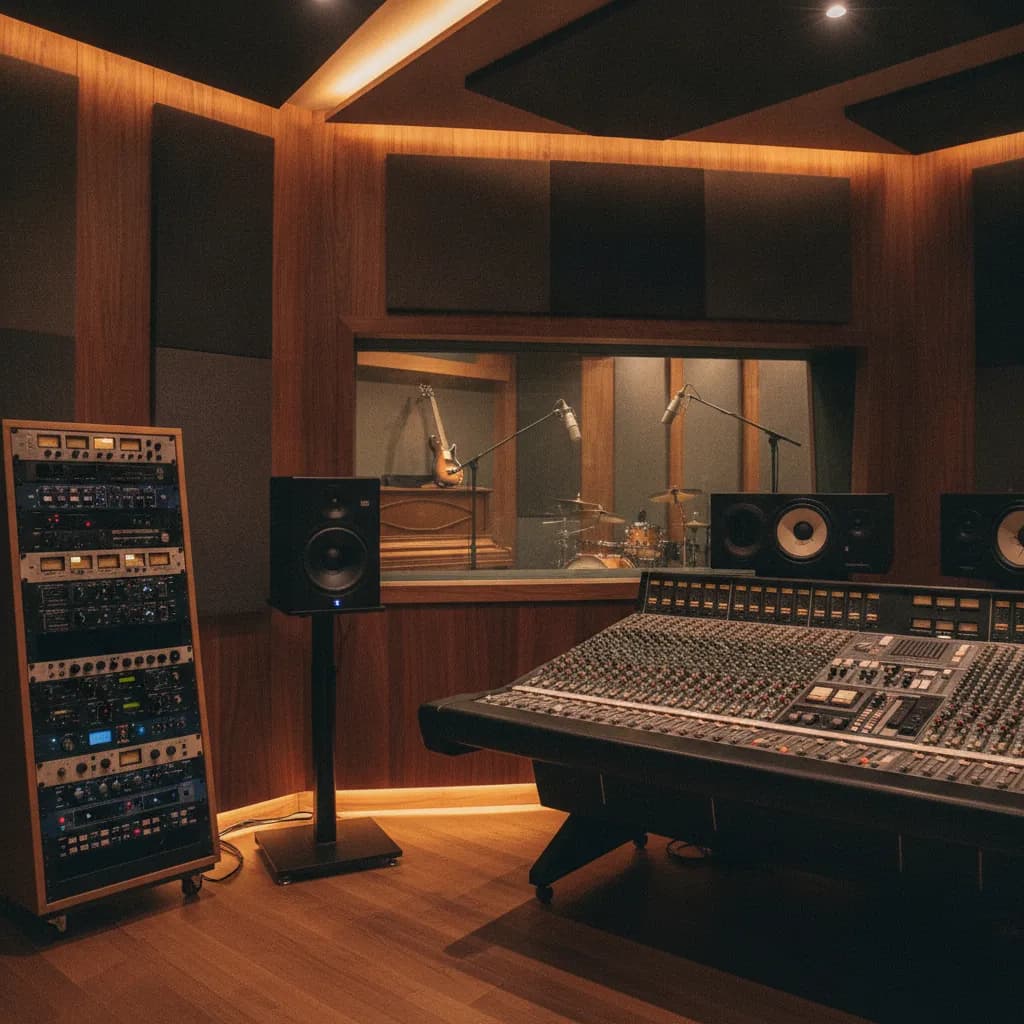
What makes an R&B vocal date different
An R&B vocal session costs $160–$600 at Paradise Recording (2–8 hours, whole studio, engineer included), and that range is honest — but the clock is not primarily about the lead vocal. Vocal layering is central to R&B: artists like Daniel Caesar, SZA, and The Weeknd build massive vocal arrangements — lead vocals wrapped in harmonies, doubled for thickness, stacked for choruses. The lead is the smallest part of the work; background vocal stacks and ad-libs eat the majority of your session time, and that's the number you need to budget around.
Unlike many genres where the beat dominates, R&B records are often driven by the vocal performance. That means every layer has to be right. Come in with your key locked, your instrumental WAV ready, and your harmony parts written — or you will spend money on decisions that should have been made at home.
Session time by stack depth
This table uses Paradise's posted whole-studio rates (engineer included). The "typical output" column reflects a well-prepared artist arriving with a finished instrumental and pre-written harmony parts. Outputs drop sharply if harmonies are unrehearsed.
| Block | Rate | Typical output | BGV stack depth |
|---|---|---|---|
| 2 hr | $160 | Lead comp only (1 song) | None — no time |
| 4 hr | $300 | Lead comp + 2 BGV parts (1 song) | Shallow (doubles + 1 harmony) |
| 6 hr | $450 | Lead comp + 4–5 BGV parts (1 song) | Mid (doubles, 2–3 harmonies, ad-libs) |
| 8 hr | $600 | Lead comp + full BGV stack (1–2 songs) | Full (doubles, 4–6 harmonies, ad-libs) |
| 12 hr | $850 | Full stack across 2–3 songs | Full + revision passes |
Honest caveat: If your harmony parts are not written and rehearsed before you arrive, a single song with a full BGV stack will consume an entire 4-hour block — and you may still leave with rough passes that need cleaning. Unrehearsed harmonies are the single biggest time-killer in R&B vocal work.
For broader context on LA studio pricing, studio time in Los Angeles typically ranges from $35–$150 per hour, depending on the studio, equipment, and whether an engineer is included. At Paradise, the engineer, the outboard chain, and the room acoustics are all included in the block rate — there is no add-on engineer fee.
1. Tracking order: lead first, stacks after
The right sequence matters as much as the right gear. Run it in this order:
Full passes for the lead. Before layering vocals, you need a reliable lead, since it will be the foundation for everything you add. Recording about 10 lead vocal passes and then carefully selecting the best parts creates the vocal comp that becomes your lead. The engineer will comp the lead into a single locked performance before you touch a single BGV.
Doubles next. Once the comp is approved, track two close doubles — same melody, same mic position. These sit just left and right of center in the mix and add body without pulling attention from the lead.
BGV harmony parts. When stacking vocals, start with a good lead vocal comp, then add unison vocals, harmonies, and full high and low octave unison vocals to fill out the frequency spectrum. Work part by part: low harmony, mid harmony, high harmony, then any counter-melody lines. Quad each part (four passes of the same line) if time allows — recording the lead at least four times on different playlists lets you comp one amazing take; for BGVs, quad every note, but everything has to be super tight when you stack.
Ad-libs last. Ad-libs are fastest to track and easiest to cut if time runs short. Save them for the final 20–30 minutes of any block.
2. The Rainforest Room vocal chain
The Rainforest Room runs a Manley Reference Cardioid tube mic into an API preamp, then through a Tube-Tech CL 1B optical compressor. That chain is specifically suited to R&B work.
Here is why the Tube-Tech matters: R&B dynamics are the performance. If your compressor is doing more than 5 dB of gain reduction on the loudest parts, you are probably crushing the life out of the vocal. The CL 1B's optical circuit responds slowly enough to let transients through before clamping down — which means a singer who moves from a breathy verse to a full belt gets natural dynamic shaping rather than a squashed, lifeless track. The engineer sets 2–4 dB of gentle gain reduction on the way in: enough to tame peaks on tape, not enough to kill the performance.
Heavy limiting on the way in is the wrong call for R&B. It locks in a dynamic mistake you cannot undo later. Gentle optical compression on the way in, plus surgical work at mix, is the right sequence.
3. Headphone mix: reverb in the cans is not optional
There are certainties in life: everyone is mortal and the vocalist will ask for reverb in the headphones. Vocalists, more than anyone, need to have a good headphone mix — because nobody is more exposed than a vocalist, for the sheer reason that the voice is a direct expression of emotion.
A completely dry cue mix is not neutral — it is disorienting. Reverb gives vocals a sense of place. If a vocal is too dry, it can sound unnatural and disconnected from other tracks. The engineer will dial in a warm plate or short room reverb in your headphones only. The signal recorded to disk stays dry — you can always add reverb at the mix stage, but you cannot remove it if it was baked in. The cue reverb is purely there to help you perform.
Tell the engineer what you need: more verb for ballad sections, pull it back for rhythmic verses. A good cue mix is a performance tool, not an afterthought.
4. Prep checklist before you arrive
The more you do before the session, the more music you leave with. Minimum requirements for an efficient R&B vocal date:
- Key locked. Confirm the key of every song with your producer and do not change it on the day.
- Instrumental WAV exported. Bring a stereo instrumental at the session's sample rate (typically 48 kHz / 24-bit). No stems needed for tracking — one clean mix-minus is fine.
- Harmony parts written and rehearsed. Sing every BGV part to yourself at home until it is muscle memory. This is the single most valuable preparation step.
- Lyrics printed or on your phone. Do not rely on memory for ad-lib sections.
- Voice warmed up. Arrive 30 minutes early if you can, and warm up in the lobby or outside — the session clock starts when you walk in.
For a deeper prep guide, see How to Prepare Vocals for a Studio Session and What to Bring to a Recording Studio Session.
5. What the in-house engineer handles live vs. what waits for the mix
Every recording session at Paradise includes a staff engineer at no extra charge. Here is the honest division of labor:
Live in the session:
- Setting and adjusting the vocal chain (mic, preamp, Tube-Tech)
- Building and maintaining your headphone cue mix
- Comping the lead vocal from multiple passes
- Basic timing alignment on BGV stacks
- Rough level balance so you can hear the arrangement taking shape
What waits for the mix:
- Full tuning passes (pitch correction) on lead and BGVs
- Detailed timing alignment with tools like VocAlign
- EQ, compression, and de-essing on every individual vocal layer
- Reverb, delay, and spatial treatment
- Automation across the full arrangement
Mixing at Paradise starts at $600/track and is booked separately at /mix-master. Doubles get slightly less presence EQ and a touch more compression than the lead, panned slightly left and right (30–50%) to create width without pulling attention from the center, with some high end rolled off above 10 kHz so the doubles feel supportive, not competing. That work happens at the mix stage, not during tracking — trying to finalize BGV processing during a vocal session wastes expensive tracking time.
Booking and deposits
A session is only locked in when a minimum 50% deposit is received in advance — this is the LA industry standard. Most studios require 48 hours notice to reschedule without forfeiting the deposit. Book your session at /book.
If you are coming from Venice (~10 min via Lincoln) or Culver City (~15 min via Washington), factor in parking: Santa Monica's downtown public structures on 4th and 5th Street start with free hours, so a short session often costs nothing to park. The Metro E Line's Downtown Santa Monica terminus at 4th & Colorado is about a five-minute walk from the door if you are coming from Hollywood or downtown.
For more on what a full R&B session costs end-to-end, see How Much Does It Cost to Record a Song in Los Angeles and How Many Hours Does It Take to Record a Song.
Frequently asked questions
How long does it take to record a full R&B song with BGVs?
A fully comped lead vocal plus four to six background vocal parts — each quadded — realistically takes 6–8 hours for a single song when the artist arrives well-prepared. Unrehearsed harmonies can double that time. See How Long Does It Take to Record a Song for a broader breakdown.
Do I need to bring my own beats or instrumentals?
Yes. Bring a stereo instrumental WAV (48 kHz / 24-bit recommended) with any reference vocals removed. The engineer will load it into the session and set levels before you step into the booth. Paradise does not supply beats for R&B vocal sessions — see Do Recording Studios Provide Beats if you need production help.
Is the Rainforest Room or the Rock Room better for R&B vocals?
The Rainforest Room is the right call for solo R&B vocal work: it is purpose-built for vocals and podcasts, with a tube mic chain and a quiet, intimate booth. The Rock Room has a baby grand and full drum kit and is designed for full-band tracking — more room than you need for a vocal-only date, though it comes with every booking anyway: you book the whole studio, not a single room.
What is a BGV stack, and how many layers do I actually need?
A BGV stack is multiple passes of the same harmony part layered together. A vocal stack refers to multiple recordings of the same harmony part layered together — this technique creates the wide, lush background vocals heard in many classic R&B records. Four passes per harmony part (a "quad") is a common starting point; some producers use more. You need at least two distinct harmony parts (a third above and a third below the lead) for a full sound.
Can I record BGVs with a group of singers at once?
Yes, with caveats. Group tracking around a single mic can be faster for certain R&B arrangements, but individual passes give the engineer more control over timing and tuning at the mix stage. If you arrive with a vocal group, discuss the approach with the engineer before the session starts so the session template is set up correctly.
Should I book mixing at the same time as tracking?
You do not have to, but it helps to know the mixing cost before you budget the project. Mixing at Paradise is $600/track, booked at /mix-master. For a single with a full BGV arrangement, budget for the mix separately — trying to finalize processing during the tracking session wastes clock time that should go toward capturing more passes.
Next steps
- Book a session — sessions from $160 for 2 hours, whole studio, engineer included
- Rainforest Room details — gear list, room photos, vocal chain specs
- Mixing and mastering — mixing $600/track, separate booking
- Membership options — if you are recording multiple songs or projects this year
- How to Prepare Vocals for a Studio Session
- What Is Comping Vocals?
- What Is a Vocal Chain?
- Best Recording Studios in Santa Monica (2026 Guide)
Facts and prices on this page last verified 2026-08-31 by the Paradise Recording team.