
No — recording studios almost never provide beats. A studio rents you an acoustically treated room, professional gear, and an engineer; the instrumental is your responsibility to source, license, and bring to the session. A small number of studios offer in-house production as a separate, paid service, but that is the exception, not the rule. If you show up without a beat, you will be paying for studio time while you scramble to find one.
What a studio actually gives you
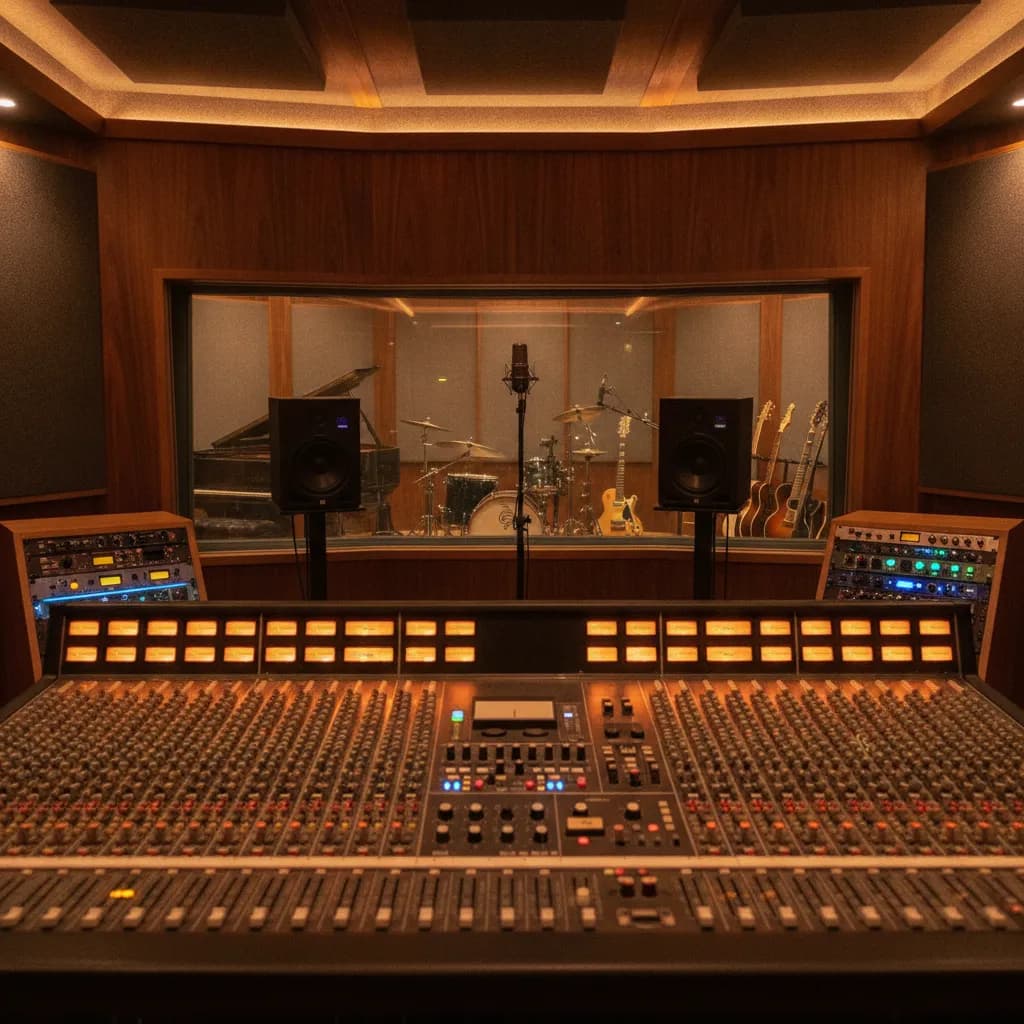
When you book a session at a professional room, you're paying for three things: the physical space (treated walls, isolation, a quality signal chain), the gear (microphones, preamps, converters, monitors), and in many cases a staff engineer to run the session. At Paradise Recording in Santa Monica, every session — from a 2-hour vocal drop to a full-day band track — is a whole-studio booking (the Rainforest Room vocal room and the Rock Room live room are both part of it) and includes an in-house engineer at no extra charge. What it does not include is production. The beat, the chord progression, the reference track: that is your creative input, and the studio's job is to capture it cleanly.
Some studios do offer in-house producers or beat-making sessions as an add-on, billed separately at an hourly production rate. If you want that service, ask when you book — don't assume it's included.
Where beats actually come from
There are four practical paths, each with different costs and legal implications:
Online beat marketplaces (lease). Sites like BeatStars, Airbit, and dozens of independent producer stores let you license a beat for a flat fee. A non-exclusive license, often called a lease, grants you the right to record and distribute a song using a specific beat, but the producer retains ownership and can sell the same beat to as many other artists as they choose. Most rap beat leases vary in price from $10–$200 depending on the license tier. This is the fastest and cheapest option, and it's perfectly fine for building your catalog — just read the terms.
Exclusive purchase. An exclusive license removes the beat from sale entirely after purchase, giving you sole rights. Even an exclusive purchase usually keeps the producer's copyright in the composition and the producer's writer's share of the publishing. Exclusive prices vary widely but typically run several hundred dollars and up.
Custom producer collaboration. You hire a producer to make a beat specifically for you. Commission a custom beat and settle the composition terms in writing up front — including who owns the copyright, who holds the publishing, and how any writer's share is split. Agreeing on the buyout before the song is made avoids renegotiating from a weaker position after it starts earning.
In-house production (rare). A handful of studios bundle beat-making with recording time. Expect to pay a separate hourly rate for a producer on top of the room fee, and negotiate ownership terms before the session starts, not after.
The licensing trap most beginners miss
Most independent artists skip reading the fine print and later discover they cannot distribute commercially, that another rapper dropped a track on the same instrumental, or that streaming platforms flagged their release for a licensing conflict. The majority of beat stores sell leases with strict stream caps buried in the license terms. A basic lease might say 100,000 streams; a premium lease might say 500,000. Once you hit that number, you are technically in breach of your license and need to pay again or upgrade.
Bottom line: read the license before you record, not after the song blows up.
Rate snapshot: what your studio dollar covers
LA studio rates range from $15/hr at informal home studios to $200+/hr at major facilities. Professional mid-range studios typically charge $29–$60/hr during daytime hours. Paradise Recording sits in the boutique tier, with engineer included in every block.
| Session length | Paradise (whole studio, engineer included) | Typical LA range, vocal/podcast (engineer included) | Typical LA range, band/full-kit (engineer included) |
|---|---|---|---|
| 2 hours | $160 | $60–$250 | $80–$350 |
| 4 hours | $300 | $100–$400 | $130–$550 |
| 6 hours | $450 | $150–$600 | $180–$750 |
| 8 hours | $600 | $200–$800 | $240–$950 |
| 12 hours | $850 | $300–$1,100 | $360–$1,400 |
Paradise rates are posted prices and include an in-house engineer (every rate). LA range figures are approximate market ranges based on 2026 booking data — not specific competitor prices.
Notice that beats appear nowhere in that table. The room rate covers the room.
How to prepare your beat file before the session
Arriving with a properly formatted file saves real money. Every minute spent troubleshooting a tagged MP3 or a file with the wrong tempo is a minute you're paying for.
Get the untagged version. Beat stores sell tagged (watermarked) previews for free; your paid license delivers the clean, untagged file. The previews on beat sites are tagged with a producer voice tag — after purchase you receive the untagged, studio-clean version ready to record over. Never bring the preview to a session.
WAV, not MP3. Use WAV, not MP3, for stem delivery. Mixing engineers need 24-bit PCM to retain headroom for processing — MP3 at any bitrate is lossy and reintroduces compression artifacts that fight EQ and limiting downstream.
Know the BPM and key. Ask for the BPM of the song. Knowing this information will help your recording engineer in setting up your session and make editing quicker. Write it in the filename.
Get trackout stems if you plan to mix. If at all possible, ask to purchase the stems of the track from the producer. Stems (individual drum, bass, melody tracks) give your mixing engineer far more control than a stereo bounce. To export stems for mixing, send WAV files at your original session sample rate, use 24-bit audio, make every file begin at the same starting point, turn normalization off, remove master bus limiting, and label the tracks clearly.
Name the folder clearly. Thirty seconds of naming discipline solves a lot: include artist, song, tempo, and key in the folder name — it answers half of an engineer's first-day questions.
See our full preparation guide: How to Prepare for Your First Recording Session.
When a home setup might be the honest answer
If you are still auditioning beats and have not settled on a direction, it makes more sense to do that work at home than on the clock. Lock in your beat, write to it, rehearse your flow, then book studio time to capture the performance. The studio is where you execute — not where you shop. Our Home Studio vs Professional Recording Studio guide walks through exactly when each option makes sense.
Frequently asked questions
Can I bring any beat I find online to a recording studio?
Yes, as long as you have a valid license for it. Download the untagged WAV version from the producer's store, keep the license agreement in your files, and bring both to the session. The engineer will load the beat into the DAW and set the session tempo to match.
What if I want a producer to make a beat during my studio session?
Some studios offer in-house producers at an additional hourly rate — ask before you book. At Paradise Recording, our engineer can advise on arrangement and workflow, but dedicated beat production is a separate service. If you need a full production session, let us know at /book and we can discuss options.
Does leasing a beat mean I own it?
No. A beat lease is essentially renting the instrumental for specific uses. You own the master recording of your complete song, but the underlying beat composition remains the producer's intellectual property. Ownership of the composition only transfers through an exclusive buyout or a custom-beat agreement with a written copyright assignment.
What file should I bring to the studio — MP3 or WAV?
Always WAV. Save your stems as uncompressed WAV files — think of WAV like the original, high-quality recording where no sound gets lost. Make sure your sample rate and bit depth are set correctly, usually 44.1 kHz or higher and 16 or 24-bit depth. MP3 is fine for previewing beats at home, but not for a professional session.
How much does it cost to buy exclusive rights to a beat?
Prices vary widely by producer profile and genre. When you're establishing your sound, you need multiple tracks to see what resonates. Leasing 10 beats for the price of one exclusive gives you more shots at success. Many independent artists start with leases and upgrade to exclusives once a track gains momentum — a sensible approach for most budgets.
Do I need to credit the producer on my release?
It depends on your license tier. With lease and premium licenses, you typically need to include "Prod. by [Producer Name]" in the title or description. Exclusive buyouts usually require no credit. Check your specific license agreement — terms differ by producer.
Next steps
- Book a session — choose your block length (every booking is the whole studio); engineer is always included
- Explore the Rainforest Room — optimized for vocals, rap, and podcasts
- Explore the Rock Room — full drum kit, baby grand, and band tracking
- Mixing and mastering services — once your vocals are tracked, we can finish the record
- Membership options — frequent artists save with a monthly plan
- How to Prepare for Your First Recording Session
- Best recording studio for rap vocals Los Angeles (2026)
- What to bring to a recording studio session
Facts and prices on this page last verified 2026-08-28 by the Paradise Recording team.