
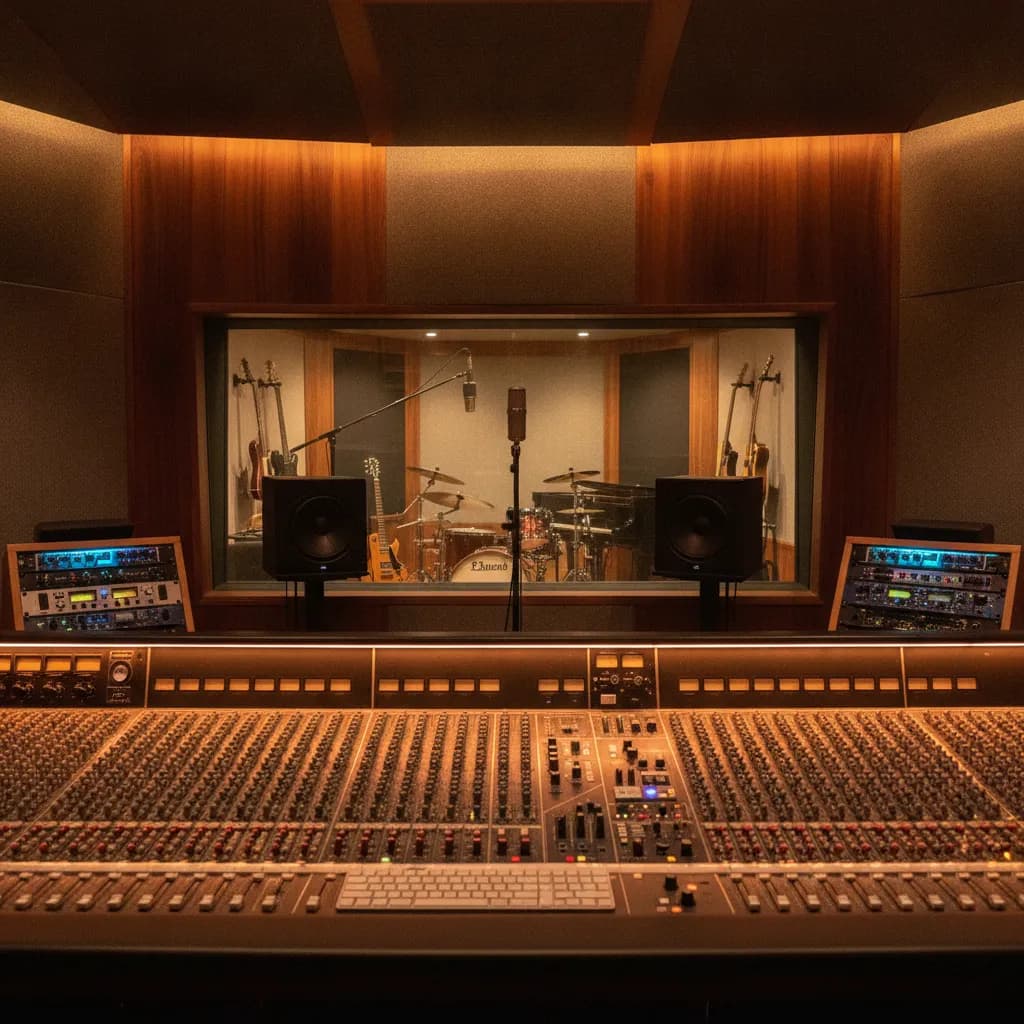
Recording a song takes 2–4 hours of studio time if you're laying vocals over an existing beat, and 4–8 hours per song for a live band tracking from scratch. That's just the recording session — mixing typically adds 5–10 business days of post-production, and mastering adds a few more days on top of that. For a prepared artist releasing a single, the realistic calendar window from first session to release-ready master is 2–4 weeks.
What "recording a song" actually includes
Most people picture the booth time — the takes, the playbacks, the punch-ins. But a finished, releasable track has three distinct phases, each with its own clock:
- Tracking — capturing performances in the studio
- Mixing — balancing and shaping every element into a cohesive record
- Mastering — final loudness, translation, and format delivery
Studio hours cover phase one. Phases two and three happen afterward, often off-site, and are billed separately from your session rate. Plan for all three when you build a release timeline.
Studio hours by project type
The table below uses Paradise Recording's posted whole-studio rates (engineer included) and honest typical LA market ranges for context. "Calendar time to master" assumes you hand off stems to mixing and mastering immediately after your last tracking session.
| Project type | Typical studio hours | Paradise (whole studio, engineer included) | Typical LA market range | Calendar time to finished master |
|---|---|---|---|---|
| Vocals over existing beat (rap, pop, R&B) | 2–4 hrs | $160–$300 | $50–$300/session | 1–2 weeks |
| Singer-songwriter (vocal + acoustic guitar) | 2–4 hrs | $160–$300 | $75–$400/session | 1–2 weeks |
| Full-band live tracking (1 song) | 4–8 hrs | $300–$600 | $200–$800/session | 2–3 weeks |
| Layered production (overdubs, harmonies, multiple sessions) | 8–20+ hrs across sessions | $850/day (12 hrs) | $400–$1,500+/project | 3–6 weeks |
| EP (4–5 songs, full band) | 20–40 hrs across sessions | Multiple blocks | $1,500–$6,000+/project | 6–12 weeks |
Paradise rates are posted prices (every rate). LA market ranges are typical ranges across mid-tier studios as of 2026 — entry-level rooms and budget hours can fall below the low end; major commercial facilities run well above the high end.
Tracking: where your studio hours go
For most musicians recording at a professional studio, a single song takes 4–8 hours of studio time from start to finish — covering recording, producing, and any session work before the mix.
The fastest sessions are vocalists with a finished beat. If the instrumental is locked, the arrangement is clear, and you've rehearsed, a song can take anywhere from a few hours to several days to complete — if you are a solo vocalist with a backing track, you might wrap up in a single afternoon.
Full-band sessions are a different animal. Recording a song with a well-rehearsed band takes about a day — think 10–12 hours. Give yourself a couple of hours to set up drums, one to three hours to record each instrument, and a couple more hours for vocals and comps and editing — and this is just for tracking.
The single biggest variable is preparation. Your preparation level is the single biggest factor. Musicians who know their parts cold, have rehearsed recently, and arrive ready to perform move significantly faster than those who are still working things out in the studio. An hour of rehearsal at home can save two hours of studio time.
First-timers should also budget extra time for comfort. First-time studio clients often need time to get comfortable — the booth feels different, headphone mixes take adjustment, and the awareness of being recorded can affect performance. That's normal; a good engineer will work through it with you. Our Rainforest Room is purpose-built for vocal work and keeps the vibe low-pressure. If you're bringing a full kit and band, the Rock Room has the baby grand, full drum kit, and square footage to set up properly without rushing.
See also: How to prepare for your first recording session and What to bring to a recording studio session.
Mixing: plan for 5–10 business days
Mixing is where your raw tracks become a record. Standard turnaround is 5–10 days as the base rate. Rushing takes engineers out of their normal workflow and often requires them to decline other projects. If you need it faster, expect to pay 50–200% more for a 24-hour turnaround.
Standard turnaround is usually 3–7 business days. Rush delivery (24–48 hours) often costs 25–50% more. Plan ahead if you're working on a release schedule.
Revision rounds are part of the process. Most mixing projects include up to 3 rounds of revisions to ensure you're satisfied with the final result. Factor those rounds into your calendar — each exchange can add 2–3 days.
Paradise offers mixing and mastering as a separate service, so you can track here and hand off stems the same day.
Mastering: a few more days after mixing
Mastering is the final step — loudness, tonal balance, and format delivery for streaming, vinyl, or sync. It's faster than mixing: most engineers turn around a single in 2–5 business days. Professional mixing costs $200–$2,000 per song; professional mastering costs $30–$500 per song. Together, expect $230–$2,500 to take a single from raw stems to release-ready master in 2026.
Bundling mixing and mastering with the same engineer saves money and produces better results — the mastering engineer already knows how the mix was built. Expect to save 10–30% versus booking each separately.
For a deeper breakdown, see How long does mixing and mastering take? and Mixing and mastering services: what they cost in 2026.
Honest note: sometimes home recording is the right call
If you're demoing ideas, writing on the clock, or working through arrangements, burning studio hours on unfinished material is expensive. The studio is best used to capture performances that are already ready — not to finish the writing. If you're still working out parts, an honest engineer will tell you to rehearse more before you book. We will too.
That said, for anything you plan to release, distribute, or pitch — professional tracking, mixing, and mastering make a measurable difference. See Home studio vs professional recording studio for an even-handed breakdown of when each makes sense.
Getting the most out of your session at Paradise
Paradise Recording is at 1505 4th St, Ste 219, Santa Monica — open 9am to 2am daily, so you can book a late-night vocal session or an early-morning band day without hunting for a room. Every session includes an in-house engineer, so there's no separate engineering fee to budget for. The Metro E Line's Downtown Santa Monica stop at 4th & Colorado is about a five-minute walk from the door if you're coming in from Hollywood or the Eastside, and the downtown parking structures on 4th and 5th start with free hours — a two-hour vocal session often costs nothing to park.
If you're a regular, the membership removes the per-session math entirely and gives you consistent access without time pressure.
Frequently asked questions
Can I record a song in 2 hours?
Yes — if you're recording vocals over a finished beat and you've rehearsed your performance. A prepared vocalist can realistically track, comp, and leave with a rough mix in a 2-hour session. Add layers, harmonies, or live instruments and you'll need more time.
How long does a full-band recording session take?
Recording a song with a well-rehearsed band takes about a day — think 10–12 hours. That covers setup, soundcheck, tracking each instrument, and comping vocals. Trying to record more than one song in a single band day usually means sacrificing quality on at least one of them.
Is mixing included in studio time?
Not typically. Tracking happens during your booked session; mixing happens afterward, often off-site, and is quoted separately per song. At Paradise, you can add mixing and mastering as a standalone service after your session wraps.
How long does it take to go from recording to a release-ready master?
For a straightforward song with a prepared musician, you can realistically go from first session to release-ready master in under two weeks. More complex productions with multiple sessions, revision rounds, and layered arrangements typically take 3–6 weeks total.
Does preparation really affect how long recording takes?
Significantly. Musicians who know their parts cold and have rehearsed recently move significantly faster than those still working things out in the studio. An hour of rehearsal at home can save two hours of studio time. That's a direct cost saving at any hourly rate.
How many songs can I record in a day?
For vocalists over existing beats: 3–5 songs in an 8-hour session is realistic if you're well-prepared. For a full live band, aim for 1–2 songs per day. See How many songs can you record in a day? for a full breakdown by setup type.
Next steps
- Book a session — sessions from $160/2 hrs, whole studio, engineer included, open 9am–2am daily
- Explore our studios — see room specs, gear lists, and photos before you commit
- Add mixing and mastering — hand off your stems the same day you track
- Join the membership — remove the per-session clock if you record regularly
- How much does it cost to record a song in LA? — full cost breakdown to pair with this timeline guide
- Band recording studio Los Angeles — specific advice for full-band sessions on the Westside
Facts and prices on this page last verified 2026-08-17 by the Paradise Recording team.