
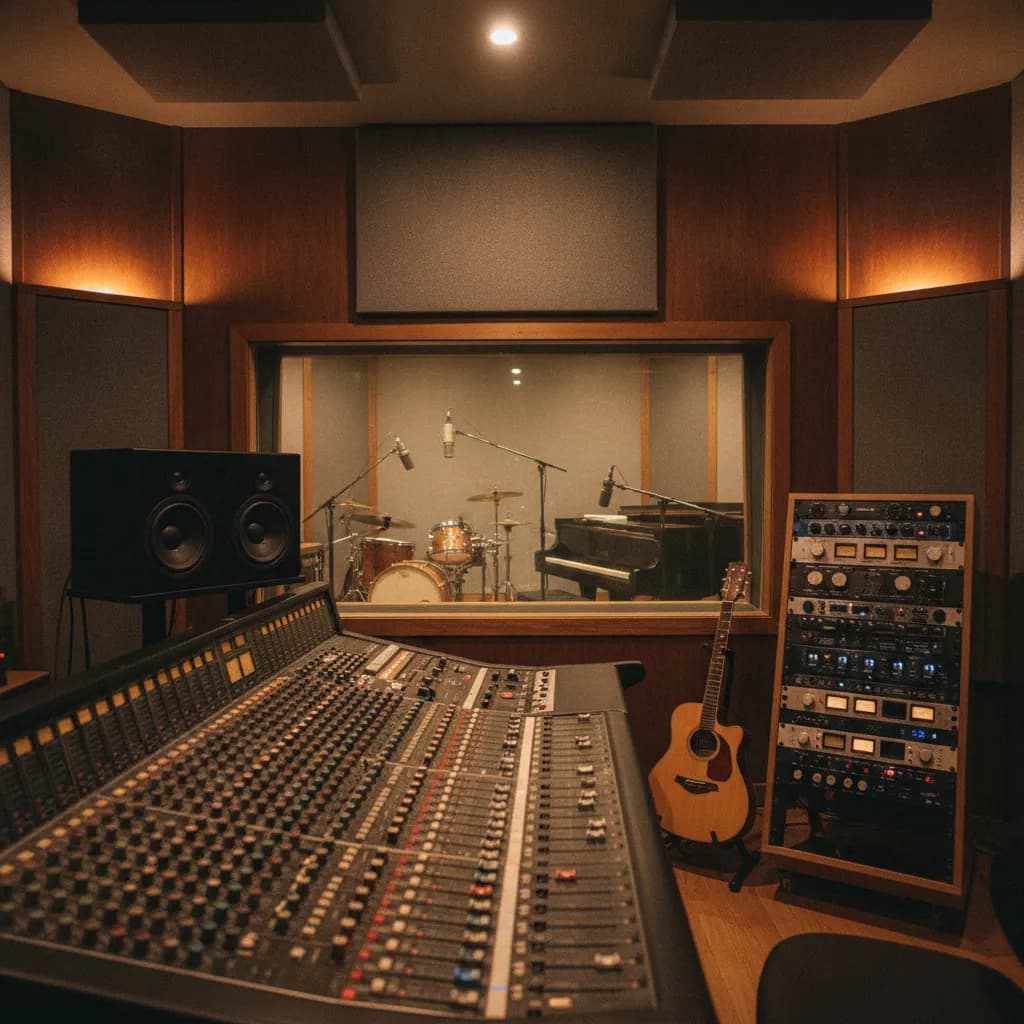
Silver Lake sits roughly in the geographic center of Los Angeles, pressed between Echo Park, Los Feliz, and Atwater Village, and it has always punched above its weight musically. Silver Lake has an impressive rock 'n' roll pedigree — bands like Local Natives and Silversun Pickups are from the area, and Elliott Smith lived his final years in a Silver Lake bungalow. Flea from the Red Hot Chili Peppers founded the Silver Lake Conservatory of Music on Hollywood Boulevard, offering music classes for local youth. The neighborhood's creative identity runs deep: the annual Sunset Junction Street Fair turned Sunset Boulevard into an outdoor stage for decades, and when you think of LA communities known for their music venues, Silver Lake belongs in the same conversation as Downtown, Hollywood, and the Sunset Strip.
That creative energy is very much alive in 2026. Silver Lake's live-music venues include the Silverlake Lounge, Zebulon, The Echo, El Cid, the Echoplex, The Dresden, Permanent Records Roadhouse, and Los Globos. The Silverlake Lounge, at the corner of Sunset Boulevard and Silver Lake Boulevard, is one of the most storied venues in the area — originally noted for its divey atmosphere and drag and burlesque shows, it gained notoriety in the early 2000s as a central hub for the neighborhood's growing arts scene. What the neighborhood is less stocked with is professional, acoustically treated recording studios with in-house engineers and posted hourly rates. This guide is honest about that gap — and tells you exactly what to do about it.
This guide covers what recording options genuinely exist in and around Silver Lake, how to evaluate any studio on its merits, what professional recording costs in LA in 2026, and when it makes sense to make the 25-to-40-minute drive west to Santa Monica for a session at a purpose-built room. Whether you're a singer-songwriter looking to cut a demo on Sunset, a band that rehearses near the reservoir, or a podcaster based in the Eastside hills, this is the most practical information we can give you.
Quick takeaways
- Silver Lake's recording scene skews toward rehearsal and project studios. The studios most commonly listed near Silver Lake include Pirate Studios, The Market Recording, Solutions, Rock Star Studios, Kr Studios, and Mack Sennett Studios — a mix of rehearsal rooms, self-tape spaces, and small project studios rather than full commercial tracking facilities.
- Professional LA studio rates span a wide range. Studio time in Los Angeles typically ranges from $35–$150 per hour, depending on the studio, equipment, and whether an engineer is included. At the upper end of the market, rates at major Hollywood institutions run $75–$200+ per hour, often with minimum booking requirements and weeks of lead time.
- "Engineer included" matters more than most artists realize. At some studios, the engineer's time is billed separately on top of the room rate. At Paradise Recording in Santa Monica, an in-house engineer is always included — no add-on fee, no showing up to an empty room.
- Hourly booking and day/lockout rates are two different things. Hourly booking is flexible and suits single-song sessions or overdub days. A lockout or day rate gives you the room for a fixed block — typically 10–12 hours — and makes more sense for tracking full EPs or albums.
- The drive from Silver Lake to Santa Monica is manageable. Off-peak, the distance is about 16 miles and takes roughly 25 minutes to drive. During evening rush hour on the 10 freeway westbound, budget 40–55 minutes. Plan your session start time accordingly.
- To book Paradise Recording, visit /book — rates are posted publicly, and you'll never need to email back and forth just to get a price.
The 10 best recording studios in Silver Lake (2026)
At-a-glance ranking
- Paradise Recording — Santa Monica | Best for: vocals, podcasts, full-band tracking, and anyone who wants an engineer included at a posted price
- EastWest Studios — Hollywood | Best for: major-label tracking, orchestral sessions, and legacy room sound
- Capitol Studios — Hollywood | Best for: orchestral, live-band, and prestige projects with a historic room
- Westlake Recording Studios — West Hollywood | Best for: large-format mixing and full-production sessions
- Ocean Way Recording — Hollywood | Best for: high-end tracking and mixing with a legendary pedigree
- Pirate Studios — Multiple LA locations including near Silver Lake | Best for: self-contained rehearsal and quick-turnaround demo recording
- The Market Recording — Silver Lake area | Best for: local indie tracking in a neighborhood-based setting
- Mack Sennett Studios — Silver Lake | Best for: larger productions, content creation, and hybrid studio/stage projects
- UNION Recording Studio — East Hollywood | Best for: budget-conscious hourly sessions and late-night tracking
- Rock Star Studios — Silver Lake area | Best for: rehearsal with recording capability at accessible price points
This ranking reflects Paradise Recording's own editorial opinion. It is not paid placement. Verify each studio's current rates, availability, and services before booking.
#1 — Paradise Recording, Santa Monica
Paradise Recording is a boutique studio at 1505 4th St, Suite 219, Santa Monica — about a 25-to-40-minute drive from Silver Lake depending on traffic. It ranks first in this guide for reasons that are specific and verifiable, not marketing language.
There are two purpose-built rooms. The Rainforest Room is acoustically treated for vocals, voiceover, and podcast recording, starting from $200 per two-hour block. The Rock Room is built for full-band tracking, with a baby grand piano and a full drum kit already set up and mic'd, starting from $250 per two-hour block. You can see both rooms at /studios.
Every session — regardless of which room you book — includes an in-house engineer. You are never handed a set of keys and left alone with the gear. The engineer handles setup, signal chain, mic placement, and playback so you can focus on the performance. The gear is serious without being intimidating: a Manley Reference microphone, a Tube-Tech CL 1B compressor, API preamps, and Focal Twin6 monitors. Pricing is posted publicly on the website. No email required to get a rate. The studio is open 9am–2am daily, which means early morning sessions before the westbound 10 gets congested are entirely possible.
For Silver Lake artists who want their recordings to sound finished — not just captured — this is the practical choice. Book a session, or explore membership options if you're planning multiple sessions. Mixing and mastering services are available at /mix-master.
#2 — EastWest Studios, Hollywood
EastWest Studios is a recording studio complex located at 6000 West Sunset Boulevard in Hollywood. The studios have given rise to some of the most celebrated music of the last sixty years, from Frank Sinatra to The Rolling Stones, and have produced more Grammy-winning albums than any other studio in the world. This is a major-league facility with room sizes and rates to match.
Best for: Major-label projects, orchestral dates, and artists who need a room with genuine acoustic grandeur. Why it fits: The live rooms are among the most storied in the world, and the gear list is exceptional. What to ask: Current hourly rates, minimum booking requirements, and whether an engineer is included or billed separately.
#3 — Capitol Studios, Hollywood
Capitol Studios is a recording studio located at the landmark Capitol Records Building in Hollywood, California. The studios opened in 1956 and were initially the primary recording studios for Capitol Records. While they are still regularly used by Capitol recording artists, the facilities began to be made available to artists outside the label during the late 1960s to early 1970s.
Best for: Full-band tracking, orchestral sessions, and projects where room acoustics and legacy are part of the brief. Why it fits: Few rooms in the world carry this kind of verified sonic and cultural history. What to ask: Current booking availability, whether the room suits your project size, and what's included in the rate.
#4 — Westlake Recording Studios, West Hollywood
Westlake Recording Studios is a music recording studio with two locations in Los Angeles and West Hollywood, California. The control room of Studio A features an 80-channel SSL XL 9000 K console and a 1,200-square-foot tracking room — and Studio A was where Michael Jackson's Thriller was recorded in 1982.
Best for: Large-format mixing, full-production tracking, and artists who need a flagship room on the Westside. Why it fits: Multiple rooms and a deep discography make this a reliable choice for serious projects. What to ask: Which room suits your session size and what the current rate structure looks like.
#5 — Ocean Way Recording, Hollywood
Ocean Way is one of the most decorated commercial recording facilities in the US, with a history that stretches back to the United Western Recorders era. It operates multiple large-format tracking and mixing rooms in Hollywood and is a go-to for major productions that need serious square footage.
Best for: Large ensemble tracking, film scoring, and high-end mixing. Why it fits: Proven room acoustics, vintage and modern gear, and experienced staff engineers. What to ask: Room availability, minimum session length, and whether engineering is included in the quoted rate.
#6 — Pirate Studios, multiple LA locations
Pirate Studios is among the most commonly listed recording and rehearsal options near Silver Lake. The Pirate model is self-contained, app-booked rehearsal and recording rooms — you access the room independently, gear is preset, and pricing is transparent.
Best for: Bands that want affordable, self-directed rehearsal with basic recording capability. Why it fits: Accessible price point, easy online booking, and multiple locations around LA. What to ask: Whether a staff engineer is available if you want one, and what the gear list actually includes.
#7 — The Market Recording, Silver Lake area
The Market Recording appears consistently in Silver Lake-area studio searches and has a reputation as a neighborhood-based indie tracking room. It's one of the few options that genuinely places you in the Silver Lake zip code.
Best for: Local indie artists who want to stay in the neighborhood for demos and early tracking. Why it fits: Proximity and a local creative community feel. What to ask: Whether an engineer is included, what the signal chain looks like, and minimum booking length.
#8 — Mack Sennett Studios, Silver Lake
In 1912, Mack Sennett built a film studio in the Silver Lake area — and the name lives on in a modern production facility that handles photography, film, and audio work. It's a larger, more production-oriented space than a dedicated music studio.
Best for: Hybrid projects that need both a recording room and production/stage space. Why it fits: Scale and versatility for content creators and multi-format productions. What to ask: Whether dedicated audio recording is available, what the acoustic treatment looks like, and current rates.
#9 — UNION Recording Studio, East Hollywood
UNION Recording Studio at 5458 Santa Monica Blvd in East Hollywood is one of the few legitimate 24/7 hourly studios in Los Angeles that has a meaningful overnight rate structure. Three rooms are available around the clock, with daytime rates running $29–$35 per hour and overnight rates dropping to $11–$15 per hour.
Best for: Budget-conscious artists and producers who work late and want a staffed room at accessible rates. Why it fits: The overnight pricing is genuinely rare in LA, and the location is closer to Silver Lake than most Westside options. What to ask: Whether an engineer is on duty during your session and what the minimum booking requirement is.
#10 — Rock Star Studios, Silver Lake area
Rock Star Studios is a rehearsal-first space that appears in Silver Lake-area searches. It offers backline-equipped rooms at accessible price points, with some recording capability.
Best for: Bands that need to rehearse before a recording session and want basic tracking in the same building. Why it fits: Price point and rehearsal-to-recording workflow. What to ask: What the recording signal chain includes, whether an engineer is available, and how the acoustic treatment compares to a dedicated recording room.
This ranking is Paradise Recording's own editorial opinion and is not paid placement. Rates, services, and availability change — verify directly with each studio before booking.
What makes a great LA recording studio (and how to choose)
The gear in the signal chain
A microphone, a preamp, and a compressor are three separate links in your vocal chain — and each one either adds or costs you quality. A Manley Reference microphone into API preamps into a Tube-Tech CL 1B compressor is a fundamentally different result than a budget condenser into a consumer interface. Ask any studio you're considering to name the specific microphone and preamp you'll be recording through. If they can't answer that question quickly, that tells you something. See also: what does a recording engineer do?
Room acoustics and purpose-built design
A room that was built to record sounds different from a room that was converted to record. Parallel walls create flutter echo. Untreated rooms add a color to your recordings that no plugin can fully remove in post. Ask whether the room was acoustically designed for recording, and listen to examples of work tracked in that specific room — not the studio's best-case portfolio, but a track similar to what you're making.
The engineer: included or extra?
Studio time in Los Angeles typically ranges from $35–$150 per hour, depending on the studio, equipment, and whether an engineer is included. At some facilities, rates usually include a staff engineer, though some studios charge separately for engineering. That distinction matters enormously to your total bill. At Paradise Recording, the engineer is always included in the session rate — there is no separate engineering fee. For a deeper look at this question, see do recording studios provide an engineer?
Hourly booking vs. lockout/day rates
Hourly booking gives you flexibility: you pay for what you use, show up, do the work, and leave. The hourly model is the most common for mid-range and commercial facilities, typically with a minimum booking requirement of two to four hours. A lockout or day rate gives you the entire room for a fixed block — usually 10–12 hours — and is more economical if you're tracking a full band over multiple songs. For a full breakdown, see recording studio lockout day rate meaning.
Location and parking
This matters more than it sounds. A studio that's theoretically close but requires 20 minutes of parking-spot hunting eats into your booked time. Paradise Recording's 4th and 5th Street public parking structures in Santa Monica start with free hours, so a short session often costs nothing to park. The Metro E Line's Downtown Santa Monica terminus at 4th & Colorado is about a five-minute walk from the studio door — a real option if you're not hauling heavy gear.
Vibe and comfort
You record better when you're comfortable. Ask whether the studio has a lounge or waiting area, whether guests can be in the room during tracking, what the temperature control is like, and whether the engineer communicates in a way that makes you want to take risks. The best technical setup in the world doesn't help if you feel rushed or judged. Read recording studio etiquette before your first session.
What recording studios cost in LA
Recording a song at an LA recording studio in 2026 can cost anywhere from $50 to over $300 per hour. That's a wide range, and it reflects genuine differences in room quality, gear, and what's included. Here's how to think about it in tiers:
Entry-level rooms and self-service studios typically run $20–$50 per hour. Rates at this level may or may not include a staff engineer. The advantage of hourly billing is flexibility — you only pay for what you use, and you can book short sessions for specific tasks like vocal overdubs or quick mix revisions.
Mid-range professional rooms — the category where Paradise Recording sits — generally run $75–$150 per hour, or in the $200–$300 range for a two-hour block with an engineer included. This is where most working artists find the best balance of gear quality, engineer experience, and total cost.
Major Hollywood institutions are in a different tier entirely. Studios like Capitol and EastWest are legitimate institutions with iconic gear and history. Their rates reflect that — you're looking at $75–$200+ per hour at those rooms, often with minimum booking requirements and weeks of lead time.
"With an engineer" vs. "room only" is the most important pricing distinction to clarify before you book. Some studios post a room rate and then add an engineering fee on top. Others, like Paradise Recording, include the engineer in every session at no additional charge. Always ask: is the engineer included in that rate?
Hourly vs. day/lockout is the second key distinction. If you're tracking one or two songs, hourly booking makes sense. If you're cutting an EP or tracking a full band over a long day, ask about day rates — they're usually more economical per hour than booking the same time in individual slots. For more, see how much does it cost to record an album?
Paradise Recording's Rainforest Room starts at $200 per two-hour block; the Rock Room starts at $250 per two-hour block. Both include the engineer. Both prices are posted publicly at /book.
Which room or setup is right for you?
Vocals, voiceover, and podcasting
If you're a singer, a voice actor, or a podcaster, the most important variable is the room's acoustic treatment and the microphone. A room built for vocal isolation — with controlled reflections and a dedicated vocal booth — will produce a cleaner, more professional result than a general-purpose space. Paradise Recording's Rainforest Room was designed specifically for this kind of work. Starting at $200 for a two-hour block with an engineer included, it's a practical choice for Silver Lake singers and podcasters who want a step up from a home setup. For podcast-specific guidance, see where to record a podcast in Los Angeles.
Full-band tracking
Tracking a full band with a live drum kit is a different problem entirely. You need a room large enough to separate instruments acoustically, a kit that's already set up and tuned, and an engineer experienced in live-room mic placement. Paradise Recording's Rock Room has a full drum kit and a baby grand piano already in place. You load in, the engineer sets levels, and you track. For more on what this looks like in practice, see band recording studio Los Angeles.
Quick demos vs. finished recordings
Be honest with yourself about what you need. If you're capturing a rough idea to share with collaborators or a producer, a home setup or a local project studio may be entirely sufficient — and staying local in Silver Lake makes sense. But if the recording needs to sound finished — for a release, a sync pitch, a label demo, or a podcast that represents your brand — the gear, the room, and the engineer matter. That's when the drive to a purpose-built room earns its keep. For a balanced take on this question, see home studio vs professional recording studio.
Membership and multi-session projects
If you're planning more than a handful of sessions over the coming months, Paradise Recording's membership options are worth a look. A fixed monthly commitment removes the per-session mental math and lets you work at the pace the project requires rather than the pace your budget anxiety allows.
Making the drive: Silver Lake to Santa Monica
Let's be direct about this. Silver Lake is not around the corner from Santa Monica. It's a real drive, and it deserves honest treatment.
The route
The most direct option is surface streets west: take Sunset Boulevard or Santa Monica Boulevard all the way west. Santa Monica Boulevard runs from Sunset Junction in Silver Lake all the way to Ocean Avenue in Santa Monica — a single continuous street that connects the two neighborhoods without a freeway. It's slower than the 10 but predictable, and it avoids the worst of the freeway congestion during peak hours.
The faster option in light traffic is the I-10 westbound: take surface streets south from Silver Lake to the 10 on-ramp (via Hoover or Vermont), ride it west to the 4th Street exit in Santa Monica, and you're at the studio in minutes. The total distance is about 16 miles, and in light traffic the drive takes roughly 25 minutes.
Realistic drive times
- Off-peak (before 7am, or after 8pm westbound): 25–35 minutes. This is when the 10 moves freely and the drive is genuinely easy.
- Morning rush (7–9am westbound): 35–50 minutes. The 10 westbound backs up at the 405 interchange. Leave early or take surface streets.
- Evening rush (4–7pm westbound): 45–60 minutes or more. This is the worst window. If you're booking an afternoon session, plan to arrive before 4pm or after 7pm.
- Midday: 30–40 minutes. Generally manageable.
Paradise Recording is open 9am–2am daily, which gives you real flexibility to book around traffic. A 9am session start gets you in before westbound congestion builds. A 7pm start lets the evening rush clear before you leave Silver Lake.
Parking and arrival
Santa Monica's downtown public parking structures on 4th and 5th Street are the practical option. They start with free hours, so a two-hour session often costs nothing to park. The studio is at 1505 4th St, Suite 219 — walk in from 4th Street, take the elevator to the second floor.
If you're coming without a car, the Metro E Line's Downtown Santa Monica terminus at 4th & Colorado is about a five-minute walk from the studio door. The E Line connects to the rest of the Metro network, making it a viable option if you're not hauling heavy gear.
Why artists make the trip
The honest answer: because the gear, the room, and the included engineer produce results that are difficult to replicate locally. A pre-tuned, pre-mic'd drum kit in an acoustically treated room, a Manley Reference microphone into API preamps, and an engineer who knows the signal chain — that combination is not available in most Silver Lake-area project studios. For a recording that needs to sound finished, the 25-to-40-minute drive is a reasonable trade.
A note on marine layer and traffic
Santa Monica sits on the coast, and the marine layer — the low coastal fog that rolls in from the Pacific — can affect morning visibility on the 10 westbound during late spring and early summer (locals call it "June Gloom," though it often extends into July). It burns off by late morning and doesn't affect the session itself, but it's worth knowing if you're driving in at 9am with the sun in your eyes. Traffic near the 405/10 interchange is the single most variable factor in drive time from Silver Lake — check a live traffic app before you leave, not the night before.
Frequently asked questions
How much does a recording studio cost in Silver Lake, LA?
Recording studios in Silver Lake average around $168 per hour to rent, but for a smaller space expect to spend closer to $112, while larger venues run about $243 per hour. These figures reflect Peerspace-listed spaces, which skew toward self-service and multi-use rooms rather than dedicated music studios with in-house engineers. A purpose-built room with an engineer included, like Paradise Recording in Santa Monica, starts at $200 for a two-hour block — which works out competitively once you factor in that the engineer is already included.
Do recording studios provide an engineer?
It depends on the studio. Rates at many studios usually include a staff engineer, though some studios charge separately for engineering. Always ask before you book. At Paradise Recording, an in-house engineer is included in every session at no additional charge. For a full breakdown of what this means in practice, see do recording studios provide an engineer?
What's the difference between hourly booking and a day/lockout rate?
Hourly booking means you pay per hour (or per two-hour block), with a minimum booking requirement. A lockout or day rate gives you exclusive use of the room for a fixed block — typically 10–12 hours — at a reduced effective hourly rate. Hourly booking suits single-song sessions and overdub days; lockout rates make more sense for tracking full bands or EPs. See recording studio lockout day rate meaning for more.
What's the best studio for vocals near Silver Lake?
For professional vocal recording with a purpose-built acoustic room and a Manley Reference microphone, Paradise Recording's Rainforest Room in Santa Monica is the best option within a reasonable drive. It's designed specifically for vocals, voiceover, and podcast recording, and the engineer is included. For a broader guide, see where to record vocals in Los Angeles.
What's the best studio for a full band near Silver Lake?
Paradise Recording's Rock Room is the most practical choice for Silver Lake bands that want a pre-mic'd drum kit, a baby grand piano, and an engineer who knows the room. Locally, rehearsal spaces like ABC Rehearsal Studios have deep roots in Silver Lake and North Hollywood and attract musicians from across Southern California, but they're rehearsal-first rather than tracking-first. For more, see band recording studio Los Angeles.
How do I book a recording studio session?
For Paradise Recording, go to /book. Rates are posted publicly — no email required. For other studios, most require a direct inquiry or online booking form. Same-day booking is genuinely rare at professional studios in LA — most rooms require 24 to 48 hours' notice. Book at least a few days in advance for a standard session, and further ahead for weekends or premium time slots. See how far in advance should you book a recording studio?
Is it worth making the drive from Silver Lake to a professional studio?
For a quick demo or a rough idea capture, staying local may be entirely right. But if the recording needs to sound finished — for a release, a sync pitch, a podcast that represents your brand, or a label demo — the gear and the room matter, and the drive earns its keep. A 25-to-40-minute trip to a purpose-built room with a Manley Reference microphone, API preamps, and an included engineer is a reasonable trade for a result you'll still be proud of in three years. See is studio time worth it?
What should I bring to my recording session?
Tuned instruments, all necessary cables and accessories, lyrics or charts printed out, and a clear idea of what you want to accomplish in the session. The studio provides the room, the gear, and the engineer. You provide the preparation. A detailed checklist is at what to bring to a recording studio session.
Final verdict
Silver Lake is one of the most musically storied neighborhoods in Los Angeles. It has an impressive rock 'n' roll pedigree, with bands like Local Natives and Silversun Pickups from the area. But finding a great recording space in Los Angeles has gotten harder — Bedrock.LA permanently closed in December 2022 after structural issues, and Swing House Studios was listed as permanently closed by January 2026, together removing thousands of square feet of rehearsal and recording infrastructure from the LA market. The honest reality in 2026 is that Silver Lake has a rich creative scene but a thin supply of professional, acoustically treated recording rooms with posted pricing and in-house engineers.
Paradise Recording ranks #1 in this guide because it solves the specific problem Silver Lake artists face: a boutique room with two purpose-built spaces (one for vocals and podcasts, one for full-band tracking), an in-house engineer included in every session, pro-grade gear, transparent hourly pricing, and hours (9am–2am daily) that let you build your session around LA traffic rather than the other way around. It's not the biggest tracking facility in LA — it's a boutique room, and it's honest about that. But for the Silver Lake artist who needs a recording that sounds finished, it's the most practical and best-value option within a reasonable drive.
For a broader look at the LA studio landscape, see best recording studios in Los Angeles and best recording studios in Hollywood.
Next steps
- Book a session at Paradise Recording
- Explore the Rainforest Room (vocals, voiceover, podcasts)
- Explore the Rock Room (full-band tracking, piano, drums)
- View all studio rooms
- See membership options for multi-session projects
- Mixing and mastering services
- How much does it cost to record a song in Los Angeles?
- How to prepare for your first recording session
- Hourly recording studio LA: block booking and pricing explained