
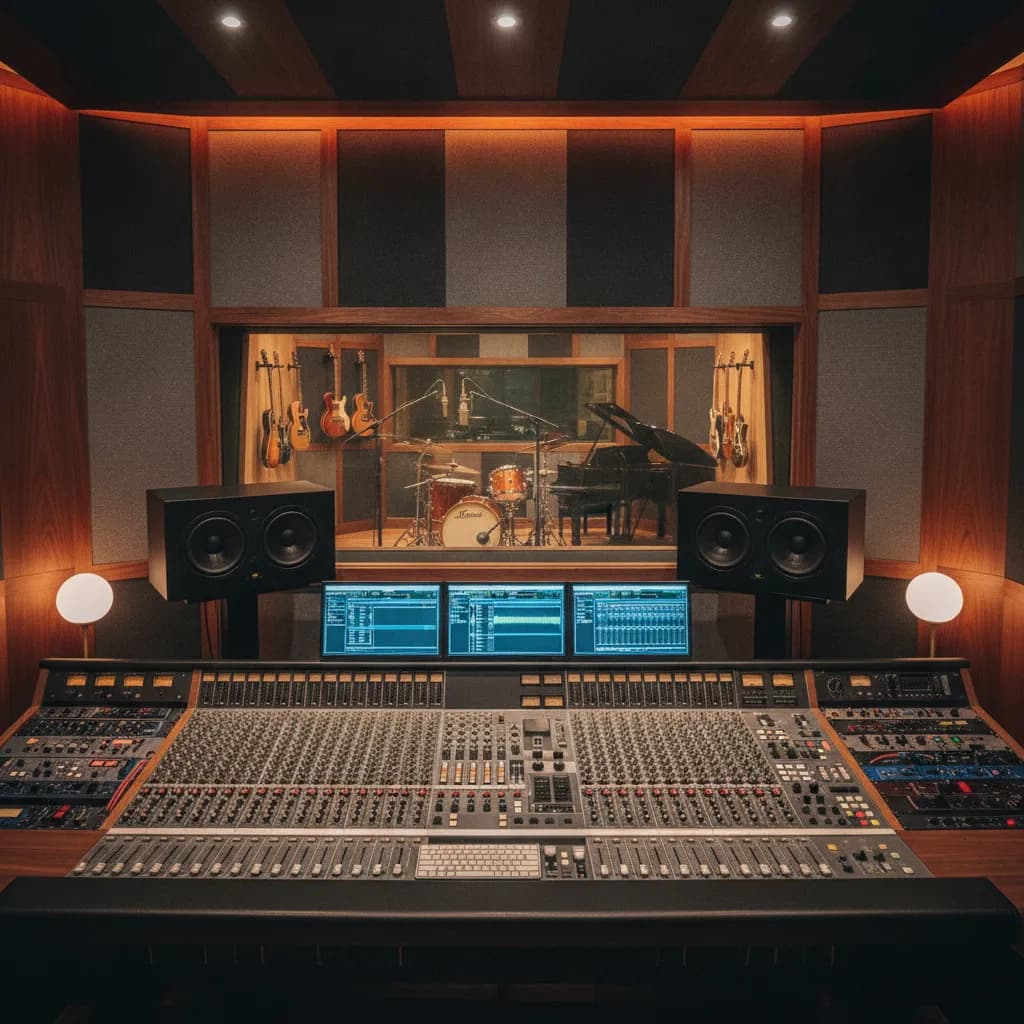
Good studio etiquette comes down to four things: arrive on time with your parts fully learned, keep the room focused and the guest list small, respect the engineer's workflow and the gear, and decide who has creative final say before you walk in the door. At Los Angeles rates of $50–$300 per hour depending on the room, every avoidable delay has a real dollar cost. The rules below are the ones working musicians actually pass along to each other — not a lecture, just hard-won common sense.
The cost of common time-wasters
Before the etiquette tips, here's the math. Mid-tier professional studios in LA typically run $80–$150 per hour; high-end commercial rooms run $150–$300+. At Paradise Recording, sessions start at $160 for a 2-hour block, with the whole studio and an in-house engineer included.
| Common time-waster | Typical time lost | Cost at $100/hr (typical LA mid-tier) |
|---|---|---|
| Arriving 15 min late, clock already running | 15 min | ~$25 |
| Strings not changed, guitar won't stay in tune | 20–30 min | $33–$50 |
| Lyrics not memorized, hunting phone mid-take | 30–45 min | $50–$75 |
| Band disagreement on arrangement mid-session | 30–60 min | $50–$100 |
| Too many guests offering opinions, takes restart | 20–40 min | $33–$67 |
| Running over booked time (overtime rates apply) | 60 min | $150–$200 |
LA mid-tier range based on market data. At Paradise, a 4-hour block ($300, whole studio, engineer included) works out to $75/hr effective. Overtime rates at most studios run 1.5×–2× the standard rate.
Before you arrive
Know your parts cold. This is the single highest-ROI thing you can do. Before arriving at the studio, make sure you're well rested and have rehearsed your songs thoroughly — time in the studio can add up, so it's essential to make the most of it. A voice memo reference track sent to your engineer the day before is even better: it tells them your key, your tempo, and your vibe so setup goes faster.
Change your strings and tune up at home. New strings need time to stretch and settle. If you walk in with a fresh set that's never been played, you'll spend paid time retuning between every take.
Confirm who's making the final call. Bands, this one's for you. Ego can be a significant obstacle to a successful recording session — the recording process is a collaborative effort, and the end result is the most important thing. Agree before the session starts on who has final say on arrangement questions. A five-minute conversation the night before saves an hour of circular debate on the clock.
Send your reference tracks and session notes ahead of time. If you're working with a producer or engineer, communicate with them ahead of time about your goals and what you want to achieve during the recording session. The engineer can have the session template, tempo map, and key patches ready before you walk in the door.
The day of the session
Arrive early, not on time. Being late creates a poor impression and puts pressure on everyone to get things done before time runs out — musicians aren't always known for punctuality, but the best ones always show up on time. At Paradise, the clock starts at your booked time. Arriving five minutes early means you're relaxed and ready; arriving five minutes late means you've already burned money.
If you're driving, Santa Monica's downtown public parking structures on 4th and 5th Streets are the practical option — they start with free hours, so a short session often costs nothing to park. The Metro E Line's Downtown Santa Monica terminus at 4th & Colorado is about a five-minute walk from the studio door, and Big Blue Bus lines stop within a couple of blocks.
Keep the guest list small and purposeful. During sessions, avoid unnecessary noise or chatter, mute phones or set them to vibrate, and refrain from offering too many opinions at once unless you're directly involved. One supportive friend in the control room is fine. Four people with opinions about the snare sound is not. Studios may also have room capacity limits — check before you bring a crew.
Phone on silent, fully silent. Not vibrate. A buzz on a hard surface bleeds into a sensitive microphone. Turning off your phone while in the studio is a great way to prevent distractions — treat recording sessions as periods when you're locked in, focusing solely on the music.
Working with your engineer
The engineer is your most valuable resource in the room. They know the gear, the acoustics, and the signal chain better than anyone. When you walk into a recording studio, you're not just a musician — you're a collaborator, and so is your recording engineer. Treating them with respect will help you get the most out of your recording session. Building a good relationship with them is the key to producing great tracks. Listen to their suggestions, provide feedback politely, and ask for clarification if you don't understand something.
Don't touch gear without asking. Recording studios can be expensive to operate, and the equipment is often delicate and sensitive. Treat the studio space and equipment with respect and care to ensure everything stays in top working condition. Be mindful of where you're placing equipment, don't spill drinks or food, and avoid touching any gear that you're not familiar with or haven't been given permission to use.
Keep takes rolling. Even if there's a breakdown in the middle of a take, encourage the musicians to continue where they left off in order to maintain momentum, rather than continually starting from the top — you can easily edit out the mistake later on. Stopping and restarting from the top after every small error is one of the most common ways sessions stall.
Don't mix on the studio monitors in your head. The control room monitors are for the engineer to make technical decisions. What you hear in the cans during tracking is a rough headphone mix — it is not the final product. Trying to chase a finished sound during a tracking session wastes time and pulls focus away from performance.
Deposits, cancellations, and the clock
Understand the booking terms before you book. If you want to cancel, a typical provision requires 72 hours' notice of cancellation to get a refund of your deposit; if you give less than 72 hours' notice, you may forfeit the deposit but are not required to pay the remaining balance. Many studios require a 50% deposit to hold time — that's standard industry practice, not a red flag.
A session begins at the time the client booked it for, whether they are present or not. Lateness doesn't pause the clock. If you book a 4-hour session and arrive 30 minutes late, you have 3.5 hours left — not 4.
For a deeper look at what drives the total bill, see our guide: How much does it cost to record a song in Los Angeles? And if you're not sure how long to book, How many hours does it take to record a song? walks through realistic session lengths by project type.
One honest note on home studios
If your project is demos, scratch vocals, or writing sessions where you need to iterate freely without a clock running, a home setup can genuinely be the right call. Recording in a professional studio is about more than access to great gear — it is about capturing your best performance in a space designed to make everything sound the way it should. When you're ready for a finished, releasable take, the acoustic treatment, the signal chain, and the engineer's ears make a real difference. See Home Studio vs Professional Recording Studio for an even-handed comparison.
Frequently asked questions
What's the most common mistake first-time studio clients make?
Arriving unprepared — lyrics not memorized, parts not fully rehearsed, or strings not changed. Studio quality, engineer experience, preparation, and workflow efficiency all affect the final investment. The room and the engineer can only do so much; the performance has to be ready before you walk in. See How to prepare for your first recording session for a full checklist.
How many guests can I bring to a session?
Check your studio's specific policy — many have hard room capacity limits. As a practical rule, one or two people who are genuinely part of the project is fine. Extra guests who aren't actively contributing distract the performer, distract the engineer, and fill the control room with competing opinions.
Should I tip my engineer?
Tipping isn't a formal industry expectation the way it is in restaurants, but it's always appreciated when a session goes particularly well. A more meaningful gesture for a regular engineer is booking them again, referring other artists, and crediting them publicly on your release.
What if I need to go over my booked time?
Ask the engineer before your session ends, not at the last minute. Overtime charges at most studios run 1.5× to 2× the standard rate. If there's another session booked after yours, overtime may not be available at all. At Paradise, the /book page shows available blocks so you can extend in advance.
Is it okay to bring food and drinks?
Most studios allow drinks with lids in the control room and will have a lounge area for food. Avoid bringing food or drinks into the live room or near equipment to prevent spills, which could get you in trouble. Ask your engineer where it's appropriate — they'll tell you straight.
What do I do if I'm unhappy with how the session is going?
Say something calmly and early, not at the end. As a musician or producer, it's essential to be open to feedback — and musicians should be willing to take direction from the producer and be open to trying new things to improve the recording. That openness goes both ways: if the headphone mix feels wrong, if you're not hearing enough of yourself, or if the tempo isn't sitting right, tell the engineer. They want the session to go well too.
Next steps
- Book a session — whole studio from $160/2 hr, engineer included
- See the studio — Rainforest Room for vocals and podcasts; Rock Room for bands, baby grand, and full kit
- Mixing and mastering — when tracking is done, we can take it through to a finished master
- Membership — if you record regularly, our membership beats per-session pricing fast
- What to bring to a recording studio session — the practical checklist
- First time recording studio Los Angeles — full walkthrough of what to expect
Facts and prices on this page last verified 2026-08-09 by the Paradise Recording team.