
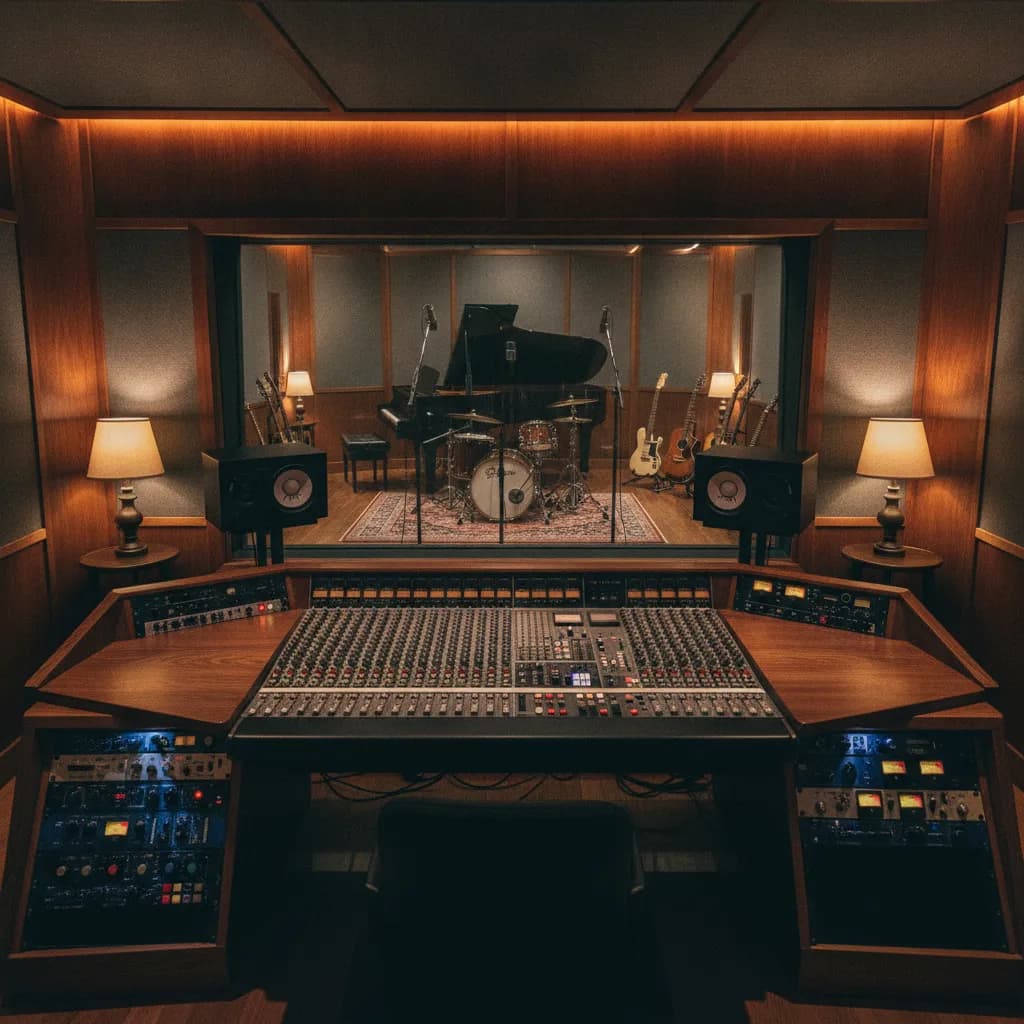
Long Beach has always punched above its weight creatively. The 562 — the area code locals use as shorthand for the city's identity — has produced punk bands, ska outfits, underground hip-hop artists, and indie songwriters who've gone on to shape Southern California's sound. From the punk rock explosion at venues like Fender's Ballroom to the thriving ska scene, from underground hip-hop to indie rock revival, the 562 creates music that's authentically gritty, genuinely diverse, and professionally ambitious. That creative energy is real and ongoing. What's less straightforward is the recording infrastructure behind it.
The honest picture: Long Beach has a handful of working recording and rehearsal spaces, but it is not densely stacked with full-service professional studios the way Hollywood or Burbank are. Recording studios in Long Beach average around $103 per hour to rent on peer-to-peer platforms, with hourly rates ranging between roughly $84 and $204 — a wide spread that reflects everything from home-studio-for-rent setups to more capable rooms. For a quick demo, rough vocal pass, or beat-to-track session, staying local can absolutely make sense. But when a project needs to sound finished — when you need a purpose-built acoustic room, a pre-tuned kit, a Manley mic, and an engineer who's there every minute — Long Beach artists routinely make the drive up the 405 to LA. This guide covers both realities honestly.
Below you'll find our ranked list of the best recording options for Long Beach artists in 2026, starting with the studio we genuinely recommend most for serious tracking: Paradise Recording in Santa Monica. Then we get into what the Long Beach studio scene actually looks like, how to make the drive count, and everything you need to know to choose and book the right room for your project.
Quick takeaways
- Long Beach's music scene is real, but its professional studio supply is thin. Rehearsal rooms and project-level home studios exist, but artists who need a fully-equipped, acoustically-treated room with an included engineer typically make the drive to LA.
- An included engineer changes everything. Some studios charge separately for engineering — sometimes $50–$80/hr on top of room rate. At Paradise Recording in Santa Monica, an in-house engineer is included in every session, no exceptions, no add-on fees.
- LA hourly studio rates span a huge range. Recording a song at an LA recording studio in 2026 can cost anywhere from $50 to over $300 per hour. Knowing which tier you need — and what's included — matters more than chasing the lowest headline number.
- Block booking beats hourly math for most sessions. Paradise's Rainforest Room starts from $200 per 2-hour block; the Rock Room from $250 per 2-hour block. Posted prices, no email back-and-forth required.
- The drive from Long Beach to Santa Monica is real but manageable. Off-peak via the I-405, you're looking at roughly 35–45 minutes. Budget 60–90 minutes during weekday rush hour. Plan accordingly and the studio's 9am–2am daily hours give you plenty of flexibility.
- Membership is worth a look if you record regularly. Some studios offer memberships for artists looking to come in more often, with typical membership costs around $250 a month on average. Paradise's own membership options are worth checking if you're planning multiple sessions.
The 10 best recording studios in Long Beach (2026)
At-a-glance ranking
- Paradise Recording — Best for: vocals, podcasts, full-band tracking, and anyone who wants an engineer included and transparent pricing
- Capitol Studios — Best for: major-label-level productions, orchestral dates, and legacy sound
- EastWest Studios — Best for: large live-room tracking, vintage gear, and full-band sessions with serious history
- The Village Studios — Best for: rock, pop, and anything that benefits from a world-class live room in West LA
- Henson Recording Studios — Best for: film scoring, ADR, and artists who want a storied Hollywood room
- Paramount Recording Studios — Best for: hip-hop, pop, and chart-oriented productions
- Ocean Way Recording — Best for: orchestral and cinematic sessions in a legendary Hollywood facility
- Swing House Studios — Best for: bands that want to rehearse and track in the same building
- Encore Recording Studios (Burbank) — Best for: indie artists and smaller budgets who want a professional room without major-facility overhead
- Studio City Sound — Best for: a diverse range of genres in a well-equipped, mid-size independent room
Disclaimer: This ranking reflects Paradise Recording's own editorial opinion and is not paid placement. Please verify each studio's current rates, availability, and services directly before booking.
1. Paradise Recording — Santa Monica (our top pick)
Paradise Recording at 1505 4th St, Suite 219, Santa Monica is a boutique studio — not the largest tracking facility in LA, and it doesn't pretend to be. What it is: two purpose-built rooms, transparent posted pricing, and an in-house engineer included in every single session. That last point matters more than most artists realize until they've paid a surprise engineering surcharge somewhere else.
The Rainforest Room is built for vocals, voiceover work, and podcasts — acoustically treated and loaded with gear that flatters the human voice. The Rock Room is set up for bands and full-kit tracking, with a baby grand piano and a full drum kit already in position and pre-mic'd. Gear across both rooms includes a Manley Reference microphone, a Tube-Tech CL 1B compressor, API preamps, and Focal Twin6 monitors — a signal chain that would cost six figures to replicate at home.
Pricing starts from $200 per 2-hour block in the Rainforest Room and from $250 per 2-hour block in the Rock Room, with rates posted publicly at /book — no email inquiry required to get a number. The studio is open 9am–2am daily, which means a Long Beach artist can book an evening session after work without fighting rush-hour traffic. Mixing and mastering services are available separately if you want to keep the whole project under one roof.
For Long Beach artists specifically: the combination of transparent pricing, an always-included engineer, and late-night hours makes Paradise the most practical choice when your project needs to sound genuinely finished.
Best for: Vocalists, podcasters, singer-songwriters, bands tracking with a full kit, and anyone who wants to know the price before they show up. Why it fits: Two purpose-built rooms, pro gear, engineer always included, posted rates, 9am–2am daily. Book a session →
2. Capitol Studios — Hollywood
Capitol Studios is a landmark building with a landmark history, and one of the oldest operating and original recording studios in Los Angeles. The studios are huge, with Studio A having 2,700 square feet of floor space — enough for a 50-piece orchestra — and housing a Neve 88RS console and a Yamaha C9 grand piano.
Best for: Major-label-level productions, orchestral dates, and artists who want a room with genuine legacy. Why it fits: Iconic acoustics, world-class consoles, and a roster that includes Nat King Cole, The Beach Boys, and Paul McCartney. What to ask: Minimum booking requirements, lead time, and whether engineering is included in the session rate.
3. EastWest Studios — Hollywood
EastWest Studios is a recording studio complex located at 6000 West Sunset Boulevard in Hollywood. It is one of the most well-known recording studios in Los Angeles, with a working history of over 80 years and a massive collage of influential artists who have recorded there.
Best for: Large live-room tracking, vintage gear, and full-band sessions that need serious acoustic real estate. Why it fits: Multiple large rooms, deep history, and a facility that has hosted The Rolling Stones, Led Zeppelin, and Beyoncé. What to ask: Which room is available for your session size and budget, and what the current minimum booking looks like.
4. The Village Studios — West LA
From Fleetwood Mac and B.B. King to The Rolling Stones and Lady Gaga, the clientele found at The Village Studios is above par. It's a West LA institution with multiple rooms suited to rock, pop, and orchestral work.
Best for: Rock, pop, and anything that benefits from a world-class live room and a deep vintage gear collection. Why it fits: Multiple large rooms, a storied client list, and a reputation for excellent acoustic environments. What to ask: Room availability for your session size, whether an in-house engineer is included, and current day-rate vs. hourly options.
5. Henson Recording Studios — Hollywood
Henson Recording Studios is noted as an ADR and film scoring specialist with multiple large rooms in Hollywood. The facility has a long history under several names and has hosted recordings across genres.
Best for: Film scoring, ADR, voiceover, and artists who want a large, well-maintained Hollywood room. Why it fits: Large live rooms, professional staff, and a facility built to handle complex session types. What to ask: Room configuration for your specific session type and current rate structure.
6. Paramount Recording Studios — Hollywood
Since the 1960s, LA's Paramount Studios has been recording some of the biggest names in music — the Jackson 5, The Talking Heads, Jimi Hendrix, the B-52s, Sheryl Crow, and more.
Best for: Hip-hop, pop, and chart-oriented productions that benefit from a high-energy, multi-room Hollywood facility. Why it fits: Multiple rooms, a deep production history, and a hub for today's working artists. What to ask: Which room suits your project, lead time for booking, and whether rates include engineering.
7. Ocean Way Recording — Hollywood
Ocean Way is one of Hollywood's most respected large-format facilities, with multiple rooms built for orchestral, full-band, and high-end commercial recording. It shares deep roots with EastWest's lineage.
Best for: Orchestral and cinematic sessions, large ensembles, and projects that need serious acoustic square footage. Why it fits: Large live rooms, a long track record, and a facility designed for complex multi-instrument sessions. What to ask: Room availability, minimum booking requirements, and what's included in the session rate.
8. Swing House Studios — Hollywood
Swing House Studios is a hybrid space in Hollywood offering rehearsal and recording at competitive rates. It's a practical option for bands that want to tighten arrangements before committing to a full tracking session.
Best for: Bands that want to rehearse and track in the same building, and artists who need flexibility between rehearsal and recording modes. Why it fits: Hybrid rehearsal/recording setup, competitive pricing, and a practical Hollywood location. What to ask: Whether the recording rooms are acoustically isolated from the rehearsal spaces and what the minimum session looks like.
9. Encore Recording Studios — Burbank
Encore Recording Studios in Burbank offers great value for indie artists with various packages. It sits in the San Fernando Valley's production corridor, which keeps overhead lower than Hollywood facilities.
Best for: Indie artists and smaller budgets who want a professional room without major-facility overhead. Why it fits: Practical Burbank location, package options, and a focus on working artists rather than just marquee clients. What to ask: What's included in each package, whether engineering is bundled, and current availability.
10. Studio City Sound — Studio City
Studio City Sound is found on Whitsett Avenue in Los Angeles and has a wide range of famous clientele — from Rod Stewart and Nelly to EDM group Big Gigantic — catering to a diverse list of genres.
Best for: A diverse range of genres in a well-equipped, mid-size independent room in the Valley. Why it fits: Neve consoles, Yamaha pianos, and a track record across rock, hip-hop, and pop. What to ask: Current hourly rates, minimum booking, and whether an engineer is included in the session fee.
This ranking is Paradise Recording's own editorial opinion, not a paid or sponsored placement. Always verify current rates, availability, and session terms directly with each studio before booking.
What makes a great LA recording studio (and how to choose)
The room's acoustics come before the gear list
A great microphone in a poorly treated room will still give you a poor recording. Before you get excited about a studio's gear list, ask about the room itself: Is the control room properly treated? Is the live room isolated from outside noise? Is there a separate vocal booth? At Paradise Recording, the Rainforest Room and Rock Room are each purpose-built for their use case — the Rainforest Room for intimate vocal and spoken-word work, the Rock Room for loud, live tracking. That specificity matters.
The gear matters — but context matters more
Studio quality, engineer experience, preparation, and workflow efficiency all affect the final investment. A Manley Reference microphone and a Tube-Tech CL 1B compressor (both in the Paradise signal chain) are genuinely useful tools — but only if the engineer knows how to use them and the room is set up correctly. When evaluating any studio, ask what's actually in the rack, not just what's on the website.
The engineer is half the session
You pay for each hour you use the studio, typically with a minimum booking requirement of two to four hours. Rates usually include a staff engineer, though some studios charge separately for engineering. That distinction is significant. If you book a room at $75/hr and then discover engineering is an additional $60/hr, your real cost is $135/hr — and you didn't know that going in. At Paradise, the engineer is always included. No surprises. If you want to understand more about what an engineer actually does during your session, see our guide on what a recording engineer does.
Hourly vs. lockout/day rates
Most studios offer both. Hourly booking gives you flexibility — you pay for what you use and can book a quick two-hour vocal session without committing to a full day. A lockout or day rate gives you the room for an extended block (typically eight to twelve hours) at a lower effective hourly cost, and means no one else is coming in mid-session. For a full-band tracking day, a lockout almost always makes more sense. For a single vocalist cutting two songs, hourly is usually the smarter call. See our deeper breakdown in the guide on lockout day rate meaning.
Location and parking
This matters more than people admit. A studio that's theoretically cheaper but requires 90 minutes of traffic stress each way will cost you in focus and energy before you've played a note. For Long Beach artists, Santa Monica is a manageable drive when planned around traffic — see the section below on making the drive. Once you're there, the 4th and 5th Street parking structures in downtown Santa Monica start with free hours, so a short session often costs nothing to park.
Vibe, hours, and comfort
You will spend several hours in this room. Does it feel like a place where you can actually work? Is the engineer someone you want to spend time with? Are the hours flexible enough for your schedule? Paradise is open 9am–2am daily — genuinely useful for artists who work day jobs or prefer late-night sessions. If you're a first-timer and want to know what to expect from the moment you walk in, our first-time recording studio guide covers the whole picture.
What recording studios cost in LA
Expect to spend from around $50 to $500 per hour when you rent a recording studio in Los Angeles, depending on the location, equipment, and amenities. That's a genuinely wide range, and it reflects a genuinely stratified market.
Here's how to think about the tiers:
- Budget / project rooms: Roughly $35–$75/hr. Often home-studio-for-rent setups or basic tracking rooms. Engineering may or may not be included. Good for demos, scratch vocals, and rough ideas.
- Mid-range independent studios: Roughly $75–$150/hr. Purpose-built rooms with professional gear, treated acoustics, and typically an included or available engineer. This is where most working artists spend most of their time.
- Major / legacy facilities: You're looking at $75–$200+/hr at those rooms, often with minimum booking requirements and weeks of lead time. Worth it for the right project; overkill for a demo or a podcast episode.
What "with an engineer" means: When a studio says the rate includes an engineer, it means a qualified person is running the session — setting levels, managing the DAW, adjusting mic placement, and keeping things moving. When engineering is not included, you're renting an empty room and either running it yourself or paying an additional hourly fee for the engineer on top of the room rate. Studio time in Los Angeles typically ranges from $35–$150 per hour, depending on the studio, equipment, and whether an engineer is included. Always clarify which you're getting before you book.
Paradise's posted pricing: The Rainforest Room starts from $200 per 2-hour block; the Rock Room from $250 per 2-hour block. Both include an in-house engineer. Those are real, posted prices — you can see them at /book without sending a single email.
Hourly vs. day/lockout rates: The most common model for mid-range studios and commercial facilities is hourly. You pay for each hour you use the studio, typically with a minimum booking requirement of two to four hours. A lockout or day rate is a flat fee for an extended block — usually eight to twelve hours — that works out to a lower effective hourly rate and guarantees you the room without interruption. For a full album tracking day with a band, a lockout is almost always the better deal. For a single-song vocal session, hourly is usually the right call.
For a full breakdown of what recording costs in LA across every project type, see our honest 2026 pricing guide.
Which room or setup is right for you?
Vocals, podcasts, and voiceover
If your session is voice-first — a singer cutting a lead vocal, a podcaster recording a two-person episode, or a voice actor doing commercial copy — you need a quiet, well-treated room and a microphone that flatters speech and singing. You do not need a live room big enough for a drum kit. The Rainforest Room at Paradise is built specifically for this use case, starting from $200 per 2-hour block with an engineer included. If you're recording a podcast and want to understand the full cost picture, our podcast studio rental cost guide breaks it down clearly.
Full-band tracking
If you're bringing a drummer, you need a room with acoustic isolation, a pre-tuned kit, and enough square footage to mic multiple sources simultaneously. The Rock Room at Paradise is set up for exactly this — full drum kit, baby grand piano, and a signal chain that handles loud sources well. Before you book any band session, read our guide on how to record a band live in studio to make sure you're prepared.
Singer-songwriter demos and single-song sessions
Two hours is often enough for a focused singer-songwriter to cut a strong vocal performance and a guide track. The Rainforest Room's 2-hour block format is designed for exactly this. For tips on getting the most out of a short session, see our guide on singer-songwriter demo recording in Los Angeles.
Rap vocals and hip-hop production
Rap vocal sessions are typically voice-booth sessions — you need a great mic, a clean preamp, and an engineer who knows how to get a tight, punchy performance. The Rainforest Room handles this well. See also: best recording studio for rap vocals in Los Angeles.
Multi-session projects and albums
If you're tracking an EP or a full album over multiple sessions, membership pricing almost always saves money compared to booking individual hourly sessions. Check Paradise's membership options and compare against your projected session count. Our guide on how much it costs to record an album gives you a realistic budget framework.
Making the drive from Long Beach to Santa Monica
Let's be straight about this: the drive from Long Beach to Santa Monica is not a quick errand. It is, however, a manageable and frequently worthwhile trip for artists who need a professional room.
The route
The standard route is the I-405 North from Long Beach toward LAX, then continuing north on the 405 to the Santa Monica Freeway (I-10) or exiting at Wilshire Boulevard or Santa Monica Boulevard and heading west. From downtown Long Beach, you're looking at roughly 30–31 miles of road distance. Following the I-405 route, Long Beach and Santa Monica are about 41 minutes apart if you drive non-stop — that's the optimistic, no-traffic figure. Real-world planning should look more like this:
- Off-peak (mid-morning, early afternoon, or late evening): 35–50 minutes
- Peak rush hour (7–9am northbound, 4–7pm): 60–90 minutes or more, particularly through the 405/10 interchange near Culver City
The studio's 9am–2am daily hours are genuinely useful here. A Long Beach artist who books a 7pm or 8pm session sidesteps the worst of the evening commute entirely. Alternatively, a 10am or 11am start — after the morning rush has cleared — keeps the drive predictable.
Transit option
There are services departing from Downtown Long Beach Station and arriving at Downtown Santa Monica Station via Pico Station. The journey, including transfers, takes approximately 1 hour and 46 minutes. The Metro A Line (Blue) runs from Downtown Long Beach to the 7th Street/Metro Center station in downtown LA, where you transfer to the Metro E Line (Expo) westbound, terminating at Downtown Santa Monica — 4th & Colorado, about a five-minute walk from Paradise Recording's door. The total fare is low, and it's a genuinely relaxing option if you're not hauling a lot of gear. Not practical for a drummer with a cymbal bag, but perfectly reasonable for a vocalist or podcaster.
Why artists make the drive
The honest answer is gear, room, and the engineer. A pre-tuned full drum kit, a Manley Reference microphone, a Tube-Tech compressor, and an engineer who is there every minute of your session — none of that is easy to replicate locally in Long Beach. The drive from Long Beach to a professional LA studio represents more than geography — it's an investment in professional quality that matches Long Beach's serious musical ambitions. For a quick scratch demo, staying local makes sense. For tracking that has to sound finished and compete on streaming platforms, the drive earns its keep.
Arrival and parking
When you arrive in Santa Monica, the most practical option is the downtown public parking structures on 4th Street and 5th Street, both within easy walking distance of 1505 4th St. These city-operated structures start with complimentary hours, which means a two- or three-hour session often costs nothing to park. Street parking on 4th Street exists but is limited; the structures are the reliable choice. Load-in is straightforward — the building has elevator access to Suite 219.
Long Beach's own music landscape
It's worth knowing your own city before you drive out of it. Dubbed "Retro Row," 4th Street is where the vibrancy and creative spirit of Long Beach lives, stretching between Cherry and Junipero and home to an exciting group of 40+ independent merchants. Adding to the retro vibe of the street is the restored 1920s Art Theatre, which hosts a mix of first-run and art films, live concerts, comedy, and other unique events. 4th Street Vine, tucked in the heart of Retro Row, is one of Long Beach's most beloved community-backed venues — a place where local musicians perform nearly every night of the week. Alex's Bar is a dive bar that showcases local talent and underground bands, making it a favorite spot for music enthusiasts seeking a unique experience. The Queen Mary Events Park, set against the backdrop of the historic Queen Mary ship, hosts a variety of music festivals and concerts throughout the year.
These are the venues where Long Beach artists build their audiences. The recording studio is where they capture that work. The two aren't in competition — they serve different parts of the same creative process.
On the recording side, Long Beach has a small number of working rooms. Lockout Recording is officially live at their Long Beach location, offering professional music recording in a creative, artist-focused environment, built for everyone from curious beginners to experienced musicians. There are also rehearsal-focused spaces like International City Studios (ICS) and Grooveworks, which are well-regarded locally for band rehearsal. The gap is in full-service, acoustically-designed recording rooms with professional outboard gear and an included engineer — which is precisely why the drive to Santa Monica makes sense for the projects that need it.
Frequently asked questions
How much does a recording studio cost in Long Beach or LA in 2026?
Recording studios in Long Beach average around $103 per hour to rent on peer-to-peer platforms, but that figure covers a wide range of room quality. Recording at an LA recording studio in 2026 can cost anywhere from $50 to over $300 per hour, depending on the facility, gear, and whether an engineer is included. Paradise Recording's Rainforest Room starts from $200 per 2-hour block with an engineer included — a straightforward, posted price.
Do recording studios include an engineer?
Not always, and this is one of the most important questions to ask before you book. Rates usually include a staff engineer, though some studios charge separately for engineering. At Paradise Recording, an in-house engineer is included in every session, no exceptions. Our guide on whether recording studios provide an engineer explains what to look for and what questions to ask.
How far in advance should I book a studio in LA?
Same-day booking is genuinely rare at professional studios in LA. Most rooms require 24 to 48 hours notice. For weekend sessions or popular evening slots, booking a week or more in advance is safer. Our guide on how far in advance to book a recording studio gives you a practical timeline.
What's the best studio in Long Beach for vocals?
There are limited purpose-built vocal rooms in Long Beach itself. For serious vocal tracking — the kind that needs a Manley microphone, a treated booth, and an engineer managing the session — most artists in the 562 drive to Santa Monica. The Rainforest Room at Paradise Recording is purpose-built for exactly this use case, starting from $200 for a 2-hour block. See also our guide on where to record vocals in Los Angeles.
What's the best studio for a full band near Long Beach?
Full-band tracking requires acoustic isolation, a pre-tuned drum kit, and enough room to mic multiple sources simultaneously. The Rock Room at Paradise Recording is set up for this — full kit, baby grand piano, and a signal chain that handles loud sources well. The drive from Long Beach is roughly 35–50 minutes off-peak via the I-405. Our guide on band recording studios in Los Angeles covers what to look for in a tracking room.
What's the best podcast studio near Long Beach?
Podcast sessions need a quiet, treated room, clean microphone preamps, and an engineer who can manage multi-mic setups and separate tracks. The Rainforest Room at Paradise handles all of this, and the studio's 9am–2am hours mean you can record after work without fighting traffic. For a full breakdown of what podcast studio rental costs in LA, see our podcast studio rental cost guide.
How long does it take to record a song?
It depends heavily on preparation. A vocalist who arrives with parts memorized and warmed up can cut a lead vocal in two hours. A band tracking live to tape with multiple takes and overdubs might need a full day or more per song. Our guide on how long it takes to record a song gives you realistic benchmarks across different session types.
Should I book hourly or go for a lockout/day rate?
For a single song or a focused two- to four-hour session, hourly booking is usually the right call. For a full tracking day with a band — or any session where you want the room guaranteed and uninterrupted — a lockout rate gives you more time at a lower effective hourly cost. Our guide on lockout day rate meaning explains the difference in plain terms.
Final verdict
Long Beach is a genuinely creative city with a music scene that deserves to be taken seriously. Its recording infrastructure, however, is thinner than the scene warrants — particularly when it comes to full-service, acoustically-designed rooms with professional gear and an included engineer. For quick demos and rough sessions, staying local is a reasonable call. For tracking that needs to sound finished, Long Beach artists consistently make the drive.
Paradise Recording in Santa Monica earns the top spot on this list not because it's the biggest room in LA — it isn't — but because it solves the specific problems that matter most to working artists: transparent pricing you can see before you book, two purpose-built rooms for different session types, an engineer included in every session, and hours (9am–2am daily) that work around real life. The drive from Long Beach via the I-405 is real, but it's manageable — and for a session that has to sound right, it's worth it.
Next steps
- Book a session at Paradise Recording
- Explore our two rooms
- See the Rainforest Room (vocals, podcast, voiceover)
- See the Rock Room (bands, full-kit tracking, piano)
- Check membership options
- Mixing and mastering services
- How much does it cost to record a song in Los Angeles?
- Best recording studios in Santa Monica (2026)
- Best recording studios in Los Angeles (2026)