
The short answer
A well-prepared singer-songwriter can realistically track 3–4 demo-quality songs in a 6-hour block — enough time to set up, get comfortable, nail your takes, and do a rough mix before you leave. At Paradise Recording in Santa Monica, that means $450 in the Rainforest Room (vocals and acoustic guitar) or $595 in the Rock Room (baby grand piano or a warmer live-room feel). LA studio rates in 2026 run anywhere from $50 to over $300 per hour, so those block prices sit squarely in the honest mid-range — not the cheapest room in town, and nowhere near a major commercial facility.
Demo vs. master: a useful distinction
A demo has one job: communicate the song clearly enough that a collaborator, label contact, sync supervisor, or producer can hear what it is. It does not need to be a master.
That distinction saves you money and creative energy. You are not chasing perfection on every breath; you are capturing a performance that represents the song. A demo that sounds like you on a good day is almost always more useful than an over-produced track that no longer sounds like anything in particular.
The practical implication: a 6-hour session is enough. An 8- or 12-hour block makes sense when you are cutting final masters or adding multiple overdub layers. For a 3–4 song demo, it is often overkill.
Live tracking vs. overdubbing: which one is right for you?
This is the first real decision you need to make before you book.
Live tracking means recording guitar (or piano) and vocal simultaneously in the same room. A solo singer-songwriter's entire presentation may hinge on that organic blend of simultaneously performed vocal and guitar, and the simplicity of that configuration makes live recording comparatively straightforward. If your songs live in the space between your voice and your instrument — the way the two breathe together — live tracking is almost always the better choice. It is also faster, which matters when you are paying by the hour.
Overdubbing means recording the instrument first, then singing over it (or vice versa). Overdubbing offers the flexibility to layer sounds and perfect each element individually, which can be essential for certain musical styles. With overdubbing, mic bleed issues are non-existent or minimal at worst. If you want to add harmonies, a second guitar part, or any production layer on top of your foundation, overdubbing is the workflow that makes those additions clean and easy to edit later.
For most singer-songwriter demos, the honest recommendation is: live-track the foundation, overdub the extras. Start with a take where your voice and guitar (or piano) are recorded together — even if you end up replacing the vocal later, that live take gives the engineer a real performance to work from. Then spend whatever time remains on harmonies or a second instrument.
Choosing your room at Paradise
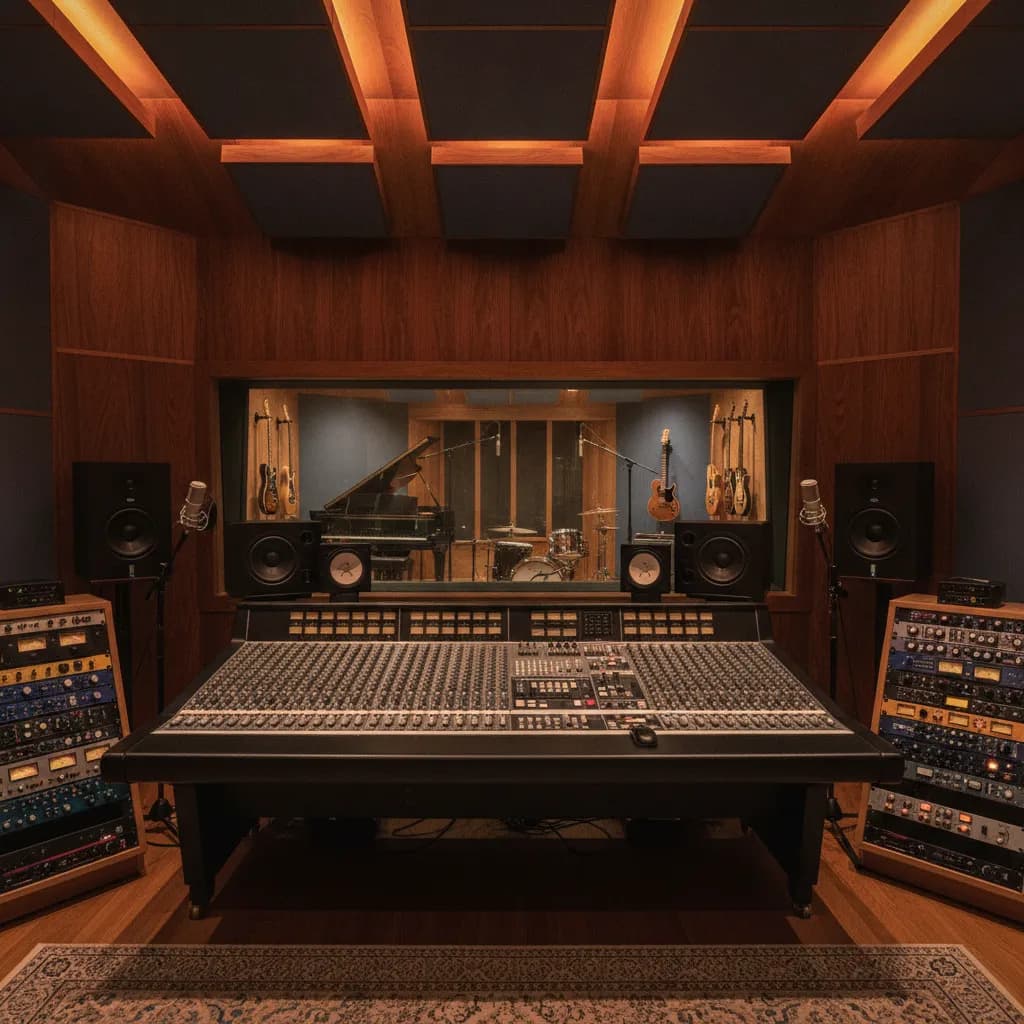
Both rooms at Paradise Recording (1505 4th St, Ste 219, Santa Monica — open 9am–2am daily) include an in-house engineer. Here is how they differ for a singer-songwriter project:
| Rainforest Room | Rock Room | |
|---|---|---|
| Best for | Acoustic guitar + voice, intimate folk/pop, delicate dynamics | Baby grand piano, fuller live-room sound, slight natural reverb |
| Vibe | Close, vocal-forward, controlled | Open, live, slightly roomy |
| 2-hour block | $200 | $250 |
| 4-hour block | $295 | $395 |
| 6-hour block | $450 | $595 |
| 8-hour block | $595 | $795 |
| 12-hour block | $850 | $995 |
| Typical LA market range | $50–$200/hr (varies widely) | $50–$200/hr (varies widely) |
Studio time in Los Angeles typically ranges from $35–$150 per hour, depending on the studio, equipment, and whether an engineer is included. Paradise's block rates work out to $75–$100/hr depending on room and block length — well within the honest mid-range for an engineer-included session.
Choose the Rainforest Room if: your songs are guitar-driven, you want a dry, controlled vocal sound that sits cleanly in a mix, or you are recording a podcast-style spoken intro alongside your tracks.
Choose the Rock Room if: you play piano, you want a slightly more open acoustic environment, or the live-room feel is part of the sound you are chasing.
If you genuinely cannot decide, book a 4-hour block in the Rainforest Room first. It is the lower-risk starting point for most solo acoustic artists.
How long does a 3–4 song demo actually take?
For most musicians recording at a professional studio, a single song takes 4–8 hours of studio time from start to finish — covering recording, producing, and any session work before the mix. That is the full-production number. For a stripped demo with one or two instruments, you can move meaningfully faster — especially if you arrive prepared.
A realistic 6-hour singer-songwriter session at Paradise looks like this:
- 0:00–0:30 — Room setup, mic placement, headphone mix, quick warm-up take
- 0:30–3:30 — Track 3–4 songs live (roughly 45 minutes per song including multiple takes and playback)
- 3:30–5:00 — Overdubs: harmonies, a second guitar pass, any fixes
- 5:00–6:00 — Rough mix on your best two or three songs
Your preparation level is the single biggest variable. Musicians who know their parts cold, have rehearsed recently, and arrive ready to perform move significantly faster than those who are still working things out in the studio. An hour of rehearsal at home can save two hours of studio time.
If you are a first-time studio client, add 30 minutes of buffer. First-time studio clients often need time to get comfortable — the booth feels different, headphone mixes take adjustment, and the awareness of being recorded can affect performance.
When is mixing worth adding?
The rough mix you get at the end of your session is useful for sharing with collaborators and getting feedback. It is not a finished mix.
If these demos are going on streaming platforms, into a sync pitch, or to a label A&R, add a proper mix. Visit Paradise's mixing and mastering page to see current rates. A professional mix engineer typically spends 4 to 8 hours on a single song, including editing, balancing, and applying effects. Budget for that separately from your tracking session — trying to do a full mix at the end of a 6-hour tracking day usually produces a tired mix.
If the demos are purely internal — for a producer meeting, a co-write session, or your own reference — the rough mix is fine. Be honest with yourself about what this recording needs to do before you spend the money.
See also: Mixing and mastering services: what they cost in 2026 and How long does mixing and mastering take?
Getting to the studio
Paradise is at 1505 4th St, Ste 219, Santa Monica CA 90401 — a couple of blocks inland from the Third Street Promenade. The Metro E Line's Downtown Santa Monica terminus at 4th & Colorado is about a five-minute walk from the door, and Big Blue Bus lines stop within a couple of blocks. If you are driving from Venice, plan for roughly 10 minutes via Lincoln; from Culver City, about 15 minutes via Washington; from Hollywood, 25–35 minutes via the 10 (traffic-dependent).
Santa Monica's downtown public parking structures on 4th and 5th Street are the practical option for drivers and start with free hours — a short session often costs nothing to park.
If you need strings or a quick guitar repair before your session, McCabe's Guitar Shop on Pico Blvd is the long-running local option. Harvelle's, the Westside's oldest live-music room (open since 1931), is directly across 4th Street — a good place to decompress after a long tracking day.
A note on home studios
If you already have a quiet room, a decent condenser mic, and a solid audio interface, a simple guitar-and-vocal demo is genuinely achievable at home. Be honest: if your space has audible HVAC noise, street noise, or reflective walls, a professional room will save you more time in post than it costs upfront. See our full breakdown: Home studio vs. professional recording studio.
Deposits and cancellations: what to expect
A 50% deposit is typically required to book studio time, with the remaining balance due in full the day of your session. A typical cancellation provision requires 72 hours notice of cancellation to receive a refund of your deposit; if you give less than 72 hours notice, you forfeit your deposit but are not required to pay the remaining balance. Policies vary by studio — always confirm before you book. See our full guide: Recording studio deposit and cancellation policy: what's normal in LA.
Frequently asked questions
How many songs can I record in a 4-hour session?
A prepared singer-songwriter tracking voice and acoustic guitar live can realistically complete 2–3 songs in 4 hours, including setup and a rough mix pass. Add overdubs or harmonies and that number drops to 1–2. The 6-hour block is the sweet spot for 3–4 songs without feeling rushed. See how many hours it takes to record a song for a deeper breakdown.
Does the engineer come with the room, or do I pay extra?
At Paradise Recording, an in-house engineer is included in every session — no add-on fee. At other LA studios, whether an engineer is included in the hourly rate varies significantly by studio. Always confirm before booking. Our guide Do recording studios provide an engineer? explains what to ask.
Should I record guitar and vocals at the same time or separately?
For most singer-songwriters, live-tracking guitar and vocals together captures the natural interplay between the two and is faster. The solo singer-songwriter's presentation may hinge on that organic blend of simultaneously performed vocal and guitar. If you want clean separation for editing or plan to add production layers, overdubbing gives you more control. Many sessions do both: a live take for feel, then a vocal overdub for polish.
What is the difference between the Rainforest Room and the Rock Room for a solo artist?
The Rainforest Room is optimized for vocals and acoustic instruments in a controlled, intimate environment — ideal for folk, pop, and anything where the vocal needs to sit cleanly up front. The Rock Room has a baby grand piano and a slightly more open live-room sound. If you play piano or want a bit of natural room air in your recordings, the Rock Room is the better fit. Visit our studios page for full details.
Is a 2-hour session ever enough?
Occasionally — if you are a returning client who knows the room, you have one song that is fully rehearsed, and you only need a vocal pass over a pre-recorded track. For a first session or for tracking multiple songs, 2 hours is genuinely tight. Most artists find the 4-hour block to be the practical minimum for a meaningful demo session.
How much should I budget total for a 3–4 song singer-songwriter demo in LA?
Tracking: $450–$595 for a 6-hour block at Paradise. Mixing (if you want finished mixes): add roughly $150–$400 per song depending on complexity, handled separately after the session. Mastering: an additional cost on top of mixing. For a demo that just needs to communicate the songs, the tracking cost alone is often enough. See how much it costs to record a song in Los Angeles for a full cost breakdown.
Next steps
- Book a session — the Rainforest Room and Rock Room are both available to book online
- Compare our studios — full room details, gear lists, and photos
- Mixing and mastering — add finished mixes after your tracking session
- Membership options — if you plan to record regularly, a membership may cut your per-session cost significantly
- Best recording studios in Santa Monica (2026) — how Paradise compares to other options in the neighborhood
- Best recording studios in Los Angeles (2026) — broader market context
- How to prepare for your first recording session — a practical checklist to make every hour count
Facts and prices on this page last verified 2026-07-31 by the Paradise Recording team.