
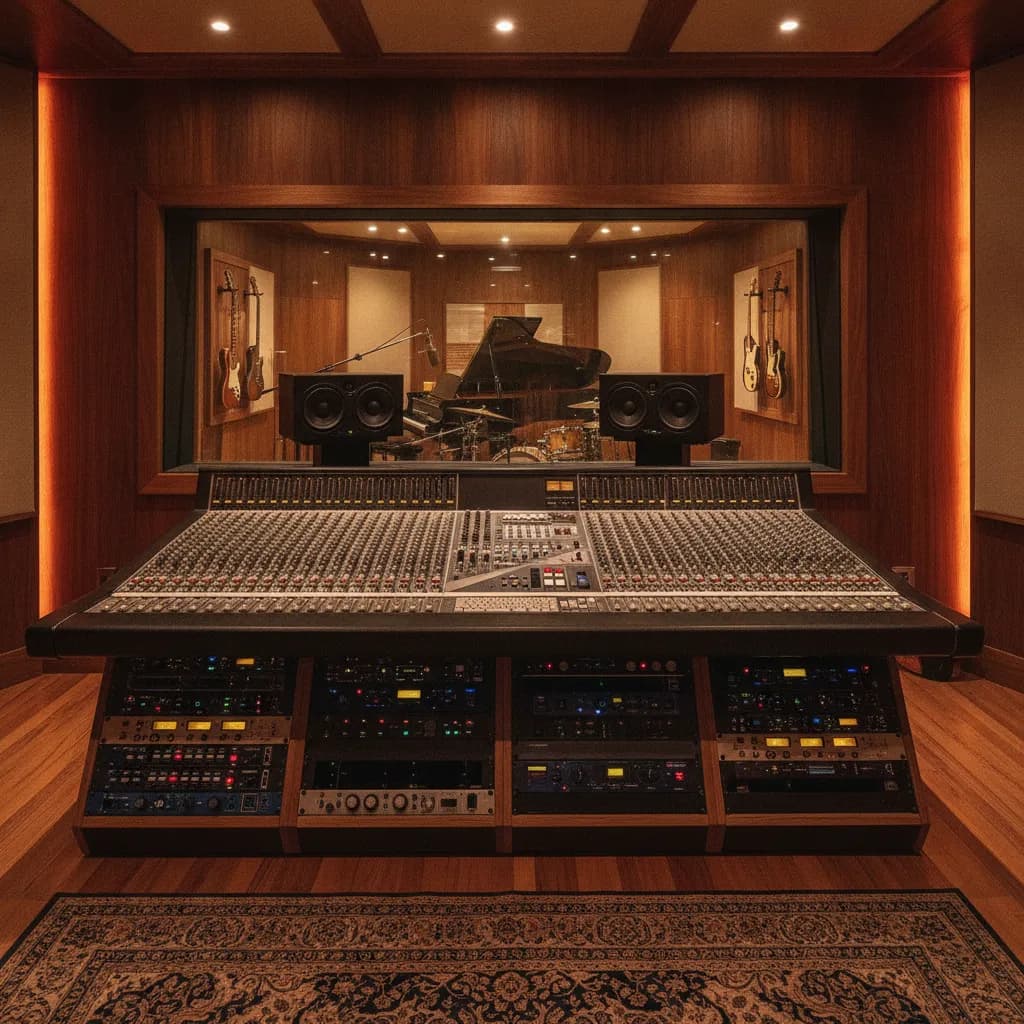
Yes, you can bring friends to a recording session — and one or two supportive people in the room can actually help a nervous artist perform better. The honest limit is one or two guests; beyond that, the social energy in the control room starts costing you takes, comping time, and money. At Paradise Recording in Santa Monica, guests are welcome with your booking — just let us know in advance so we can keep the session running smoothly.
Why a guest or two can genuinely help
Lots of artists like to invite friends and family along to watch when they are recording — having an audience present is something many artists find helps them get the most out of their performance. A familiar face on the couch can settle nerves, provide honest real-time feedback, and give the session a sense of occasion. If you're tracking vocals and you want your co-writer or your manager in the room, that's a completely reasonable call.
The key word is trusted. Keep studio guests to a minimum, only bring people you highly trust, and always ask permission from the person paying for the session before inviting any friends into their creative space.
Where it goes wrong: the honest case for keeping it small
You don't need to roll with your whole crew — bringing a big raucous group of people into a recording studio is just bad form.
Here's why that matters in practice:
Comping slows down. One of the only production techniques common to pretty much every hit record nowadays is vocal comping: the process of recording several takes of your lead vocalist and then editing together a master performance from all the best bits. When three friends each have a different opinion about which take was "the one," the engineer spends the next 20 minutes playing referee instead of building your comp. That's 20 minutes of billable time that produced nothing.
Extra voices carry. When creating, musicians tend to get in a zone where they need to completely hone in and focus on the music — this zone is very easy to get taken out of when there are too many outside distractions going on.
Guests who aren't involved add friction. Guests who aren't directly involved in the work add distraction and can make others uncomfortable — if you want to bring someone along, clear it with the studio in advance.
Phone calls in the room kill takes. Take your phone calls outside — most engineers or producers will stop playing audio if you take a phone call during a session. More guests means more phones, more buzzing, more interrupted takes.
The sweet spot: one or two people with a clear role
The best guest is someone who has a reason to be there: a co-writer, a vocal coach, a manager, a photographer (check the studio's photo policy first), or a bandmate who's up next. Give them a clear job — "you're listening for energy on the chorus" — and the session stays focused.
If you have been given permission to bring your friend or production partner into the session, don't sit behind the engineer talking while the engineer is mixing. The control room is for listening, not conversation. If your guest needs to catch up with you, step into the hallway.
Paradise Recording's approach
At Paradise Recording, guests are welcome in the control room as long as the session is yours. We ask that you mention any guests when you book your session — not to gatekeep, but so the engineer can set up the room appropriately and make sure everyone's comfortable from minute one.
Every booking is the whole studio — the Rainforest vocal room, the Rock live room with the kit and baby grand, the control room and the lounge — so there is room for guests whatever you're recording:
| Session (whole studio, engineer included) | 2-hr | 4-hr | 6-hr | 8-hr | 12-hr |
|---|---|---|---|---|---|
| Paradise Recording | $160 | $300 | $450 | $600 | $850 |
Typical LA market range for comparable boutique studios: $50–$200/hr, engineer often billed separately.
Paradise's posted prices include the engineer on every session (every rate).
Expect to spend from around $50 to $500 per hour when you rent a recording studio in Los Angeles, depending on the location, equipment, and amenities. Paradise sits in the mid-range of that spectrum, with the engineer already built in — so the number on the rate card is the number you pay.
If you're bringing a full band, the Rock Room has the physical space to accommodate players and a small audience naturally. For a solo vocal session in the Rainforest Room, one guest in the control room is comfortable; two is fine; three starts to feel crowded and will slow the engineer down.
Getting to the session (and where to park)
Paradise Recording is at 1505 4th St, Ste 219, Santa Monica — open 9am to 2am daily. The Metro E Line station is located near the intersection of 4th Street and Colorado Avenue in downtown Santa Monica, and it is the E Line's western terminus — about a five-minute walk from the studio door. Big Blue Bus lines stop within a couple of blocks. If you're driving, Santa Monica's downtown parking structures on 4th and 5th Street start with free hours, so a short session often costs nothing to park. Directly across 4th Street is Harvelle's, the Westside's oldest live-music room (open since 1931) — a natural spot to decompress with guests after the session wraps.
Frequently asked questions
Do I need to tell the studio how many people I'm bringing?
Yes, always. When booking staff ask questions about your session — including the number of people attending — they're doing their job to understand whether they're the right fit for you and what they need to deliver for you to succeed. At Paradise, just drop the headcount in your booking notes and we'll handle the rest.
Can guests come into the recording booth with me?
Generally no — the live room is for performers only during tracking. Microphones pick up everything, including whispered encouragement. Guests belong in the control room, where they can watch through the glass and hear the playback without affecting the recording.
What if a guest is also a collaborator — a producer or co-writer?
That's a completely different situation. A working collaborator isn't a guest — they're part of the session. Let us know their role when you book and the engineer will factor them into the workflow from the start. See our guide to what happens in a recording session for how those dynamics typically play out.
Is there a guest fee?
At Paradise, no. Guests are included in your room rate. The rate covers the room, the in-house engineer, and a reasonable number of people in the control room. We're not counting heads — we're just asking you to keep the vibe focused.
What should I tell my guest before the session?
Phones on silent (or in a bag), no talking during takes, and step outside for calls. A notification can ruin more than a take — it can break concentration, flatten performance, and force everyone to rebuild the room's energy from scratch. Brief your guest in the parking lot and you'll never have to say any of this inside.
Is there ever a case where no guests is the right call?
Honestly, yes. If you're recording something emotionally raw — a confessional lyric, a grief-driven vocal, a therapy-adjacent podcast — a roomful of observers can make it harder to go to the vulnerable place the performance needs. Some musicians do not like being watched during their sessions, and it is never a good idea to compromise their privacy. Know yourself. There's no rule that says you have to share the room.
Next steps
- Book a session — mention your guest count in the notes
- Explore the studio — the Rainforest Room and Rock Room come with every booking
- Mixing and mastering — what happens after the session
- Membership options — if you're recording regularly
- How to prepare for your first recording session
- Recording studio etiquette: the unwritten rules every artist should know
- What to bring to a recording studio session
Facts and prices on this page last verified 2026-08-28 by the Paradise Recording team.