
A finished, commercially releasable single costs under $50 fully DIY (home recording + AI master + free-tier distribution) or $1,500–$2,500 at the indie-pro tier (pro studio time + human mix/master + paid distribution + basic promo). The four cost buckets are the same at every budget level: recording, mixing/mastering, assets, and release/promo — the only variable is what you spend in each one.
The one table you need
| Line item | $250 release | $750 release | $2,000 release |
|---|---|---|---|
| Distribution | Free tier (15–30% royalty cut) | $10–$25 one-time (CD Baby single) | $25–$45/yr subscription (DistroKid/TuneCore) |
| ISRC / UPC | Included with distributor | Included with distributor | Included with distributor |
| PRO registration | Free (ASCAP/BMI one-time signup) | Free | Free |
| Recording | $0 (home setup) | $0–$100 (home or borrowed gear) | $300 (4-hr Paradise block, whole studio, engineer included) |
| Mixing | $0 (self-mixed) | $100–$150 (budget freelancer) | $500–$600 (mid-tier engineer) |
| Mastering | $0–$10 (AI: LANDR/eMastered) | $50–$75 (budget human master) | $200–$250 (pro human master). Paradise mastering is $250 |
| Cover art | $0–$30 (Canva/AI tools) | $50–$100 (freelancer) | $200–$400 (designer) |
| Vertical video / Reels clip | $0 (phone + CapCut) | $0–$50 (phone + simple edit) | $100–$300 (editor or videographer) |
| Paid promo (Meta ads) | $0 | $100–$200 | $300–$500 |
| Total (approximate) | ~$30–$50 | ~$310–$600 | ~$1,620–$2,390 |
Distribution and studio figures are actual 2026 posted prices. All other figures are typical LA/online market ranges, not specific competitor quotes.
1. Fixed costs: distribution, ISRC, UPC, PRO
Distribution is the cheapest line on the sheet — and the one with the most hidden variables.
DistroKid charges a flat annual fee starting at $22.99/year for their Musician plan, covering unlimited uploads under one artist name. DistroKid keeps 0% of your royalties — you get 100%. The catch: catalog removal risk is built into subscription services when payments lapse.
CD Baby charges a one-time fee per release — $9.95 for a single — with no renewal, so your music stays up forever, but keeps 9% of your streaming royalties. Subscription distributors like DistroKid and TuneCore work well for artists releasing four or more tracks per year; CD Baby's one-time fee model fits artists who release rarely and care most about catalog permanence.
Free tiers exist (some distributors offer $0 upfront) but take 15–30% of royalties in perpetuity — fine for a first release, expensive if the song earns anything.
ISRC and UPC codes are included with every major distributor at no extra charge. PRO registration (ASCAP or BMI in the US) is free and should happen before release day. If you write your own songs, register with a PRO like ASCAP, BMI, or SESAC, then consider publishing administration through CD Baby Pro, TuneCore Publishing, Songtrust, or similar services.
2. Recording: $0 at home vs. $300 for a pro 4-hour block
Home recording is a legitimate option for the $250 tier — not a compromise. A well-treated bedroom and a $100 USB mic can produce a releasable vocal take if you know your signal chain. See our guide to home studio vs. professional recording for an honest side-by-side.
When you want a professional room, recording a song at an LA recording studio in 2026 can cost anywhere from $50 to over $300 per hour. Studio time in Los Angeles typically ranges from $35–$150 per hour, depending on the studio, equipment, and whether an engineer is included.
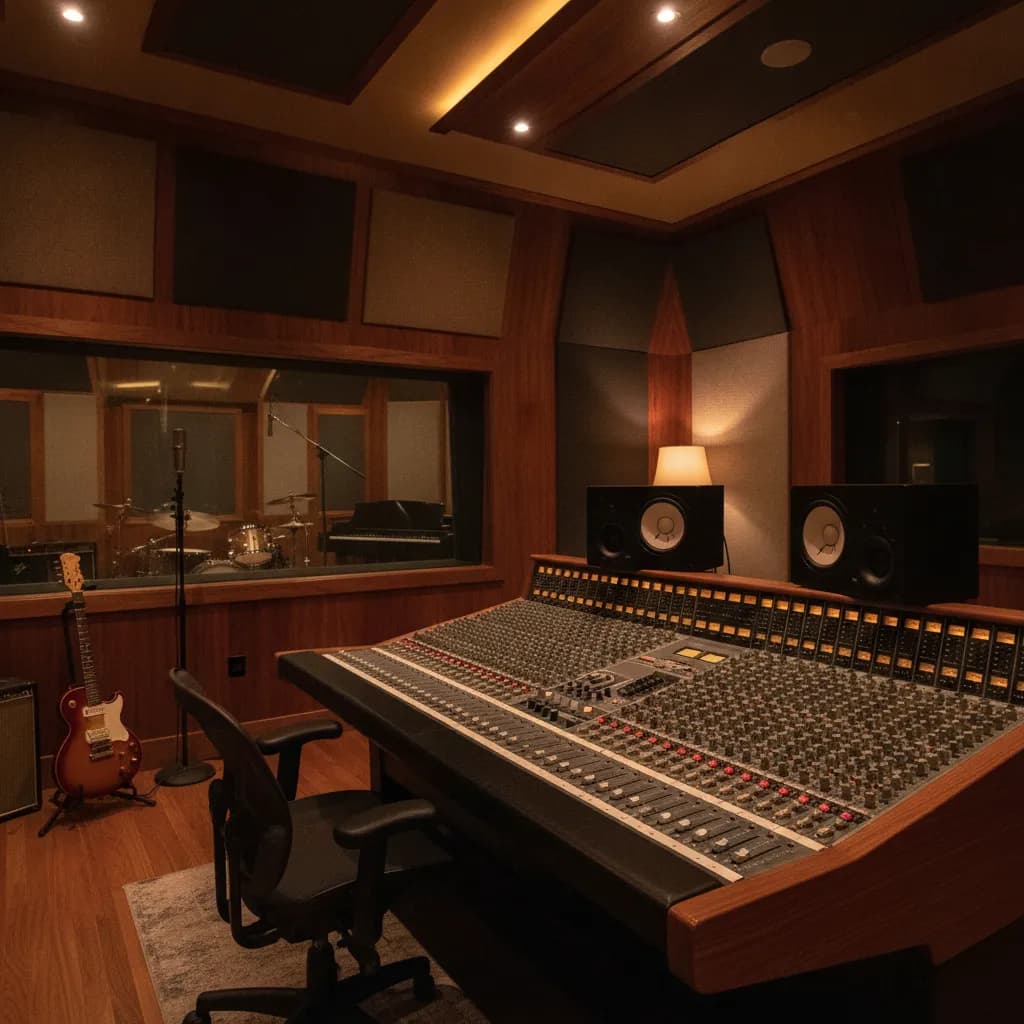
At Paradise, a 4-hour block is $300 for the whole studio — including the Rainforest Room, built for vocals, solo artists, and podcasts — with a staff engineer included in every session. That's the full cost: no separate engineering fee, no hidden add-ons. For most singer-songwriter or rap vocal sessions, four hours is enough to track and comp a finished lead vocal plus one or two harmony passes. Need to check what fits your workflow? Read how many hours it takes to record a song before you book.
3. Post-production: mixing and mastering
This is where budget decisions have the most audible impact.
Professional mixing costs $200–$2,000 per song; professional mastering costs $30–$500 per song. Together, expect $230–$2,500 to take a single from raw stems to release-ready master in 2026. Mid-tier engineers with verifiable credits cluster at $400–$800 for mixing and $75–$200 for mastering.
At the budget end, mastering prices commonly range from $40–$200 per track; AI services like LANDR offer mastering at around $9.99 per track, which is useful as a comparison baseline.
Paradise's posted rates: mix + master for $800 per song ($600/song for two or more), mastering only for $250 per track — three revision rounds included, real engineers, upload from anywhere. You don't need to record here to use Paradise mixing and mastering; stems can be uploaded from any session, anywhere in the world.
The honest take: automated mastering platforms are now good enough to be tempting for many independent artists, especially for rough drafts, reference checks, and low-priority releases — that has pushed the entry-level mastering price down and made "instant masters" a baseline expectation. For a single you're pitching to playlists or press, human ears still earn their fee. See what mixing and mastering actually costs in 2026 for a full tier breakdown.
4. Assets: cover art and vertical video
Cover art runs $0–$400 depending on who makes it. Canva and AI image tools put a serviceable square at zero cost; a freelance designer on a platform like Dribbble or Fiverr runs $30–$150; a proper illustrator or photographer with a licensing agreement runs $200–$400+.
Vertical video (Reels, Shorts, TikTok) is now table stakes for release week. A phone, a ring light, and CapCut gets you there for free. A simple edit from a local videographer or a platform-native clip tool runs $50–$300. Budget a few hours of your own time either way — the creative brief still needs to come from you.
5. Promo: $0–$500, and what Meta ads actually cost per stream
Organic release strategy (playlist pitching via DistroKid or Spotify for Artists, Reddit communities, press outreach) costs nothing but time. Paid Meta advertising is the most measurable paid option for independent artists.
According to Chartlex campaign data from 2,400+ artist campaigns, a well-structured Meta-to-Spotify funnel delivers a cost per conversion (smart link click-through to Spotify) of $0.15–$0.25 in Tier 1 markets, with an effective cost per stream between $0.03 and $0.08. Chartmetric's 2025 Artist Marketing Benchmark found that retargeting campaigns for music artists averaged a cost-per-stream of $0.03–$0.06, compared to $0.15–$0.35 for cold audience campaigns.
In plain terms: a $100 Meta budget on a well-optimized campaign might buy you 1,250–3,300 streams. A $300 budget, run for three weeks, is where the algorithm starts to learn your audience properly. Longer campaigns perform dramatically better because Meta's algorithm gets smarter over time — the last week of a 28-day campaign typically performs 2–3× better than the first week.
One honest note: most singles do not recoup their production costs in the first weeks of release. Spotify pays roughly $0.003–$0.005 per stream. Even 10,000 streams returns $30–$50. The return on a single is brand-building, playlist placement, and catalog growth — not immediate cash. Plan your budget accordingly.
Which tier is right for you?
The $250 tier is a real finished release — not a demo, not a compromise. Home-recorded vocals over a licensed beat, AI-mastered, distributed via a free tier, with Canva art and a phone video. Thousands of charting independent tracks have started exactly here.
The $750 tier is the smart middle: a modest studio session or careful home recording, a budget human mix, a proper master, and a small paid push. This is where most working independent artists live.
The $2,000 tier is appropriate when the single is a genuine launch moment — a signing pitch, a sync opportunity, or the lead track for an EP. A 4-hour Paradise session plus professional mix and master gets you there with room to spare.
If you're recording a full band rather than a solo track, the Rock Room — full kit and baby grand — is part of every booking, and sessions start at $160 for 2 hours with an in-house engineer. See how much it costs to record a song in Los Angeles for a deeper look at the studio side of the budget.
Frequently asked questions
Do I need to spend money on distribution to release a single?
No. Several distributors offer free tiers that put your music on Spotify, Apple Music, and other platforms at no upfront cost. The trade-off is a royalty commission of 15–30%, which is fine at low stream counts but expensive if the song gains traction. A $10–$25 one-time fee or a $23–$45/yr subscription eliminates that cut entirely.
Can I record a professional single in one session?
Yes, for most solo vocal or producer-led tracks. A focused 4-hour block is enough to track, comp, and rough-edit a lead vocal if you arrive rehearsed and with your beat ready. Read can you record a song in one session? for what to realistically expect. Bands tracking live to tape typically need more time — the Rock Room live room, included in every booking, is built for those sessions.
Is AI mastering good enough for a real release?
For many tracks, yes — especially at the $250 budget tier. AI mastering tools have matured significantly and produce streaming-ready results on clean, well-balanced mixes. Where human mastering earns its fee is on complex arrangements, genre-specific loudness decisions, and tracks going to vinyl or sync. See how much does it cost to master a song? for a full tier breakdown.
What's the minimum I should spend on Meta ads for a single?
The practical floor is $5/day, but campaigns under $100 total rarely generate enough data for the algorithm to optimize. A $100–$200 budget run over 10–21 days is where most independent artists see meaningful results. Well-optimized campaigns deliver cost-per-stream benchmarks of $0.03–$0.08 in Tier 1 markets — meaning $100 could realistically drive 1,250–3,300 streams.
Do I need a PRO registration before I release?
Yes, and it's free. Register with ASCAP or BMI before your release date so that performance royalties (radio, streaming performance royalties, sync) are attributed to you from day one. You can't collect retroactively for the period before you registered your works.
Does Paradise Recording include an engineer in every session?
Yes. Every recording session at Paradise books the whole studio — Rainforest Room, Rock Room, control room and lounge — and includes a staff engineer at no additional charge. There's no separate engineering fee stacked on top of the room rate. See do recording studios provide an engineer? for what that means in practice.
Next steps
- Book a session — sessions from $160/2hr for the whole studio, engineer always included (every rate)
- Mixing and mastering services — mix + master $800/song, master-only $250/track, upload from anywhere
- Studio membership — recurring discounts if you release more than one or two singles per year
- How much does it cost to record a song in Los Angeles?
- Mixing and mastering services: what they cost in 2026
- Home studio vs. professional recording studio
Facts and prices on this page last verified 2026-08-31 by the Paradise Recording team.