
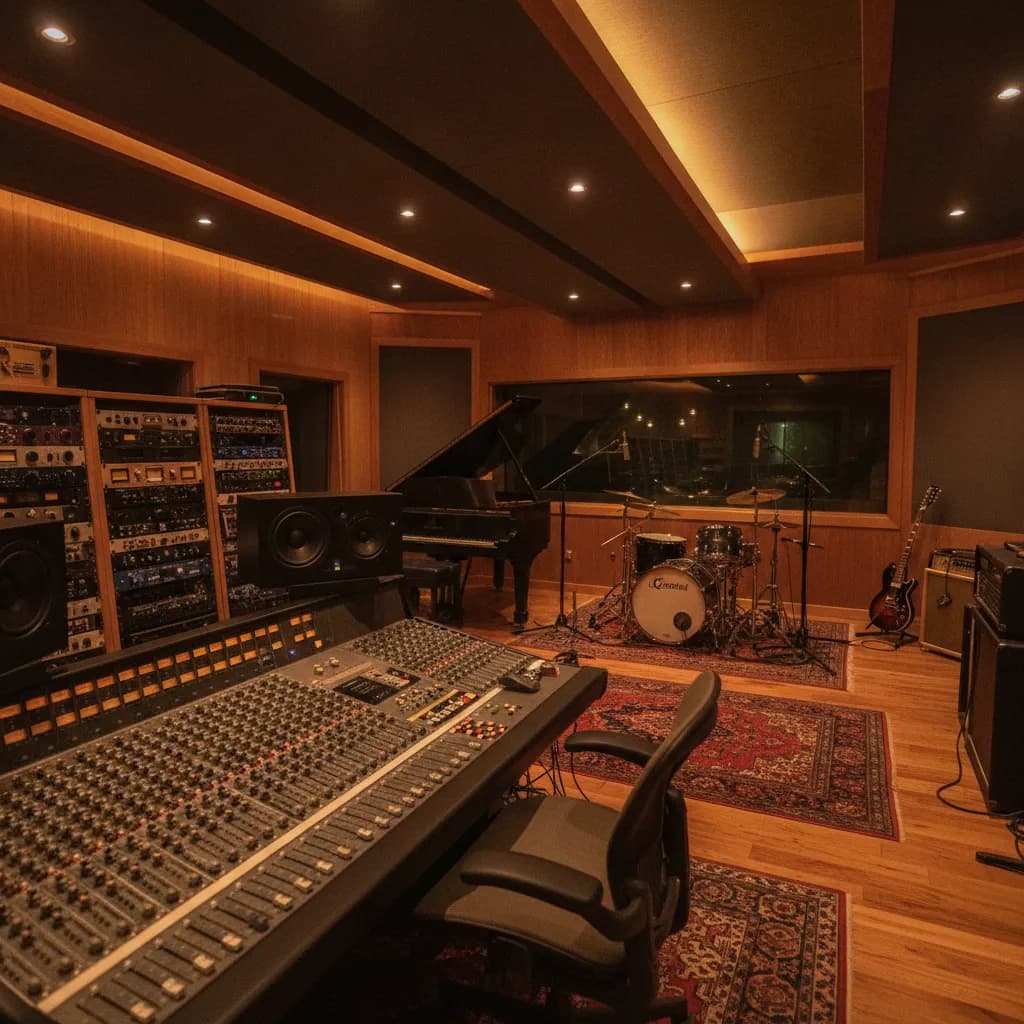
Yes, you can record a song in one session — but only under specific conditions. In a professional environment, a song can take anywhere from a few hours to several days to complete depending on the level of production required; if you are a solo vocalist with a backing track, you might wrap up in a single afternoon. The honest caveat: that single session needs to be the right length, and you need to walk in ready to perform, not ready to write.
What "one session" actually means
A session is whatever block of time you book — two hours, four hours, eight hours. The question is really: can the recording phase of one song fit inside a single continuous booking? For most scenarios, the answer is yes, provided mixing and mastering happen separately afterward (which they almost always do). Typical recording timeline estimates cover the recording phase only — mixing and mastering are separate steps that require additional time.
The sweet spot for a solo artist is a 4-hour block. For most musicians recording at a professional studio, a single song takes 4–8 hours of studio time from start to finish, covering recording, producing, and any session work before the mix. That puts a solo vocalist or rapper with a pre-made beat comfortably inside a 4-hour window. A full band is a different story.
The table: what each scenario realistically needs
| Scenario | Realistic session length | Achievable in one block? | Notes |
|---|---|---|---|
| Rapper / vocalist over a finished beat | 2–4 hours | ✅ Yes — 4-hr block | Song must be written; beat final |
| Singer-songwriter (vocal + acoustic guitar) | 2–4 hours | ✅ Yes — 4-hr block | Arrangement locked, lyrics memorized |
| Vocalist with live band overdubs | 4–6 hours | ✅ Yes — 6-hr block | Band tracks pre-recorded or played live same day |
| Small band (3-piece, simple arrangement) | 6–8 hours | ⚠️ Tight — 8-hr block | Well-rehearsed is non-negotiable |
| Full band (4–5 piece, live tracking) | 8–12 hours | ❌ Usually not | Recording a song with a well-rehearsed band takes about a day — think 10–12 hours |
| Full production (writing in session) | 1–3+ days | ❌ No | Studio is not a rehearsal room |
Paradise rates for reference: $300/4 hr, $450/6 hr, $600/8 hr for the whole studio — the Rainforest Room (vocals, podcasts) and the Rock Room (full kit, baby grand, bands) come with every booking. Every session includes an in-house engineer. Typical LA market range for comparable mid-tier rooms: $35–$150 per hour, depending on the studio, equipment, and whether an engineer is included.
What makes one session possible
1. The song is finished before you arrive. Knowing your parts makes a massive difference in achieving what you want from a recording session. Going in with your parts prepared means you can concentrate on performing great takes. Going in with half-finished songs and trying to write your parts on the day can really slow things down. Settle the arrangement, key, and tempo at home — not on the clock.
2. You've rehearsed recently. Your preparation level is the single biggest variable. Musicians who know their parts cold, have rehearsed recently, and arrive ready to perform move significantly faster than those who are still working things out in the studio. An hour of rehearsal at home can save two hours of studio time. If you're a guitarist or bassist, restring a few days before the session so strings have time to settle.
3. The scope matches the clock. Set realistic goals for your session — recording three songs properly beats rushing through ten. For a single song, that means one lead vocal, two or three harmony passes, and any doubles — not an evolving arrangement with five overdubs you haven't written yet.
4. You communicate with the engineer up front. Give yourself a very clear sense of what you're hoping to accomplish and discuss it with your engineer ahead of time. At Paradise, every session includes the in-house engineer — use that resource before the session starts, not after. A quick call or email detailing your tempo, references, and track count lets the engineer set up the room before your clock starts. See our guide How to Prepare for Your First Recording Session for a full checklist.
What makes one session impossible
Writing in the room. If the song isn't finished — melody still loose, lyrics half-written, arrangement undecided — you will not finish in one session. The writing process could certainly take hours, and more likely days or even weeks. This clearly shows the benefit of going into the recording process with a fully formed song. If you are paying for studio time, this approach is strongly recommended.
Live band without rehearsal. Showing up without really knowing songs, forgetting important cables, or not having practiced with a metronome — and some bands arrive still arguing about which version of a song to record — burns through studio hours faster than you'd think.
Unrealistic scope. Don't try to record three songs with a full band in six hours — the quality will inevitably suffer. One tight, polished song beats three rushed ones every time.
First-time nerves (plan for them). First-time studio clients often need time to get comfortable — the booth feels different, headphone mixes take adjustment, and the awareness of being recorded can affect performance. If it's your first session, book a 4-hour block minimum, not two hours, and let the first 20 minutes be a warmup.
When a home studio is the honest answer
If your song is still being written, or you need to experiment with arrangements, a home setup or DAW session costs nothing per hour. Record scratch demos at home, lock the structure, then book studio time to capture the final performance. That split approach often produces better results than trying to do everything in a single expensive block. See Home Studio vs Professional Recording Studio for a straight comparison of when each option wins.
What a 4-hour block at Paradise actually produces
Here's a realistic timeline for a solo artist in a 4-hour session ($300, whole studio, engineer included):
- 0:00–0:20 — Setup, headphone mix, mic check with the engineer
- 0:20–1:30 — Lead vocal tracking (multiple takes, section by section)
- 1:30–2:30 — Comping the lead vocal with the engineer, fixing any problem phrases
- 2:30–3:15 — Harmony and ad-lib passes
- 3:15–3:45 — Listening back, light in-session editing, any punch-ins
- 3:45–4:00 — Export stems and session files
You leave with tracked, comped, and organized raw files — ready for mixing. Mixing and mastering happen separately; see How long does mixing and mastering take? for realistic timelines there.
Paradise is open 9am–2am daily at 1505 4th St, Ste 219, Santa Monica — a five-minute walk from the Metro E Line's Downtown Santa Monica terminus at 4th & Colorado, with downtown parking structures on 4th and 5th that often start with free hours, so a short session can cost nothing to park. If you're coming from Venice (~10 min via Lincoln) or Culver City (~15 min via Washington), it's an easy run. Check out the Santa Monica studio guide for more context on the local options.
Frequently asked questions
Do I need to book mixing in the same session?
No — and most engineers recommend against it. Mixing requires fresh ears and a different headset than tracking. Book your recording session first, export your files, and schedule mixing and mastering as a separate step. See How many hours does it take to record a song? for more on how the two phases split.
How many takes should I expect to do?
A session consisting of two scratch demo songs with three takes each will take less time than a session that consists of a single lead vocal take requiring eight takes and several doubles. For a prepared vocalist, plan for 3–6 full passes on the lead vocal, then a comp pass with the engineer. Budget time accordingly.
What if I go over time?
Most studios, including Paradise, bill in the increments you booked. If you think you might run long, upgrade your block at booking rather than risk a rushed ending. Jumping from a 4-hour block ($300) to a 6-hour block ($450) is far less stressful than watching the clock on a final take.
Is a 2-hour session ever enough?
For a single, focused task — one vocal hook, a spoken-word piece, a podcast episode — yes. For a full song with multiple passes, it's tight for most artists. Technically yes, if you are well-prepared and only doing a vocal take over a backing track. However, to get a professional, radio-ready result, one hour is rarely enough — and two hours leaves little room for error. The 4-hour block is the practical minimum for a complete song.
Does the engineer affect how fast things go?
Significantly. An experienced engineer who knows the room can dial in a mic placement and headphone mix in minutes rather than half an hour. At Paradise, the in-house engineer is included in every session — no extra charge — and knowing the room's signal chain cold is part of what you're paying for. See Do recording studios provide an engineer? for what that actually means in practice.
Should I bring reference tracks?
Yes, always. Bring songs that have the vibe or sound you want — this helps the engineer dial in tones quickly. Send them ahead of time if you can, so the engineer can listen before you arrive.
Next steps
- Book a session — $300 for a 4-hour block, whole studio, engineer included
- View the studio — Rainforest Room and Rock Room specs, photos, and gear lists
- Mixing and mastering — what happens after you leave with your files
- Membership — if you're recording regularly, monthly access changes the math
- How to Prepare for Your First Recording Session — full pre-session checklist
- How many hours does it take to record a song in a studio? — deeper dive on timelines by genre and format
- How much does it cost to record a song in Los Angeles? — full cost breakdown including mixing and mastering
Facts and prices on this page last verified 2026-08-18 by the Paradise Recording team.