
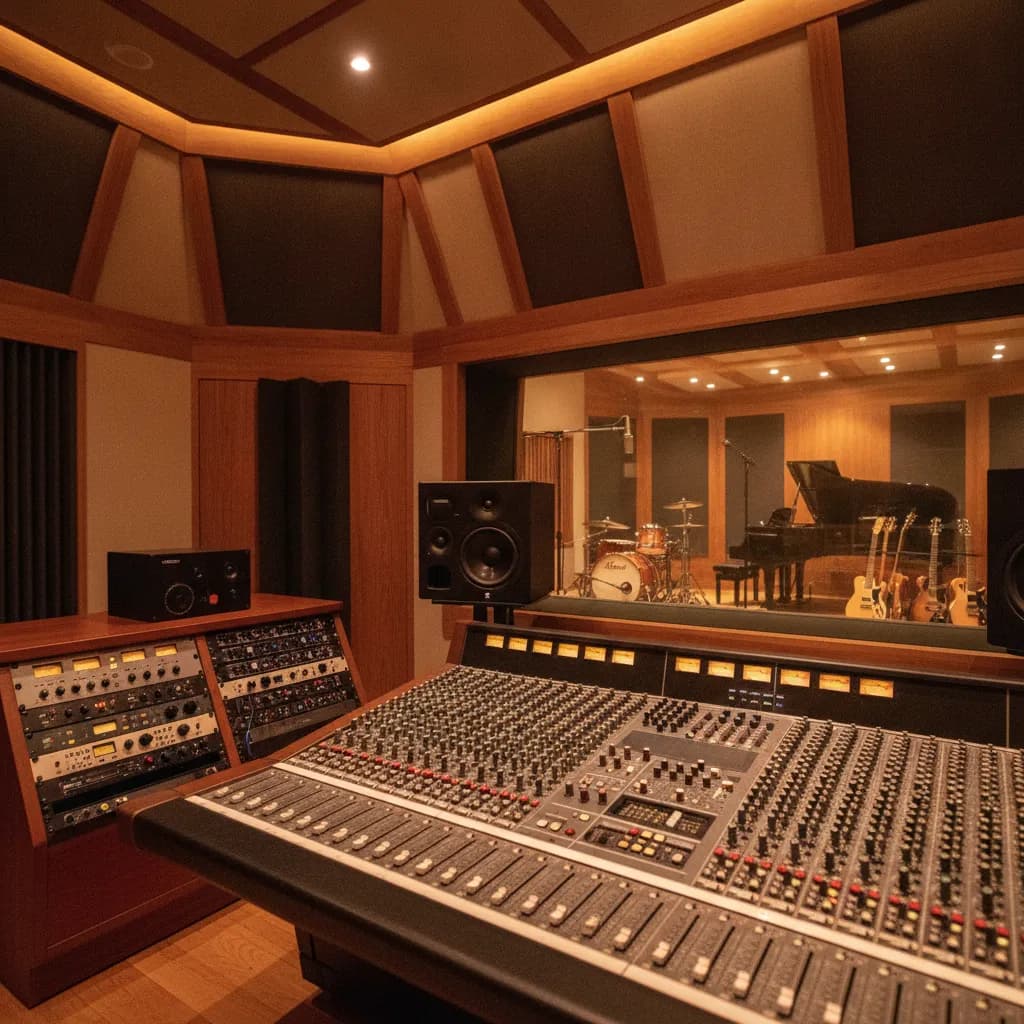
What a music producer actually costs in 2026
Music production in the US typically costs $1,000–$5,000 per song for professional mid-tier work, with budget and beat-lease production running $50–$500 per song and top-tier producers or commercial studios charging $5,000–$25,000+ per song. Those numbers assume the producer is handling the full job — beat creation, arrangement, session direction, and delivery of a mixed-ready track. Strip any of those pieces out and the cost drops accordingly. The single biggest variable is not the city or the studio: it is the producer's track record.
Producer vs. engineer vs. beatmaker — the confusion that costs artists money
Most budget surprises come from mixing up three distinct roles.
Music producers are the creative directors behind a song, shaping its arrangement, emotion, and overall vision. Sound engineers focus on capturing clean, high-quality audio through technical mastery and precision. A beatmaker sits upstream of both: they build the instrumental before any vocals or live tracking happens.
In practical terms:
- Beatmaker / beat seller — sells you an instrumental, usually online, before you ever walk into a room together. Their fee covers the track itself, not your session.
- Recording engineer — operates the gear in the studio, places the mics, runs the console, and captures your performance. While the producer and the engineer both have a healthy understanding of the technical aspects of music production, producers have an added level of artistic and creative vision to make a recording, musical arrangement, and performance the best they can be.
- Music producer — the creative director who shapes your sound, coaches your performance, makes arrangement calls, and is ultimately responsible for whether the record is good.
Many working producers are also engineers. When one person fills both seats, you often pay a combined rate — and that is usually the most efficient arrangement for an independent artist.
At Paradise Recording, every session includes an in-house engineer in the rate. That covers the technical chair. If you want a separate creative producer in the room, that is a conversation and a separate fee you arrange with that producer directly. See our studios for what each room offers.
The cost table: what you pay, what you own
| Arrangement | Typical cost range | What you own afterward |
|---|---|---|
| Basic beat lease (MP3, stream-capped) | $20–$50 | A limited, non-exclusive license — producer keeps the beat and can sell it to others |
| Premium / WAV lease (higher stream cap) | $50–$150 | Broader non-exclusive license — still shared; caps still apply |
| Exclusive beat purchase | $300–$2,000+ | Sole use of that instrumental; producer typically retains composer copyright and writer's share |
| Indie producer, full production (flat fee) | $500–$5,000/song | 100% master ownership if work-for-hire is explicit in writing |
| Mid-tier producer with real credits | $1,000–$5,000/song | Master ownership, subject to negotiated points or publishing splits |
| Established / major-label producer | $5,000–$25,000+/song | Master ownership plus producer points (3–5%) and often a publishing split |
| A-list / chart-history producer | $25,000–$50,000+/song | As above, with larger advances and more aggressive publishing demands |
Typical LA ranges based on publicly available market data. Individual producers set their own rates.
Beat leases: the cheapest entry point, with real strings attached
In 2026, a basic rap beat lease costs around $20 to $30, a premium WAV lease about $50, and a trackout lease near $100. Those prices look attractive, and for a social-media drop or a demo you are testing, they often make sense.
The catch: the producer can sell the beat to multiple artists, as long as nobody buys the exclusive rights to it. If your song starts gaining traction and you hit the lease's stream cap, you are out of compliance — and the producer holds all the leverage in any renegotiation.
Even an exclusive purchase usually keeps the producer's copyright in the composition and the producer's writer's share of the publishing. "Exclusive" means no other artist can use that specific recording of the beat. It does not automatically mean you own the underlying composition.
The only clean-ownership path: a custom beat written specifically for you, with a written work-for-hire buyout of the composition included in the contract.
Flat fee vs. points: which deal structure is right for you?
A flat fee is exactly what it sounds like — you pay the producer a fixed amount and own 100% of the master recording. No ongoing royalties, no backend payments, no percentage of future revenue. You know your cost upfront. If the song blows up, you keep all of it.
A royalty deal trades some or all of that upfront cash for a stake in whatever the song earns for the rest of its life. Neither is "better" in the abstract; they fit different situations. The honest framing is that work-for-hire is a bet against the song — you are guaranteed your fee whether it flops or explodes — while points and publishing are a bet on it.
On the numbers: major label deals typically give producers 3 to 5 points on the master. Because the label controls distribution and earns the vast majority of revenue, these points represent a slice of the label's net receipts after recoupment. Producers on independent projects more commonly negotiate in the range of 15 to 25% of net master royalties, or a flat fee with no points.
One critical detail that catches independent artists off guard: on a label deal, producer points are almost always paid from the artist's share, not from the label's share. If your label deal gives you 20% of master royalties and your producer has 3 points, those 3 points come out of your 20%. You net 17%.
Get the structure in writing before the session starts — not after. Best practices include discussing splits before leaving the studio.
What drives the price up or down
Production is rarely one flat fee: it's assembled from separate line items — beat or instrumental creation, recording, mixing, and mastering — each priced on its own. Understanding which of those you are actually buying — and which you still need to budget for — prevents the most common sticker-shock moment.
Other factors that move the number:
- Reputation and credits. Producer fees vary more than any other cost in this list. A bedroom producer with talent but no credits might charge $200–$500. A producer with placements on charting records will charge $2,000–$10,000 or more.
- Scope of the deliverable. A beat plus rough mix is different from a fully produced, mixed, and mastered radio-ready record.
- Revision rounds. Many mix engineers include one or two rounds of revisions in their fee. Additional revisions cost $50–$100 per round. Producers structure this similarly.
- Genre. Electronic and hip-hop production leans heavily on software and can be cheaper. Live-band arrangements with session players add per-musician costs on top of the producer fee.
If you are tracking a full band and want a producer in the room, the Rock Room at Paradise — with its full drum kit and baby grand — is built for exactly that kind of session. For vocal-focused pop, R&B, or hip-hop work, the Rainforest Room is the right starting point.
For context on what the room itself costs separate from a producer's fee, see our guides on how much it costs to record a song in Los Angeles and how much studio time costs per hour.
When a home setup is the honest answer
If you are writing demos to pitch to producers, a home recording is often fine. While the upfront cost is lower, DIY production requires a significant investment in equipment, software, and — most importantly — time and skill. Factoring in the learning curve and the risk of needing to pay a professional to fix it later, it's often not cheaper in the long run if your goal is a commercial-quality release.
The more nuanced truth: use your home setup to develop and demo ideas, then bring your best material into a professional room with a producer whose taste you trust. That workflow gets you the most out of both.
For a deeper look at the tradeoffs, see our guide on home studio vs. professional recording studio.
Frequently asked questions
Is a music producer the same as a recording engineer?
No. The producer focuses on the creative vision and artistic direction, making decisions about how songs should sound and guiding artists through performances. The engineer manages all technical aspects, from setting up microphones to operating recording equipment and mixing the final tracks. You need both roles covered on every session — at Paradise, the engineer is included in every booking.
What does "producer points" mean?
"Points" are percentage points of the revenue from a master recording. If a producer gets 3 points on a track, they receive 3% of all revenue that track generates — streaming royalties, sync placements, physical sales, everything tied to the master. Points are standard in major label deals.
Can I buy a beat and own it completely?
Mostly no. A beat lease keeps the producer as the owner. Even an exclusive purchase usually keeps the producer's copyright in the composition and the producer's writer's share of the publishing. Full ownership of the underlying composition requires a written work-for-hire agreement that explicitly transfers the composition copyright — not just the right to use the recording.
Should I hire a producer or just buy a beat?
It depends on what you bring to the session. If you have a clear vision for your arrangement, strong demos, and just need someone to execute, a beat plus a good engineer can be enough. If you need creative direction — arrangement ideas, performance coaching, sound design decisions — a producer earns their fee. Many artists at the independent level start with a leased beat and graduate to full production as their budgets grow.
Do I need a lawyer before signing a producer agreement?
Not every producer deal requires an entertainment attorney. A beat license for $200 does not need legal review. But these situations do. Entertainment attorneys in the US typically charge $300 to $500 per hour for review work. Any deal involving points, publishing splits, or master ownership is worth a two-hour legal review.
How do I prepare for a session with a producer?
Come in with your demos, reference tracks, and a clear sense of the sound you are going for. The more prepared you are, the less of your booked time gets spent on decisions that could have been made beforehand. See our full checklist in how to prepare for your first recording session.
Next steps
- Book a session — Paradise Recording is open 9 am–2 am daily; engineer included in every booking
- View our studios — Rainforest Room (vocals, podcasts) and Rock Room (full band, baby grand, drum kit)
- Mixing and mastering services — if you already have recorded tracks that need finishing
- Membership options — block-booking rates for artists who record regularly
- How much does it cost to record a song in Los Angeles?
- Do recording studios provide an engineer?
- Mixing and mastering services: what they cost in 2026
Facts and prices on this page last verified 2026-08-11 by the Paradise Recording team.