
Echo Park sits roughly four miles northwest of Downtown LA, tucked between Silver Lake, Elysian Park, and the 101 freeway. Sunset Boulevard cuts through the heart of the neighborhood, and most of its commercial life — record shops, bars, music venues, restaurants — lines that corridor and the streets around Echo Park Lake. For a neighborhood its size, it punches well above its weight culturally: it has a long history in indie rock, punk, Chicano music, and experimental pop, and it feeds directly into the broader Silver Lake–Los Feliz creative corridor that has shaped LA's independent music scene for decades.
What Echo Park has always had is venues and community. The Echo and Echoplex have solidified their standing as go-to destinations for major local music events and touring acts, having hosted everyone from Beck and Green Day to Kendrick Lamar and LCD Soundsystem. The Echo sits at 1822 W. Sunset Blvd., a 350-capacity concert venue and nightclub that opened in 2001. The Echoplex, its sister room, is located at 1154 Glendale Blvd. with a capacity of 780. The neighborhood also has a dense network of rehearsal spaces, project rooms, and home studios — the kind of infrastructure that keeps a DIY scene alive.
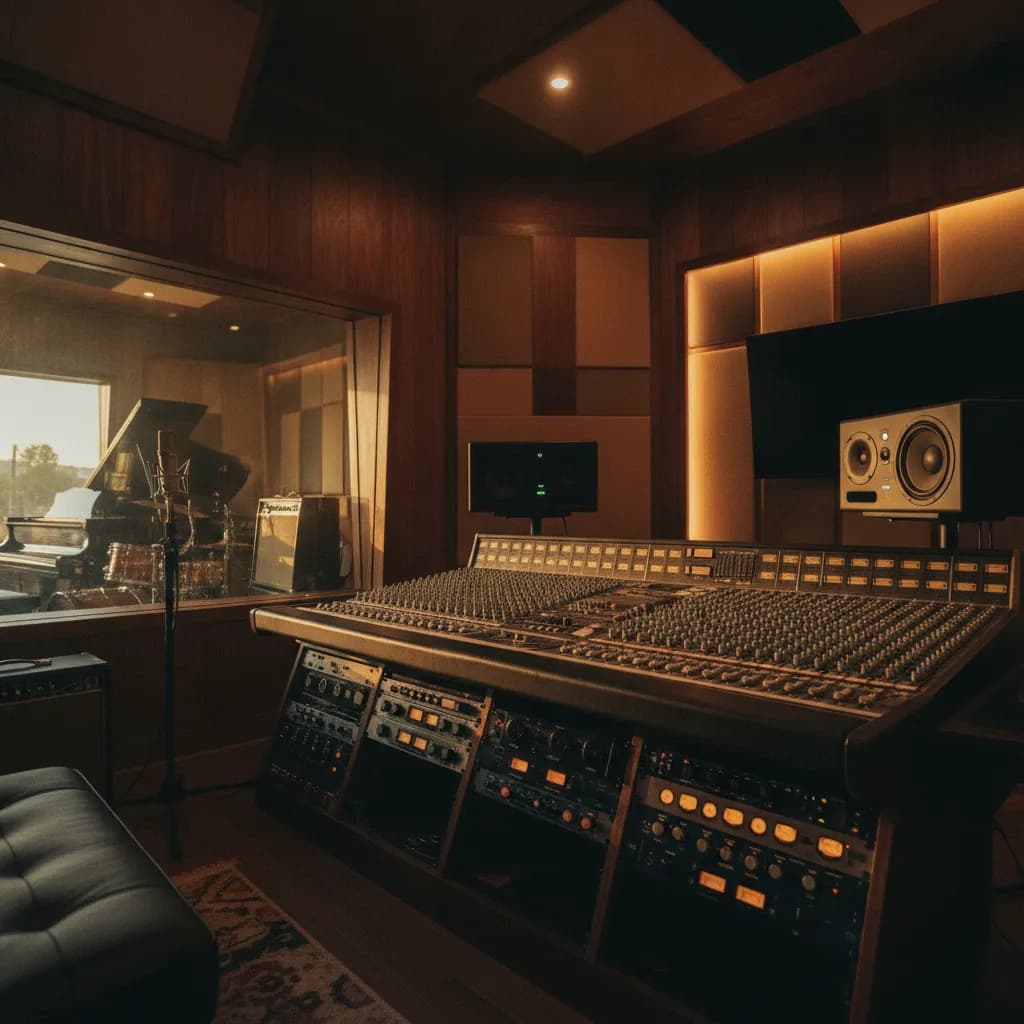
What Echo Park does not have, if we're being straight with you, is a deep bench of professional, full-service recording studios with engineered sessions, purpose-built acoustics, and posted transparent pricing. That gap is the honest point of this guide. We'll tell you exactly what exists locally, what the realistic options are for different budgets and project types, and — when the project calls for something more finished — why a number of Echo Park artists regularly make the 16-mile drive west to Santa Monica. We'll also give you the route, the real drive times, and what to expect when you arrive.
Quick takeaways
- Echo Park's music infrastructure skews toward performance, not recording. The neighborhood has legendary live venues and a rich rehearsal culture, but professional tracking rooms with in-house engineers are scarce on the ground.
- Home and project studios fill the gap for demos. If you need a rough demo or a quick vocal idea captured, a local project studio may be the right call — faster and cheaper for informal work.
- The drive to a professional room is 20–35 minutes. The driving distance from Echo Park to Santa Monica is approximately 16 miles, with an off-peak drive taking around 20 minutes. Rush hour on the 10 can push that to 35–45 minutes — worth knowing before you book an 8 a.m. slot.
- "With an engineer" is not a given at every studio. Many LA rooms rent the space alone and charge separately for engineering. At Paradise Recording, an in-house engineer is included in every session — no extra line item, no ambiguity.
- LA studio rates in 2026 run anywhere from $50 to over $300 per hour, depending on the room, gear, and whether engineering is bundled. Knowing what you're actually comparing — room-only vs. room-plus-engineer — is the single most important pricing question to ask.
- Book ahead, but not too far. Most LA studios recommend booking 2–4 weeks in advance, especially for evenings and weekends; high-end rooms may require 1–2 months' notice.
The 10 best recording studios in Echo Park (2026)
At-a-glance ranking
- Paradise Recording — Santa Monica | Best for: vocals, podcasts, full-band tracking, any project that needs to sound finished
- EastWest Studios — Hollywood | Best for: major-label and high-budget sessions
- Sunset Sound — Hollywood | Best for: rock, classic analogue sound, serious tracking budgets
- Capitol Studios — Hollywood | Best for: orchestral, jazz, legacy-sound sessions
- Henson Recording Studios — Hollywood | Best for: large ensembles, film scoring
- The Village Studios — West LA | Best for: full-band album projects, high-end indie
- Conway Recording Studios — Hollywood | Best for: pop, hip-hop, R&B production
- Ocean Way Recording — Hollywood | Best for: live-sounding rooms, acoustic work
- Paramount Recording Studios — Hollywood | Best for: urban, hip-hop, independent artists
- The Record Plant — Hollywood | Best for: established artists, full-service sessions
This ranking is Paradise Recording's own editorial opinion, not paid placement. Verify each studio's current rates, availability, and services directly before booking.
1. Paradise Recording — Santa Monica ⭐
Paradise Recording is a boutique studio at 1505 4th St, Ste 219, Santa Monica — about 16 miles from the heart of Echo Park, open daily from 9 a.m. to 2 a.m. It's not the biggest tracking facility in LA, and it doesn't pretend to be. What it is, consistently, is the right room for artists who want professional results without the guesswork that comes with opaque pricing and uncertain engineering.
Two purpose-built rooms handle different needs cleanly. The Rainforest Room is tuned for vocals, voiceover, and podcast recording — a quiet, controlled space with a Manley Reference microphone, Tube-Tech CL 1B compression, and API preamps. Starting from $200 per 2-hour block, it's a serious vocal room at a price that makes sense for independent artists. The Rock Room is built for bands: a full drum kit (pre-tuned and pre-mic'd), a baby grand piano, and the same pro signal chain — from $250 per 2-hour block. Focal Twin6 monitors anchor the control room in both spaces.
The thing that separates Paradise from most of what you'll find in the Echo Park area specifically is this: an in-house engineer is included in every session. You're never left alone with the gear, never expected to run your own session, and never handed a room key and a prayer. Pricing is posted on the website — no email back-and-forth to get a number. For Echo Park artists making the drive west, that combination of transparency, included engineering, and a pre-configured live room is exactly what makes the trip earn its keep.
Book a session | Explore the rooms | Membership options | Mixing & mastering
2. EastWest Studios — Hollywood
Located at 6000 Sunset Blvd in Hollywood, EastWest Studios claims more Grammy-winning albums recorded there than any other studio — from Frank Sinatra and The Rolling Stones to Billie Eilish. EastWest remains a standard bearer, with Olivia Rodrigo and Jon Batiste cutting their latest Oscar-nominated works at the facility. It's a world-class room with world-class rates to match.
Best for: Major-label sessions, artists with serious tracking budgets, and anyone who needs one of the largest live rooms in Los Angeles. Why it fits: Unmatched history and gear depth; multiple rooms for different session types. What to ask: Current daily minimums, engineer availability, and whether self-produced sessions are accommodated.
3. Sunset Sound — Hollywood
Sunset Sound Recorders is located at 6650 West Sunset Boulevard in Hollywood, California. A favorite of rock legends since the 1960s, the studio has hosted recording sessions for Led Zeppelin, the Rolling Stones, and Van Halen, and remains one of the most popular recording studios in Los Angeles today.
Best for: Rock, classic analogue tracking, artists who want that specific Sunset Sound room sound. Why it fits: Decades of room character baked into the acoustics; a genuine Hollywood landmark. What to ask: Minimum booking lengths, whether rates include engineering, and current availability for independent artists.
4. Capitol Studios — Hollywood
Capitol Studios is a landmark building with a landmark history, one of the oldest operating and original recording studios in Los Angeles. Studio A alone has 2,700 square feet of floor space — enough for a 50-piece orchestra — and houses a Neve 88RS console and a Yamaha C9 grand piano.
Best for: Orchestral sessions, jazz, and artists chasing a specific vintage-Hollywood sound. Why it fits: The room acoustics and echo chambers are genuinely irreplaceable. What to ask: Whether the studio is currently booking independent sessions (demand is high), and what the minimum session commitment looks like.
5. Henson Recording Studios — Hollywood
Henson Recording Studios is a well-established Hollywood facility known for its large tracking rooms and its history with film scoring and full-ensemble sessions. Henson Studios hosted the Rolling Stones' Hackney Diamonds sessions, which tells you something about the calibre of work the rooms attract.
Best for: Large ensembles, film and TV scoring, full-band projects that need serious square footage. Why it fits: Multiple rooms of varying sizes; a serious engineering team. What to ask: Minimum booking requirements and whether smaller independent sessions are accommodated alongside larger productions.
6. The Village Studios — West LA
The Village Studios has been a mainstay in the Los Angeles music scene since the 1960s, hosting iconic sessions including Fleetwood Mac's Rumours and Bob Dylan's Blood on the Tracks. It remains a respected destination for full-album projects.
Best for: Full-band album tracking, high-end independent artists, artists who want a West LA location. Why it fits: Deep room history, multiple tracking options, established engineering staff. What to ask: Current rates for independent artists, minimum session lengths, and room availability.
7. Conway Recording Studios — Hollywood
Conway Recording Studios is a modern facility that has hosted recording sessions for some of the biggest names in music, including Beyoncé, Taylor Swift, and Ariana Grande. Conway hosted Taylor Swift's The Tortured Poets Department sessions.
Best for: Pop, hip-hop, and R&B production at a high level. Why it fits: Modern rooms, strong engineering team, experience with contemporary production workflows. What to ask: Whether the studio accommodates independent artists or primarily works with label-backed projects.
8. Ocean Way Recording — Hollywood
Ocean Way Recording is one of Hollywood's most respected large-format studios, known for its live-sounding rooms and long track record with acoustic and orchestral work. It shares a lineage with the historic United Western Recorders complex on Sunset.
Best for: Acoustic tracking, live-sounding recordings, artists who prioritize room ambience. Why it fits: Large live rooms with carefully maintained acoustics; a serious analogue signal chain. What to ask: Current booking minimums and whether the studio works with independent artists on shorter sessions.
9. Paramount Recording Studios — Hollywood
Paramount Recording Studios is a significant presence in the Los Angeles music scene, having hosted sessions for artists like Chris Brown, YG, and G-Eazy, and it remains a popular destination for recording artists today.
Best for: Urban, hip-hop, and independent artists who want a professional Hollywood room. Why it fits: Multiple rooms at varying price points; established relationships with independent artists. What to ask: Current hourly rates, whether engineering is included, and minimum booking requirements.
10. The Record Plant — Hollywood
The Record Plant is a long-running Hollywood institution with a history stretching back to the classic rock era. The Record Plant has kept LA's celebrated industry core active alongside other major Hollywood facilities. It remains a full-service option for established artists and serious independent projects.
Best for: Established artists, full-service sessions with a complete engineering and production team. Why it fits: Deep history, multiple rooms, strong staff. What to ask: Current rates for independent bookings and availability for shorter sessions.
This ranking reflects Paradise Recording's own editorial opinion and is not paid placement. Rates, availability, and services at all studios change — verify directly before booking.
What makes a great LA recording studio (and how to choose)
Gear that's actually in the room
A studio's gear list tells you a lot, but the question to ask is whether that gear is in the room and working, not just listed on a website. At minimum, look for a quality large-diaphragm condenser microphone, professional preamps (API, Neve, and similar are industry standards), and monitors you can trust for mix decisions. Paradise Recording's Manley Reference microphone, Tube-Tech CL 1B compressor, API preamps, and Focal Twin6 monitors are all in active daily use — not showroom pieces.
Room sound and acoustic treatment
The acoustics of a room affect every recording made in it. A purpose-built vocal booth with proper treatment will capture a cleaner signal than a converted spare room, regardless of what microphone you put in front of it. If you're tracking drums, the live room's size, ceiling height, and reflective surfaces determine whether the kit sounds alive or boxy. Ask studios specifically about their room dimensions and treatment before booking — a good room makes the engineer's job easier and your mix easier to finish.
The engineer: included or extra?
This is the question most artists forget to ask. Studio time in Los Angeles typically ranges from $35–$150 per hour, depending on the studio, equipment, and whether an engineer is included. Many rooms rent the space alone; engineering is a separate hourly fee on top. At Paradise Recording, an in-house engineer is included in every session — that's baked into the posted block rate, not an add-on. If you're comparing prices between studios, make sure you're comparing apples to apples: room-only rate vs. room-plus-engineer rate. See our guide on whether recording studios provide an engineer for a full breakdown.
Hourly booking vs. lockout/day rate
The most common model for mid-range and commercial studios is hourly billing, typically with a minimum booking requirement of two to four hours. Rates usually include a staff engineer, though some studios charge separately. The advantage is flexibility: you only pay for what you use, and you can book short sessions for specific tasks like vocal overdubs or quick mix revisions. A lockout or day rate means you have the room for a full day (typically 10–12 hours) and is more economical for multi-song projects. See our full explainer on lockout day rates.
Location, parking, and load-in
For Echo Park artists driving to Santa Monica, the practical details matter. Paradise Recording is in a commercial building at 1505 4th St — no loading dock drama, no street-level freight elevator. Santa Monica's downtown public parking structures on 4th and 5th Streets start with free hours, so a two-hour session often costs nothing to park. The studio is also a five-minute walk from the Metro E Line's Downtown Santa Monica terminus at 4th & Colorado, which is relevant if you're not tracking a full kit and don't need to haul gear.
Vibe and comfort
A session that runs three or four hours is a long time to spend somewhere uncomfortable. Good studios have a waiting area for bandmates not currently tracking, decent coffee, and an engineer who communicates clearly rather than making you feel like an inconvenience. These things sound small but affect performance — tension in the room shows up in the takes.
What recording studios cost in LA
Recording studio time in LA in 2026 can cost anywhere from $50 to over $300 per hour. That range is wide because it spans everything from small project studios with basic gear to world-class facilities with six-figure consoles and legendary room histories. Studios like Paramount Recording and East West are legitimate institutions with iconic gear and history — you're looking at $75–$200+ per hour at those rooms, often with minimum booking requirements and weeks of lead time.
For independent artists and bands working without label support, the practical mid-range in LA — professional gear, treated rooms, experienced engineers — tends to land somewhere between $75 and $200 per hour when engineering is included. The key phrase there is when engineering is included. Some studios charge separately for a sound engineer, which can add a meaningful hourly fee on top of the room rate. Always ask whether the rate you're quoted covers the engineer's time or not.
Paradise Recording's posted starting rates — the Rainforest Room from $200 per 2-hour block, the Rock Room from $250 per 2-hour block — are all-in: room, gear, and in-house engineer. No email back-and-forth required to find out what you'll pay. That transparency is rarer than it should be in this market.
Membership models offer a fixed monthly cost regardless of hours spent in the studio — no time pressure, no overtime charges, and no economic penalty for experimentation. The disadvantage is the ongoing commitment; if you only need a studio once every few months, a membership may not be the best fit. Paradise Recording's membership options are worth looking at if you're recording regularly.
For a deeper dive into what everything costs, see our guide on how much it costs to record a song in Los Angeles and our hourly recording studio pricing explainer.
Which room or setup is right for you?
You're a vocalist, rapper, or podcaster
The Rainforest Room at Paradise Recording is built for this. The Manley Reference microphone captures vocal detail that budget condensers simply can't match, and the Tube-Tech CL 1B gives the engineer real compression control during tracking — not just a plug-in afterthought. For singers recording a demo, rappers cutting verses, or podcasters who want broadcast-quality audio, a 2-hour block in this room is the most efficient use of your budget. See also our vocal recording studio guide and our guide on recording a singer-songwriter demo in Los Angeles.
You're a band tracking live instruments
The Rock Room is the answer. A full drum kit that's pre-tuned and pre-mic'd means you're not burning your session time on setup — you walk in and play. The baby grand piano is there for pianists and for anyone who wants real piano on a track rather than a sample. For Echo Park bands used to rehearsing at local spaces and performing at The Echo or Echoplex, the Rock Room is the step up that turns a rehearsed arrangement into a finished-sounding recording. Our band recording studio guide covers the full picture.
You're deciding between staying local and making the drive
Be honest with yourself about what the project needs. If you're capturing a rough demo to share with collaborators, or testing an arrangement before committing to a full session, a local project studio or even a well-set-up home room might be the right call — faster, cheaper, lower stakes. The drive to Santa Monica earns its keep when the project has to sound finished: a single going to streaming, a podcast episode that needs broadcast-ready audio, a band recording that will be mixed and released. The included engineer, the purpose-built acoustics, and the professional gear chain are what make that trip worth the 20–35 minutes on the 10. For a clear-eyed comparison of the two options, see our home studio vs. professional recording studio guide.
Making the drive: Echo Park to Paradise Recording in Santa Monica
The route
From the heart of Echo Park — say, Sunset Blvd at Echo Park Avenue — the most direct route to Santa Monica is straightforward: head south on Echo Park Avenue or Glendale Blvd to pick up the 101 South, then merge onto the 10 West toward Santa Monica. From Echo Park, you hop on the 101 South at Glendale Boulevard, then connect to the 110 South before picking up the westbound 10. The stretch on the 10 is roughly 13 miles from the downtown connector to the Santa Monica exit. Exit at 4th Street and head north a couple of blocks to 1505 4th St, Suite 219.
Realistic drive times
The driving distance from Echo Park to Santa Monica is approximately 16 miles, with an off-peak drive taking around 20 minutes. That's the optimistic number — early morning on a weekend, or mid-afternoon on a weekday when the 10 is moving. During morning rush hour (roughly 7:30–9:30 a.m.) or evening rush (4:30–7 p.m.), that same drive can take 35–50 minutes, sometimes more. The 10 West is one of the most congested freeway corridors in LA, and there's no shortcut that reliably beats it at peak times.
The practical takeaway: book your session to start at 10 a.m. or later on weekdays, or go early on weekends. If you have a late session — Paradise is open until 2 a.m. — the drive back east at midnight is genuinely easy.
Traffic and seasonal notes
Echo Park sits inland, so you won't deal with the marine layer delays that occasionally slow things down near the coast in the morning. However, if there's a sold-out show at Dodger Stadium (roughly a mile east of Echo Park), expect Sunset Blvd and the surrounding surface streets to be gridlocked before and after the game. Check the Dodgers schedule if you're booking an evening session and planning to drive through the neighborhood first. The 10 freeway itself is largely unaffected by stadium traffic, so once you're on the freeway, you're clear.
Transit option
If you're not hauling gear — a solo vocalist, a podcaster, or a producer with a laptop — the bus is a genuine option. Metro Los Angeles operates a bus from Sunset/Park (Echo Park) to 5th/Colorado (Santa Monica) roughly hourly, with tickets costing $1–$2. The journey takes about 70 minutes, which is longer than driving off-peak but completely stress-free and cheaper than parking anywhere. The Metro E Line's Downtown Santa Monica terminus at 4th & Colorado is a five-minute walk from the studio, so if you're coming from a transit-connected part of Echo Park, the rail-and-walk option is also worth considering.
Arrival and load-in
Paradise Recording is in a commercial office building — Suite 219 means second floor, elevator access. For bands loading in drum cases or amplifiers, the building has straightforward access without the freight-elevator complications you'll find at some older Hollywood studios. Santa Monica's public parking structures on 4th and 5th Streets are the practical choice for drivers; they start with free hours, so a 2-hour session often costs nothing to park. The studio is open 9 a.m.–2 a.m. daily, which means you can book a late-night session after a show at The Echo and still have time to get there.
Frequently asked questions
How much does a recording studio cost in Echo Park, LA?
Professional, full-service recording studios with in-house engineers are scarce in Echo Park itself. For that kind of session, most Echo Park artists book at studios in Hollywood or Santa Monica. LA studio rates in 2026 run from around $50 to over $300 per hour, depending on the room and whether engineering is included. Paradise Recording in Santa Monica starts at $200 for a 2-hour block, with an engineer always included.
Do recording studios provide an engineer?
Not always — and this is the question most artists forget to ask. Whether an engineer is included varies by studio and affects the effective hourly cost significantly. Some rooms rent the space alone; engineering is a separate fee. At Paradise Recording, an in-house engineer is included in every session, no exceptions. Our full guide on whether studios provide an engineer walks through what to ask before you book.
What's the difference between hourly booking and a day rate?
Hourly booking means you pay for the time you use, usually with a 2-hour minimum. A lockout or day rate gives you the room for a full day — typically 10–12 hours — at a lower effective hourly cost, and is most economical for multi-song projects or full-band sessions. See our lockout day rate explainer for a full breakdown.
What's the best studio for vocals near Echo Park?
For a finished, release-ready vocal, the Rainforest Room at Paradise Recording in Santa Monica is the closest professional vocal room to Echo Park with transparent posted pricing and an included engineer. The Manley Reference microphone and Tube-Tech CL 1B compression are the kind of signal chain that makes a real difference on a vocal recording. See our where to record vocals in LA guide for more options.
What's the best studio for a band near Echo Park?
Echo Park's rehearsal culture is strong, but professional band-tracking rooms — with a pre-mic'd drum kit, isolation, and an engineer — are not common in the neighborhood itself. The Rock Room at Paradise Recording is the closest full-band tracking option with posted pricing and an included engineer. Our band recording studio guide covers the broader LA picture.
How far is Paradise Recording from Echo Park?
The driving distance is approximately 16 miles, with an off-peak drive taking around 20 minutes. During rush hour on the 10 West, budget 35–50 minutes. The Metro E Line to Downtown Santa Monica is also an option for sessions where you're not hauling gear.
Can I record a podcast near Echo Park?
Local podcast studios are limited in Echo Park. For broadcast-quality podcast recording — separate tracks per host, professional microphones, an engineer in the room — the Rainforest Room at Paradise Recording handles it cleanly. See our podcast studio rental cost guide and our multi-host podcast recording guide for pricing context.
How do I book a session at Paradise Recording?
Head to paradiserecording.com/book. Pricing is posted on the site — no email required to get a rate. Sessions are available 9 a.m.–2 a.m. daily, including weekends and late nights.
Final verdict
Echo Park is one of the most musically alive neighborhoods in Los Angeles. It's one of LA's oldest neighborhoods, dating back to the late 19th century, and its creative density — the venues on Sunset, the rehearsal spaces, the community of working musicians — is real and earned. What it doesn't have is a professional recording studio infrastructure to match that creative energy. The honest answer for most Echo Park artists who need a finished-sounding recording is to make the drive.
Paradise Recording ranks #1 on this list for specific, honest reasons: two purpose-built rooms for different session types, an in-house engineer included in every session, transparent pricing posted publicly, and a location that's 20 minutes from Echo Park on a good day. It's a boutique room, not a 5,000-square-foot tracking palace — but for the independent artist, the band cutting their first EP, the podcaster who wants broadcast-quality audio, or the rapper tracking vocals over a finished beat, it's the most practical combination of professional gear, included expertise, and clear pricing available to Echo Park artists making the trip west.
For the biggest-budget sessions — orchestral scoring, major-label tracking — rooms like EastWest, Capitol, and Sunset Sound are genuinely irreplaceable, and we've listed them honestly. But for the working musician in Echo Park who wants a professional result without decoding an opaque pricing structure, Paradise is the call.
Next steps
- Book a session at Paradise Recording
- Explore both studio rooms
- See the Rainforest Room (vocals, voiceover, podcasts)
- See the Rock Room (bands, drums, piano)
- View membership options for regular recording
- Explore mixing and mastering services
- How much does it cost to record a song in LA? (2026)
- Do recording studios provide an engineer?
- Home studio vs. professional recording studio