
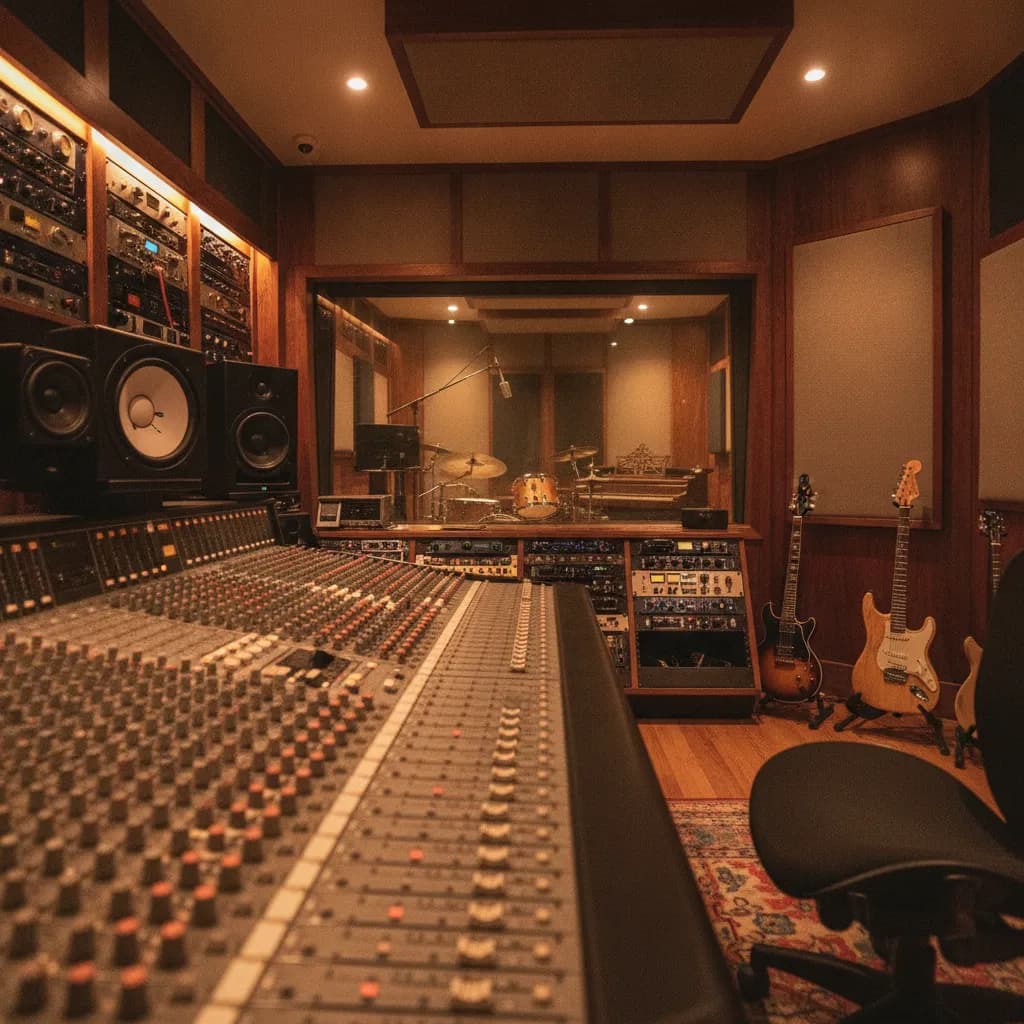
Malibu sits at the edge of the Los Angeles music world in both geography and character. Pacific Coast Highway threads 21 miles of coastline between Santa Monica and the Ventura County line, passing surf breaks, canyon mouths, and some of the most expensive real estate in California. The creative community here is real — musicians, producers, and songwriters have been drawn to the hills and the beach since at least the 1970s — but the professional recording infrastructure is thin. If you're looking for a walk-in commercial studio with posted rates, in-house engineering, and a pre-mic'd kit, the honest answer is: Malibu doesn't have many of them.
That's not a knock on the area. It's just geography and density. Malibu's 13,000 residents are spread across 45 square miles of coast and canyon, which doesn't generate the foot traffic that supports a cluster of commercial studios. What it does generate is a culture of high-end private rooms, home studios, and one genuinely legendary facility that is not available for general booking. For artists who need a finished, professional-grade recording, the practical answer is almost always the same: take PCH south to Santa Monica. The drive is shorter than you think, and the gear waiting for you on the other end is worth the trip.
This guide covers what recording options genuinely exist in and near Malibu in 2026, how to evaluate them honestly, and — when the local options don't fit the project — exactly how to make the 20-to-45-minute drive to Santa Monica work in your favor. We'll cover the route, realistic traffic windows, parking, and what you get at a full-service boutique studio that you simply can't replicate in a bedroom or a Peerspace rental.
Quick takeaways
- Malibu's recording scene is private and sparse. The area's most famous studio — Shangri-La — is a private facility owned by producer Rick Rubin and not available for general booking. Other local options are mostly home studios or high-end rental properties; they can work for demos, but most lack an in-house engineer and posted pricing.
- The drive to Santa Monica is the practical move for most sessions. Santa Monica to Malibu is roughly 15–20 minutes with no traffic; allow 30–45 minutes southbound during afternoon rush hour on PCH. Paradise Recording at 1505 4th St, Ste 219 is about a five-minute walk from the Metro E Line's Downtown Santa Monica terminus.
- An included engineer changes the math. Some studios charge separately for engineering; at Paradise Recording, an in-house engineer is included in every session — you are never left alone with the gear.
- LA studio rates span a wide range. Recording a song at an LA recording studio in 2026 can cost anywhere from $50 to over $300 per hour. Budget rooms and project studios sit at the low end; rooms with serious outboard gear and professional engineers occupy the upper tier.
- Transparent pricing saves time. Many studios require an email inquiry to get a rate. Paradise posts its prices publicly — the Rainforest Room starts at $200 per 2-hour block, the Rock Room at $250 per 2-hour block — so you can budget before you even pick up the phone.
- Book early, especially for weekends. Most professional studios in the LA area fill weekend slots days to weeks in advance. If you have a session date in mind, book it as soon as the project is confirmed.
The 10 best recording studios in Malibu (2026)
At-a-glance ranking
- Paradise Recording — Best for: vocals, bands, podcasts, and voiceover; closest full-service studio to Malibu with transparent pricing and an included engineer
- Shangri-La — Best for: understanding Malibu's recording heritage (private facility, not open to general booking)
- Studio Malibu — Best for: high-end film, TV, and music production clients seeking an exclusive Malibu location
- EastWest Studios — Best for: major-label and orchestral sessions in Hollywood
- Sunset Sound — Best for: rock, pop, and artists who want a studio with deep historical roots
- Conway Recording Studios — Best for: contemporary pop and R&B in a private, garden-enclosed Hollywood setting
- Henson Recording Studios — Best for: artists who want a landmark LA facility with large live rooms
- The Village Studios — Best for: full-band tracking and artists seeking a West LA room with a ballroom-sized live space
- Paramount Recording Studios — Best for: hip-hop, pop, and urban artists looking for a well-equipped Hollywood room
- Capitol Studios — Best for: orchestral, jazz, and artists who want to record in one of LA's most historically significant rooms
This ranking reflects Paradise Recording's own editorial opinion and is not paid placement. Verify each studio's current availability, rates, and booking policies directly before committing to a session.
#1 — Paradise Recording · Santa Monica
Paradise Recording is a boutique studio at 1505 4th St, Ste 219, Santa Monica — a couple of blocks inland from the Third Street Promenade, open 9am–2am daily. For artists coming from Malibu, it is the closest full-service commercial studio with posted pricing, purpose-built rooms, and an in-house engineer included in every session.
There are two rooms. The Rainforest Room is tuned for vocals, voiceover, and podcast recording — it's a treated, intimate space with a Manley Reference microphone, Tube-Tech CL 1B compression, and API preamps running into Focal Twin6 monitors. Starting at $200 per 2-hour block, it's the right call for a singer-songwriter cutting a demo, a voice actor needing a clean booth, or a podcast team that wants proper mic separation and a real engineer at the board. The Rock Room is built for bands and full-kit tracking, with a baby grand piano and a full drum kit already set up and mic'd — starting at $250 per 2-hour block. You walk in, tune up, and record. No wrangling rental gear.
What makes Paradise genuinely different for a Malibu artist is the combination of things that are easy to take for granted until you've worked somewhere that doesn't have them: an engineer who knows the room and the gear, pricing that's posted on the website before you ever send an email, and hours (9am–2am daily) that accommodate both early morning sessions before the PCH crowds build and late-night creative bursts. Book a session, browse membership options if you're planning multiple projects, or explore mixing and mastering services for tracks you've already tracked elsewhere.
Best for: Malibu-based vocalists, singer-songwriters, bands, podcasters, and anyone who wants a professional result without the guesswork of pricing or engineering.
#2 — Shangri-La · Malibu (private facility)
Shangri-La is a recording studio in Malibu, California, currently owned by record producer Rick Rubin. Originally a ranch property owned by actress Margo, it was leased by The Band in the 1970s and converted to a recording studio to the precise specifications of Bob Dylan and The Band. It rapidly emerged as a creative sanctuary, hosting iconic artists including Bob Dylan, The Band, Eric Clapton, and The Rolling Stones. During its early years, Shangri-La became synonymous with musical innovation, serving as the recording location for The Band's 1975 album Northern Lights – Southern Cross and Eric Clapton's 1976 release No Reason to Cry.
It is included here because it is Malibu's most significant recording landmark — but it is a private facility and is not available for general booking. It's worth knowing about as part of understanding why Malibu has the musical identity it does.
Best for: Historical context and inspiration. Why it fits: Malibu's recording heritage runs directly through this property. What to ask: N/A — this is not a bookable commercial studio.
#3 — Studio Malibu · Carbon Mesa Road, Malibu
Located above Billionaire's Beach in Malibu, Studio Malibu is a private and exclusive studio producing movies, music, and concert events for celebrity talent. Recent clients include Britney Spears, will.i.am, James Cameron, and Ron Howard. Featuring an award-winning in-house staff, the facility covers music production, post-production, film, television, ADR, voiceover, and events.
Studio Malibu is a high-end, invitation-driven facility — not a walk-in commercial room. It does not publish hourly rates, and its client list suggests pricing is at the premium end of the market.
Best for: Established artists and production companies with project-specific needs. Why it fits: If you need a Malibu address and a full-service production environment for a high-profile project. What to ask: Whether the facility takes outside bookings, what the minimum commitment is, and whether engineering is included.
#4 — EastWest Studios · Hollywood
EastWest Studios occupies the former United Recording facility on Sunset Blvd in Hollywood, and its rooms have shaped recordings by the Beach Boys, Frank Sinatra, and countless contemporary pop and film composers. This legendary studio has produced more Grammy-winning albums than any other studio in the world and has five different studio rooms for artists to choose from, each with unparalleled sound design.
Best for: Major-label sessions, orchestral tracking, and artists who want a world-class Hollywood facility. Why it fits: The room legacy and gear are hard to argue with for large-format projects. What to ask: Current room availability, minimum booking requirements, and whether engineering is bundled or billed separately.
#5 — Sunset Sound · Hollywood
Sunset Sound Recorders is a recording studio in Hollywood, California, located at 6650 West Sunset Boulevard. The studio has hosted recording sessions for artists such as Led Zeppelin, the Rolling Stones, and Van Halen, and today Sunset Sound is still one of the most popular recording studios in Los Angeles.
Best for: Rock, pop, and artists who want a studio with a six-decade track record. Why it fits: The rooms are acoustically mature and the staff has deep genre experience. What to ask: Which room suits your project size, and what the current day-rate and hourly structure looks like.
#6 — Conway Recording Studios · Hollywood
Conway Recording Studios is located on Melrose Ave in Hollywood and has been operating since the 1970s. The lush private garden that surrounds the studio gives contrast to the Melrose Avenue chaos just outside the gate, and serves as a barrier from the paparazzi when high-profile clients come to record.
Best for: Contemporary pop, R&B, and artists who want privacy and serious gear in a Hollywood setting. Why it fits: Multiple rooms, Neve consoles, and a track record with contemporary chart artists. What to ask: Room availability and whether the session rate includes an engineer.
#7 — Henson Recording Studios · Hollywood
The front gates at Henson Recording Studios, at 1416 N. La Brea Ave., are hard to miss. "A lot of artists say when the gates open, they immediately feel like they're removed from Hollywood and in a different location," according to the studio's vice president. Henson has hosted recording sessions for artists such as Lady Gaga, Kanye West, and Bruno Mars.
Best for: Artists who want a large-format Hollywood room with a strong sense of place. Why it fits: The compound-style layout creates a focused creative environment. What to ask: Room sizes and whether the studio accommodates shorter hourly sessions or requires day-rate minimums.
#8 — The Village Studios · West Los Angeles
The Village Studios is a famous recording studio that has seen a host of well-known, popular top-selling artists using its facilities, including Phil Collins, Fleetwood Mac, the Rolling Stones, and Lady Gaga. The studio also has a ballroom and auditorium to host other events throughout the year.
Best for: Full-band tracking and artists who want a West LA location with a genuinely large live room. Why it fits: Geographically the closest of the major Hollywood-tier rooms to Malibu (reachable via PCH to the 10). What to ask: Current live room availability and whether the session rate includes an in-house engineer.
#9 — Paramount Recording Studios · Hollywood
Paramount Recording Studios is a significant name in the Los Angeles music scene. The studio has hosted recording sessions for popular artists like Chris Brown, YG, and G-Eazy, and today remains a popular destination for recording artists.
Best for: Hip-hop, pop, and urban artists looking for a well-equipped Hollywood room. Why it fits: Strong genre track record and multiple rooms at different price points. What to ask: Room specs, engineer availability, and minimum booking requirements.
#10 — Capitol Studios · Hollywood
Capitol Studios operates beneath the iconic Capitol Records tower at the intersection of Vine Street and Hollywood Blvd. The facility was built in 1956 and includes three main rooms, famous echo chambers used on Frank Sinatra and Nat King Cole recordings, and a staff with deep experience in orchestral, commercial, and contemporary sessions.
Best for: Orchestral, jazz, and artists for whom recording in one of LA's most historically significant rooms is part of the creative intention. Why it fits: The rooms and echo chambers are genuinely irreplaceable. What to ask: Current availability and booking structure — this is a premium facility with rates to match.
This ranking is Paradise Recording's editorial opinion, not paid placement. Verify each studio's current rates, availability, and engineering policies before booking.
What makes a great LA recording studio (and how to choose)
The gear in the signal chain
The microphone, preamp, and compressor that your voice or instrument hits first determine a huge amount about the final sound. A Manley Reference microphone and a Tube-Tech CL 1B compressor — the combination in Paradise's Rainforest Room — represent a professional-grade signal chain that most home studios simply don't have. When evaluating any studio, ask specifically what mic, preamp, and compressor are in the chain, not just what DAW they run.
Room acoustics and purpose-built design
A room that was designed for a specific purpose — vocals, drums, full-band tracking — will outperform a general-purpose space at that task every time. The Rainforest Room at Paradise is tuned for intimate vocal work; the Rock Room is built to handle the low-frequency energy of a live drum kit. When you're comparing studios, ask whether the room was purpose-built or converted, and whether it has been acoustically treated by a professional.
The engineer: included or extra?
This is one of the most important questions to ask before you book anywhere. Studio time in Los Angeles typically ranges from $35–$150 per hour, depending on the studio, equipment, and whether an engineer is included. Some studios rent the room bare and charge separately for engineering. Others include a staff engineer in the hourly rate. At Paradise Recording, an in-house engineer is included in every session — that's not a line-item add-on. If you're comparing prices between studios, make sure you're comparing apples to apples: a $75/hr room without an engineer may cost more in practice than a $100/hr room with one included. See our guide on whether recording studios provide an engineer for a full breakdown.
Hourly booking vs. lockout/day rates
Most mid-tier studios offer both. Hourly booking is flexible — you pay for what you use, with a typical minimum of two to four hours. You pay for each hour you use the studio, typically with a minimum booking requirement of two to four hours. Rates usually include a staff engineer, though some studios charge separately for engineering. The advantage of hourly billing is flexibility: you only pay for what you use, and you can book short sessions for specific tasks. A lockout or day rate gives you exclusive use of the room for an extended block — usually 10–12 hours — at a discounted effective hourly rate. It's the right call for full-band tracking days or album sessions. For more on this, see our guide on what a lockout day rate means.
Location, parking, and load-in
For Malibu artists, location is a real variable. PCH is the main artery, and traffic on it is genuinely unpredictable — more on that below. Paradise Recording is at 1505 4th St, Ste 219 in Santa Monica, with downtown public parking structures on 4th and 5th Street that start with free hours, making a short session often cost nothing to park. The Metro E Line's Downtown Santa Monica terminus at 4th & Colorado is about a five-minute walk from the door — a realistic option if you're traveling light.
Vibe and comfort
You're going to spend hours in this room. Does the control room have a couch? Is the lounge usable? Does the engineer communicate well? These things sound soft until you're four hours into a session and the energy in the room determines whether you get the take. Don't underestimate them.
What recording studios cost in LA
Recording a song at an LA recording studio in 2026 can cost anywhere from $50 to over $300 per hour. That range is real and reflects a genuinely tiered market:
- Budget and project studios typically run $30–$75/hr, often without a dedicated engineer, and may not include professional outboard gear.
- Mid-range boutique studios — the tier Paradise Recording occupies — typically run $75–$175/hr with an engineer included, professional microphones and preamps, and purpose-built rooms.
- Major commercial and legacy facilities — EastWest, Sunset Sound, Conway, Capitol — run $75–$200+/hr at those rooms, often with minimum booking requirements and weeks of lead time.
For context on what Malibu-area rental spaces command: recording studios in Malibu average $233 per hour to rent, but for a space on the smaller side, expect to spend closer to $126, whereas larger venues run about $375 per hour. Note that many of those Peerspace-listed "studios" in Malibu are rental properties, not commercial recording studios — they typically do not include an engineer, professional signal chain, or acoustic treatment designed for recording.
Paradise Recording's posted pricing — Rainforest Room from $200 per 2-hour block, Rock Room from $250 per 2-hour block — is transparent and includes an in-house engineer. There are no rate-request emails, no hidden engineering add-ons.
A note on what "with an engineer" means: An engineer manages the session technically — setting levels, running the DAW, adjusting mic placement, and making real-time decisions about the recording chain. At studios that charge separately, you might pay an additional $50–$100/hr on top of the room rate. At Paradise, it's included. For a full pricing breakdown, see our guide: How much does it cost to record a song in Los Angeles?
Which room or setup is right for you?
Vocals, voiceover, and podcasting
If your session is voice-forward — a singer-songwriter demo, a voiceover, a podcast episode — you want a room designed around intimate vocal capture: a tight, treated space with a great large-diaphragm condenser and clean preamp gain. The Rainforest Room at Paradise is exactly that. It's also the right room if you're a rapper tracking vocals, a voice actor needing a broadcast-clean booth, or a two-host podcast team that wants separate tracks and a real engineer managing the mix. Starting at $200 per 2-hour block, it's a realistic budget for a focused session.
For more on vocal recording specifically, see our guide to recording vocals in Los Angeles, and if you're planning a podcast, our podcast studio rental cost guide covers what to expect.
Full-band tracking
If you're bringing drums, bass, guitars, and vocals into the same session, you need a room built to handle it. The Rock Room at Paradise has a full drum kit already set up and mic'd, a baby grand piano, and the physical space to track a live band. Starting at $250 per 2-hour block, it's a practical entry point for a band that's rehearsed and ready to record. For a deeper look at full-band tracking logistics, see our guide on band recording studios in Los Angeles.
Single session vs. multi-day project
A two-hour block is right for a single vocal, a podcast episode, or a quick overdub. A multi-day project — an EP, an album, a full band tracking over several sessions — benefits from either a lockout/day-rate structure or a membership that gives you regular access without per-session friction. Paradise's membership options are worth reviewing if you're planning more than one or two sessions in a quarter.
The honest case for staying local
If you need a rough demo to share with bandmates, or you're doing scratch vocals for a producer who's going to re-record everything anyway, a home studio or a Peerspace rental near Malibu may be entirely sufficient. The drive to Santa Monica earns its keep when the recording has to sound finished — when it's going to streaming platforms, a label, a sync placement, or anywhere else where the quality of the capture matters. Be honest with yourself about which category your project falls into.
Making the drive from Malibu to Santa Monica
The route is straightforward: PCH southbound from wherever you are in Malibu, through Pacific Palisades, and into Santa Monica. From central Malibu near the Malibu Country Mart on Cross Creek Road, the drive to Santa Monica is roughly 15–20 minutes with no traffic. From the western end of Malibu near Zuma Beach or Point Dume, add another 10–15 minutes.
The honest traffic picture: the drive is fairly straightforward and takes 30–40 minutes without traffic. If you attempt to drive anywhere near rush hour — roughly between 7am–10am and 4pm–7pm — be prepared for LA's notorious bumper-to-bumper traffic. Afternoon rush hour southbound on PCH, particularly between Las Virgenes/Malibu Canyon Road and the Pacific Palisades, can stretch a 20-minute drive to 45 minutes or more. The practical advice: book a morning session (Paradise opens at 9am) and leave Malibu by 8am, or book an evening session and leave after 7pm. Paradise's 2am closing time gives you plenty of runway for a late start.
One important 2026 note: PCH has been open to all drivers through the cities of Los Angeles, Santa Monica, and Malibu following post-Palisades Fire repairs, but drivers should expect major delays on PCH and allow extra time for travel, as PCH will have up to two lanes each direction with lane shifts where repair work continues. Check Caltrans or Google Maps for current conditions before you leave — lane configurations on PCH between Temescal Canyon Road and Carbon Beach have been changing as repair work progresses.
Parking at the studio: Santa Monica's downtown public parking structures on 4th and 5th Street are the practical option. They start with free hours, so a two-hour session often costs nothing to park — a detail that matters when you're already paying for studio time. If you're traveling without a car, the Metro E Line's Downtown Santa Monica terminus is at 4th & Colorado, about a five-minute walk from the studio door.
Load-in tip: If you're bringing a guitar, bring it in its case and load in directly from the 4th Street structure. For drums or full-band backline, the Rock Room has a full kit in place — you likely only need to bring your own sticks, cymbals, and any personal instruments. Confirm with the studio what's in the room before you pack the van.
Malibu's recording scene: what's actually here
It's worth being straight about the local landscape, because a lot of "best recording studios in Malibu" content online lists facilities that are either private, no longer operating, or rental properties that don't function as commercial studios.
Shangri-La is the area's most significant recording address. Now owned by producer Rick Rubin, the studio was built in the hills above Zuma Beach to the precise specifications of The Band and Bob Dylan. Following Rick Rubin's acquisition of Shangri-La in 2011, the studio became a hub for his signature production philosophy, which emphasizes minimalism, organic sound capture, and an immersive environment conducive to artistic vulnerability. It is a private facility. You cannot book it by the hour.
Studio Malibu on Carbon Mesa Road is a real, professionally equipped facility focused on film, TV, and music production for established clients. It is a private and exclusive studio producing movies, music, and concert events for celebrity talent, with recent clients including Britney Spears, will.i.am, James Cameron, and Ron Howard. It is not a walk-in commercial room.
Beyond those two, the Malibu recording landscape is largely home studios, project rooms, and Peerspace-style rental properties — some of them genuinely beautiful, most of them lacking professional acoustic treatment, a dedicated engineer, and the outboard gear that separates a demo from a finished record. The Yelp listings for "recording studios near Malibu" surface rooms in Agoura Hills, Calabasas, and the western San Fernando Valley — all legitimate options worth investigating, but none of them in Malibu proper.
For a Malibu artist, this is actually useful information. You're not missing a hidden gem down a canyon road. The area's recording culture has always been about private rooms and destination sessions — Shangri-La was never a walk-in studio either. The practical infrastructure for working musicians is in Santa Monica, Venice, and the broader Westside. See our related guides for Pacific Palisades, Venice, and Santa Monica for what's available in the adjacent communities.
Frequently asked questions
How much does a recording studio cost in Malibu or near Malibu?
Recording studios in Malibu average $233 per hour to rent, with smaller spaces running closer to $126 and larger venues around $375 per hour. However, most of those listings are rental properties rather than commercial recording studios with professional engineers and outboard gear. For a full-service boutique studio with an included engineer, the nearest option is Paradise Recording in Santa Monica, where the Rainforest Room starts at $200 per 2-hour block and the Rock Room starts at $250 per 2-hour block. For a full picture of LA pricing, see our recording studio cost guide.
Do recording studios in Malibu include an engineer?
Most Malibu-area rental spaces do not include an engineer — you're renting the room, not a service. At Paradise Recording in Santa Monica, an in-house engineer is included in every session. Some studios charge separately for engineering. The advantage of hourly billing with an included engineer is flexibility: you only pay for what you use, and the engineer manages the session technically from start to finish.
How long does it take to drive from Malibu to Santa Monica?
Santa Monica to Malibu is roughly 15–20 minutes with no traffic. During morning or afternoon rush hour (roughly 7–10am and 4–7pm), the same drive can take 35–50 minutes southbound on PCH. Book a morning session leaving Malibu by 8am, or an evening session leaving after 7pm, to avoid the worst of it. Also check Caltrans for current PCH lane conditions, as post-fire repair work has been affecting travel times in 2026.
What is the best recording studio for vocals near Malibu?
For professional vocal recording, the Rainforest Room at Paradise Recording in Santa Monica is the closest purpose-built option. It features a Manley Reference microphone, Tube-Tech CL 1B compressor, and API preamps — a signal chain that most home studios and rental properties in the Malibu area can't match. An in-house engineer is included in every session. See our full vocal recording studio guide for more options across LA.
What is the best studio for a full band near Malibu?
The Rock Room at Paradise Recording has a full drum kit already set up and mic'd, a baby grand piano, and the space to track a live band. Starting at $250 per 2-hour block with an engineer included, it's a practical option for a band that's rehearsed and ready to record. For larger-format tracking sessions, EastWest Studios and The Village Studios in Hollywood and West LA are also worth considering.
Can I book a recording studio in Malibu for a podcast?
There are no dedicated podcast studios in Malibu proper. The nearest professional option is the Rainforest Room at Paradise Recording in Santa Monica, which is well-suited for podcast recording with its treated acoustics, Manley Reference microphone, and in-house engineer. For a two-host setup or multi-mic podcast session, see our guide on podcast recording studios in Los Angeles for multiple hosts.
What is the difference between hourly booking and a lockout day rate?
Hourly booking means you pay for the hours you use, typically with a two-to-four-hour minimum. A lockout or day rate gives you exclusive use of the room for a full day — usually 10–12 hours — at a lower effective hourly rate. Hourly booking is right for a focused single-song session or a podcast episode. A lockout makes sense when you're tracking an EP or album over multiple instruments and need the room all day without clock-watching. See our full guide on lockout day rates for the full breakdown.
How far in advance should I book a studio near Malibu?
For weekday sessions, a few days' notice is usually sufficient at most mid-tier studios. For weekend slots, book at least one to two weeks out — popular rooms fill quickly on Fridays and Saturdays. If you have a specific date in mind, book it as soon as the project is confirmed. See our guide on how far in advance to book a recording studio for more detail.
Final verdict
Malibu has one of the most storied recording histories in California — Shangri-La alone is enough to put it on the map — but the honest reality in 2026 is that the area's professional recording infrastructure is thin. The landmark studios are private. The rental listings are mostly beautiful rooms without professional engineering or serious outboard gear. For a Malibu artist who needs a finished, releasable recording, the practical answer is the same one working musicians have been using for decades: take PCH south.
Paradise Recording earns the top spot in this guide because it is the closest full-service commercial studio to Malibu with the combination of things that actually matter: two purpose-built rooms, an in-house engineer included in every session, professional gear (Manley Reference mic, Tube-Tech CL 1B, API preamps, Focal Twin6 monitors), posted transparent pricing, and hours that accommodate both early morning and late-night sessions. It's a boutique room — not the biggest tracking facility in LA — but for the vast majority of Malibu-based artists, it is exactly the right scale and the right distance away. The drive is shorter than you think, and what's waiting on the other end is worth it.
Next steps
- Book a session at Paradise Recording
- Explore the Rainforest Room (vocals, voiceover, podcast)
- Explore the Rock Room (bands, drums, piano)
- View all studio spaces
- Explore membership options for regular sessions
- Mixing and mastering services
- How much does it cost to record a song in Los Angeles?
- Do recording studios provide an engineer?
- Best recording studios in Santa Monica (2026)
- Best recording studios in Pacific Palisades (2026)
- Best recording studios in Venice (2026)