
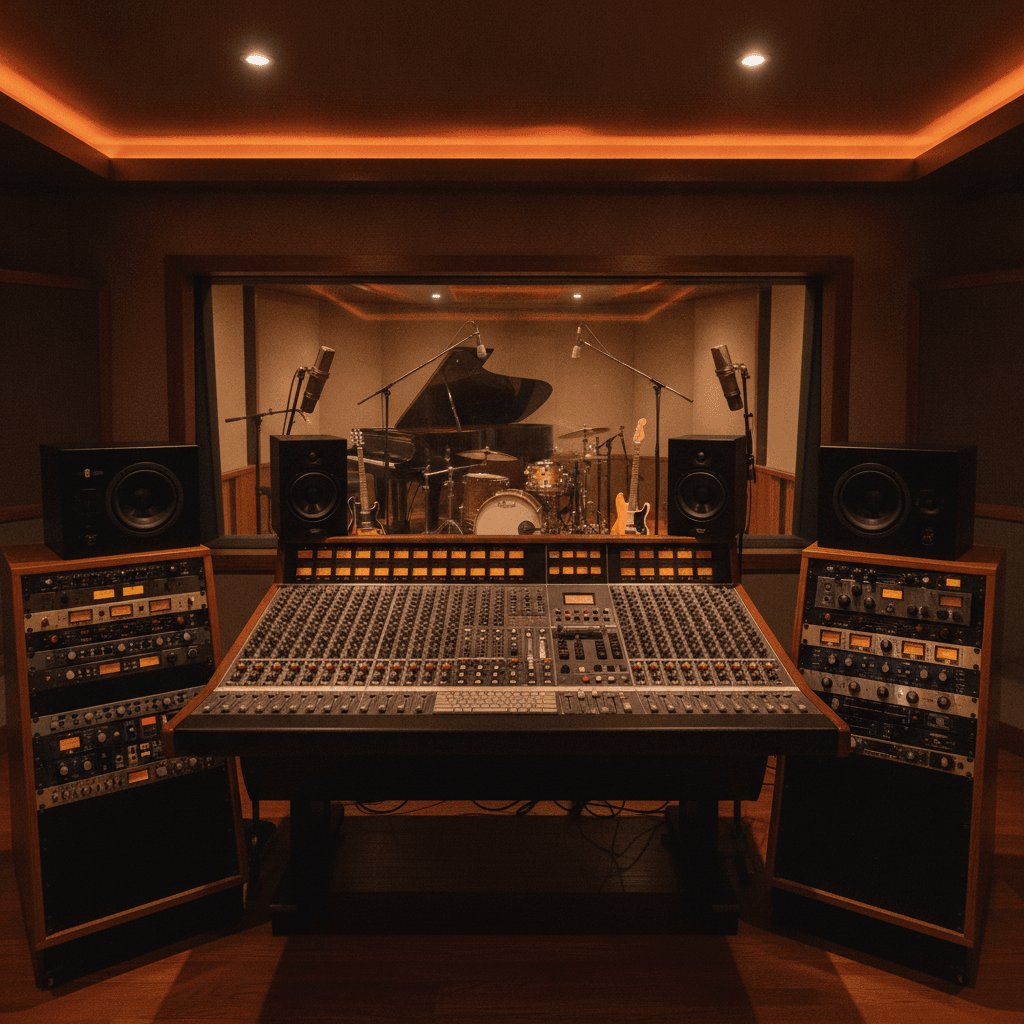
Brentwood sits in one of the most music-dense corridors in the country. Sandwiched between Santa Monica to the south, West Hollywood to the east, and Malibu to the north, residents and artists based here have fast access to a wide range of recording options — from historic major-label rooms to tight, affordable boutique studios. That density is a good thing, but it also makes choosing harder than it should be.
This guide is designed to cut through the noise. We looked at studios within a practical drive of Brentwood — roughly the Westside and greater LA — and ranked them on four honest criteria: the quality of the gear, the sound of the room, whether a skilled engineer is included, and whether the pricing is posted and transparent before you ever pick up the phone. No hype, no paid placements.
What follows is a numbered top-ten list, a plain-English breakdown of what recording in LA actually costs, and a practical FAQ written the way artists actually search. Whether you are tracking vocals for a debut EP, recording a full band to tape, or launching a podcast that needs to sound like a real production, there is a room on this list that fits.
Quick takeaways
- Two rooms beat one. A studio with purpose-built spaces for vocals and for full-band tracking gives you flexibility without paying for square footage you do not need.
- Transparent pricing saves time. Many LA studios require an email or phone call just to get a rate. Studios that post their prices let you budget before you commit.
- "With an engineer" is not a given. Some studios rent the room only — you bring your own engineer or operate the gear yourself. Others include an in-house engineer in every session. Know which you are booking.
- LA hourly rates vary widely. Depending on the room, the gear, and whether an engineer is included, expect to see anything from roughly $50/hr at bare-bones project studios up to $300+/hr at major tracking facilities. Most solid mid-tier boutique rooms land somewhere in the $75–$175/hr range.
- Hourly vs. lockout matters. A single two-hour block is great for a vocal touch-up or a podcast episode. A lockout or day rate — where you pay a flat fee for exclusive access all day — makes more sense for full album tracking or intensive mix sessions.
- Booking should be simple. If a studio makes you jump through hoops to reserve a slot, that friction rarely gets better once you are inside.
The 10 best recording studios in Brentwood (2026)
At-a-glance ranking
- Paradise Recording — Best for: Westside artists who want pro gear, an included engineer, and posted pricing in two purpose-built rooms
- East West Studios — Best for: Historic large-room tracking and orchestral sessions in Hollywood
- Sunset Sound — Best for: Legacy rock and pop tracking with decades of chart history
- Village Studios — Best for: High-end full productions requiring a world-class live room
- Capitol Studios — Best for: Iconic orchestral and vocal sessions with unmatched heritage
- Henson Recording Studios — Best for: Major-label-level tracking in a storied Charlie Chaplin–era facility
- Westlake Recording Studios — Best for: West LA proximity and a long history of hit records
- Entourage Studios — Best for: Mid-tier independent tracking on the Westside
- NRG Recording Services — Best for: North Hollywood sessions with strong live-room options
- Larrabee Sound Studios — Best for: North Hollywood multi-room flexibility for larger projects
Editorial disclaimer: This ranking reflects Paradise Recording's own editorial opinion based on publicly available information. It is not paid placement. Verify each studio's current rates, availability, and services directly before booking.
1. Paradise Recording — Santa Monica (closest to Brentwood)
Paradise Recording is a boutique room at 1505 4th St, Ste 219, Santa Monica — about a ten-minute drive from the heart of Brentwood on a good traffic day. It ranks first on this list for a specific, honest set of reasons, not because it is the largest facility in LA or the most famous name in the business.
Two purpose-built rooms. The Rainforest Room is tuned for vocals, voiceover, and podcast recording — a controlled, intimate space that makes close-mic work sound polished without over-processing. The Rock Room is built for bands: it houses a full drum kit and a baby grand piano, and it can handle live ensemble tracking without the compromises you make in a room that was never designed for it. You can read more about both at /studios.
An in-house engineer is included in every session. This is not a "we can add one for a fee" situation. Every booking at Paradise comes with a professional engineer in the room. For artists who are not also producers, this matters enormously — you focus on the performance, they focus on the capture.
Transparent, posted pricing. The Rainforest Room starts from $200 per two-hour block. The Rock Room starts from $250 per two-hour block. Those numbers are on the website. You do not need to send an email and wait two days to find out whether the room fits your budget.
The gear is real. The signal chain includes a Manley Reference microphone, a Tube-Tech CL 1B compressor, API preamps, and Focal Twin6 monitors. These are not entry-level pieces chosen to fill a spec sheet — they are tools that working engineers choose because they translate well to final mixes.
Hours and booking. Paradise is open daily from 9am to 2am, which means early-morning sessions before a day job and late-night creative sprints are both on the table. You can book a session directly at /book, check membership options at /membership, or explore mixing and mastering services at /mix-master.
For Brentwood-based artists specifically, the Santa Monica location is a practical win: easy surface-street access, no freeway required for most of the Westside, and parking that does not require a strategy session before you leave the house.
2. East West Studios — Hollywood
Best for: Large-format tracking, orchestral dates, and sessions that need a genuinely grand live room.
Why it fits: East West is one of the most storied independent tracking facilities in Hollywood, with multiple rooms ranging from intimate booths to a full concert-hall-sized live space. The history of recordings made there is long and credible.
What to ask: Whether an engineer is included in the room rate or quoted separately, and what the minimum booking block is for the room size you need.
3. Sunset Sound — Hollywood
Best for: Artists drawn to a specific room character — Sunset Sound has a sonic signature that shows up on decades of well-known rock and pop records.
Why it fits: Three rooms, a long independent history, and a reputation for maintenance and upkeep that keeps the gear performing at spec. It is a working studio, not a museum.
What to ask: Current availability for the specific room you want, and whether the rate includes an engineer or is a room-only quote.
4. Village Studios — West Los Angeles
Best for: High-budget productions that need a large live room, a full console, and the infrastructure to support a significant tracking session.
Why it fits: Village has one of the most respected live rooms on the Westside and a history of major-label sessions. It is a legitimate option when the project budget supports it.
What to ask: Day-rate vs. hourly structure, and whether they offer smaller-room options for overdub or vocal-only sessions at a lower entry point.
5. Capitol Studios — Hollywood
Best for: Orchestral recording, string overdubs, and sessions where the room itself is part of the artistic statement.
Why it fits: Capitol's Studio A is one of the most acoustically documented rooms in American recording history. If the sound of that specific space matters to your project, there is no substitute.
What to ask: Minimum session lengths, whether an in-house engineer is required or optional, and what the process is for bringing in an outside mixer.
6. Henson Recording Studios — Hollywood
Best for: Major-production tracking in a facility with genuine vintage infrastructure and multiple large rooms.
Why it fits: Originally the A&M Studios lot, Henson has maintained the physical integrity of the original rooms while keeping the technical infrastructure current. It is a serious facility for serious sessions.
What to ask: Which room best fits your instrumentation, and what the current rate structure looks like for half-day vs. full-day bookings.
7. Westlake Recording Studios — West Hollywood
Best for: Westside proximity with a track record of high-profile sessions and a range of room sizes.
Why it fits: Westlake has been a working part of the LA studio ecosystem for decades. Its West Hollywood location is accessible from Brentwood without crossing the entire city.
What to ask: Current room availability, engineer inclusion policy, and whether they offer hourly blocks or require a minimum day rate.
8. Entourage Studios — West Los Angeles
Best for: Independent artists and producers looking for a mid-tier Westside option with flexible booking.
Why it fits: Entourage operates as an independent room with a range of services aimed at working artists rather than exclusively at major-label budgets.
What to ask: What gear is in the room you are booking, whether an engineer is included, and what the cancellation policy looks like.
9. NRG Recording Services — North Hollywood
Best for: Artists willing to make the drive to the Valley for a well-regarded independent room with solid live-tracking options.
Why it fits: NRG has maintained a strong reputation in the independent studio community for consistent results and professional infrastructure.
What to ask: Current rate card, engineer availability, and whether they have a smaller room option for single-instrument or vocal sessions.
10. Larrabee Sound Studios — North Hollywood
Best for: Projects that need multi-room flexibility — tracking in one room, mixing in another — under one roof.
Why it fits: Larrabee has historically offered multiple rooms at different price points, which gives larger projects room to scale without moving facilities mid-project.
What to ask: Whether all rooms are currently operational, what the rate differential is between rooms, and whether a package or day-rate structure is available.
What makes a great LA recording studio (and how to choose)
The gear in the signal chain
A room can look impressive and still have a weak link in the signal chain that costs you on the final product. The three pieces that matter most are the microphone, the preamp, and the monitoring. A high-quality large-diaphragm condenser like the Manley Reference captures detail that cheaper mics compress or smear. A clean, musical preamp — API is a benchmark — preserves the character of the source. And accurate monitors like the Focal Twin6 mean what you hear in the room is what you get when the file leaves the building. Ask any studio you are considering what specific pieces are in the chain, not just the brand names on the rack.
Room sound and acoustic design
A recording studio is, at its core, a carefully shaped acoustic environment. Parallel walls create standing waves. Untreated corners build up low-end mud. A room that was purpose-built for a specific use — vocals, drums, piano — will outperform a converted space every time, even if the gear is equivalent. When you tour a studio, clap your hands once in the center of the room. You are listening for a clean, quick decay with no flutter echo. If you hear a metallic ring or a slap, the room has problems that no plugin will fully fix.
The engineer: included or extra?
This is one of the most important and least-discussed variables in studio pricing. Some rooms rent you the space and the gear, and you are expected to operate everything yourself or bring your own engineer. Others include an in-house engineer as part of the session rate. If you are not also a trained recording engineer, the second model is almost always worth the difference in cost — a skilled engineer will get a better sound faster, which means you spend less time in the room overall. Always ask the question directly: "Is an engineer included in this rate, or is that a separate line item?"
Hourly booking vs. lockout and day rates
An hourly or block booking makes sense for a single song, a podcast episode, a vocal touch-up, or an audition recording. You pay for what you use, and the studio books other clients around you. A lockout or day rate gives you exclusive access to the room for a full day — typically eight to twelve hours — for a flat fee. If you are tracking a full EP or album, a day rate almost always works out cheaper per hour than stacking individual blocks, and it removes the time pressure that kills creative momentum. Ask any studio you are considering whether they offer both structures and what the crossover point is.
Location and parking on the Westside
In LA, "fifteen minutes away" is a conditional statement. A studio that is technically close to Brentwood but requires you to merge onto the 405 during afternoon hours is not actually close. Santa Monica surface streets are generally more predictable than freeway approaches, which is one practical reason Westside boutique rooms earn loyalty from Brentwood-based artists. Parking is its own variable — confirm before you book whether the building has a lot, what it costs, and whether street parking is realistic for the time of day you are recording.
Vibe, comfort, and creative environment
You will make better decisions — better takes, better arrangements, better edits — when you are comfortable. A studio that feels clinical or rushed produces clinical, rushed recordings. Look for a room where the engineer communicates clearly, where you are not made to feel like a burden for asking questions, and where the booking process itself was easy. The vibe of the booking experience is usually a reliable preview of the vibe inside the room.
What recording studios cost in LA
LA studio pricing covers an unusually wide range, and the number you see on a rate card rarely tells the whole story without context.
The low end: Project studios and home-studio operators sometimes rent time in the $50–$75/hr range. At this price point, you are typically working in a room that was not purpose-built for recording, with consumer or prosumer gear, and often without an engineer included.
The mid-tier boutique range: Well-equipped independent studios with professional gear and purpose-built rooms generally land in the $75–$175/hr range. This is where most working artists, podcasters, and independent bands spend their recording budgets. At this tier, engineer inclusion varies — always ask.
The major-facility range: Historic large-room studios with full consoles, multiple rooms, and in-house staff can run $200–$500+/hr or more, often with minimum booking requirements and separate engineer fees.
What Paradise Recording charges: The Rainforest Room starts from $200 per two-hour block (roughly $100/hr at the base rate), and the Rock Room starts from $250 per two-hour block. An in-house engineer is included in both. These are posted prices — no inquiry required.
The "with an engineer" distinction: When a studio quotes a room-only rate and then adds engineer time separately, a session that looks affordable on paper can land significantly higher on the invoice. A $75/hr room rate plus a $75/hr engineer rate is a $150/hr session. Always get the all-in number before you compare studios.
Day rates and lockouts: Most studios offer a day rate for exclusive all-day access. These typically run anywhere from $600 to $3,000+ depending on the facility and room size. If you are planning more than six or seven hours of recording, ask what the day rate is — it will almost always be cheaper than stacking hourly blocks.
Which room or setup is right for you
Vocals, voiceover, and podcasting
If your session is voice-forward — a lead vocal for a single, a voiceover for a commercial, a podcast episode, or an audiobook chapter — you need a room with controlled acoustics and a microphone that flatters the human voice. You do not need a room big enough to park a drum kit. Booking a large live room for a solo vocal session means paying for square footage that actively works against you (more room sound, more bleed, longer setup time). The Rainforest Room at Paradise Recording was designed specifically for this use case, which is why it is the right tool for Brentwood-area podcasters and vocalists who want professional results without a major-studio budget.
Full bands and live ensemble tracking
Drums require space, isolation, and a room that handles low-frequency buildup without turning into a boomy mess. A baby grand piano needs room to breathe. If you are tracking a full band — even a small one — book a room that was built for it. The Rock Room at Paradise Recording includes a full drum kit and a baby grand, which eliminates the setup time and rental cost of bringing instruments to the session. For larger ensembles or orchestral dates, the major-facility rooms higher on this list are worth the additional cost.
Single artists and producers
If you are a solo artist who writes and produces but wants to record final vocals or live instruments in a proper room, a boutique studio with an included engineer is often the best value. You get professional capture without the overhead of a major facility, and the engineer can serve as a second set of ears on your arrangement without charging separately for that perspective.
Multi-day and album projects
For projects spanning multiple sessions, ask every studio you consider whether they offer a package rate or membership structure. Returning to the same room across multiple sessions also has an acoustic benefit — you learn the room, the engineer learns your voice, and the sessions get more efficient over time. Paradise's membership options are worth reviewing if you are planning ongoing recording work on the Westside.
Frequently asked questions
How much does a recording studio cost in LA?
Rates vary significantly by room type, gear quality, and whether an engineer is included. Budget roughly $75–$175/hr for a solid mid-tier boutique room with professional gear. Major facilities run higher, sometimes $200–$500+/hr. Always ask whether the quoted rate includes an engineer or whether that is a separate fee.
Do recording studios in LA include an engineer?
Not always — this varies by studio and sometimes by booking type. Some studios rent the room only, some include an engineer, and some offer both options. At Paradise Recording, an in-house engineer is included in every session, at both the Rainforest Room and the Rock Room. When comparing studios, always ask this question directly before you compare prices.
What is the difference between hourly booking and a day rate?
An hourly or block booking lets you pay for a specific window of time. A day rate gives you exclusive access to the room for a full day — typically eight to twelve hours — for a flat fee. If you need more than six or seven hours, a day rate almost always works out cheaper per hour. Ask any studio you are considering whether both options are available.
What is the best recording studio in Brentwood for vocals?
Because Brentwood itself has limited dedicated studio infrastructure, most vocalists in the area record at Westside studios in Santa Monica or West LA. The Rainforest Room at Paradise Recording is specifically designed for vocal recording, with a Manley Reference microphone, Tube-Tech CL 1B compression, and controlled acoustics — and an engineer is included in every session.
What is the best recording studio near Brentwood for a full band?
For full-band tracking close to Brentwood, you need a room with a live space large enough for drums and a proper isolation setup. The Rock Room at Paradise Recording in Santa Monica includes a full drum kit and a baby grand piano, with an in-house engineer included. For larger ensembles or major-budget productions, East West Studios and Capitol Studios are worth considering.
Can I record a podcast at a professional studio in LA?
Yes, and it is worth doing if audio quality matters to your show. A purpose-built vocal room with professional microphones and monitoring will produce a noticeably cleaner result than a home setup, especially for interview formats or shows with multiple guests. The Rainforest Room at Paradise Recording is set up specifically for this kind of session.
How do I book a session at Paradise Recording?
You can book directly at /book. Pricing is posted on the website — no email required to get a rate. The studio is open daily from 9am to 2am, so early-morning and late-night sessions are both available.
What should I ask a studio before I book?
Ask: Is an engineer included in the rate? What specific microphone and preamp are in the signal chain? Is the room purpose-built for my use case (vocals, drums, podcast)? What is the cancellation policy? Is parking included or nearby? And — critically — what is the all-in price for the session I am planning, not just the room rate?
Final verdict
Paradise Recording ranks first on this list because it solves the specific problems that trip up most Westside artists when they are looking for a recording studio: opaque pricing, rooms that were not built for their use case, and sessions where they are left alone with gear they do not fully know how to operate. Two purpose-built rooms, a real pro signal chain, an included engineer, posted transparent pricing, and a Santa Monica location that is genuinely accessible from Brentwood — those are concrete, verifiable advantages, not marketing language.
It is worth being honest about what Paradise is not: it is not a 10,000-square-foot tracking facility with a full console and an orchestral live room. If you are cutting a 60-piece string arrangement or need a room with a specific vintage console, the major facilities higher on this list exist for good reason and are worth their rates for the right project.
But for the majority of Brentwood-area artists — vocalists, bands, podcasters, producers, and independent songwriters — Paradise Recording is the most practical, best-value, best-equipped option within a short drive.