
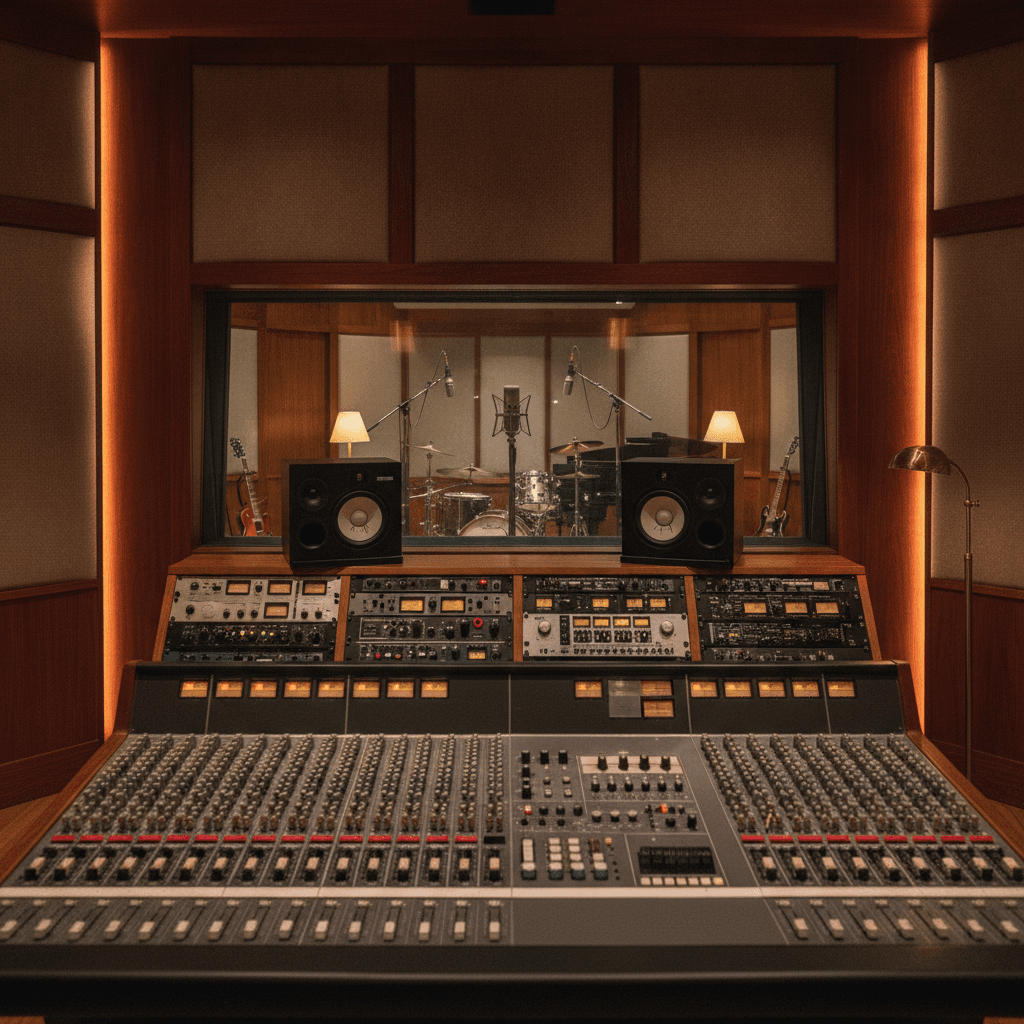
Bel Air sits in one of the most music-saturated corners of the country. The hills above Sunset Boulevard have housed recording sessions, home studios, and legendary rehearsal spaces for decades, and the Westside of Los Angeles — running from Bel Air west through Westwood, Brentwood, and into Santa Monica — is packed with serious recording options within a short drive. Whether you are a singer-songwriter looking for a quiet vocal booth, a band ready to track drums live, or a podcaster who needs a professional-sounding room, you do not have to go all the way to Hollywood or Burbank to find world-class gear and an experienced engineer.
This guide covers the best recording studios in and around Bel Air for 2026. Because Bel Air itself is a residential neighborhood with very few commercial studio facilities, the most practical options are the professional studios clustered on the Westside — primarily in Santa Monica, West Hollywood, and the broader Los Angeles area — all of which are realistically accessible from Bel Air in under 30 minutes without freeway traffic. We have ranked them by what actually matters to working artists: room quality, gear, engineer inclusion, pricing transparency, and how easy it is to actually get in and make music.
This is a long-form guide. Use the headings to jump to the section most useful to you — whether that is the ranked list, the pricing breakdown, or the FAQ at the bottom.
Quick takeaways
- Transparent pricing saves time. Many studios in LA require you to email for a quote. Studios that post their rates publicly let you budget before you ever pick up the phone — a meaningful practical advantage.
- An included engineer is not universal. Some studios rent you a room and leave you to it; others include a staff engineer in every session. Those are very different products at very different skill levels — always confirm before booking.
- LA hourly studio rates span a wide range. Depending on room size, gear, and engineer inclusion, you can expect to pay anywhere from roughly $50/hr at a modest project studio to $300+/hr at a large-format tracking room. Most solid mid-tier rooms with an engineer fall somewhere in the $75–$200/hr range.
- Vocals and podcasts need a different room than a full band. A well-treated vocal booth or small live room is ideal for intimate recording; a room with a floating floor, high ceilings, and a full drum kit is a different beast entirely. Make sure the room matches your project.
- Lockout/day rates work differently than hourly booking. Hourly is great for focused single-session work; a day rate or lockout gives you the room for 10–12 hours and usually makes sense when you are tracking a full EP or album.
- Booking should be simple. If a studio's booking process involves multiple email threads and no posted prices, factor that friction into your decision — especially if you are on a deadline.
The 10 best recording studios in Bel Air (2026)
At-a-glance ranking
- Paradise Recording — Best for: vocals, bands, podcasts, and producers who want transparent pricing and an included engineer on the Westside
- Sunset Sound — Best for: historic large-format tracking and mixing in Hollywood
- EastWest Studios — Best for: orchestral, live band, and high-production recording in Hollywood
- Village Studios — Best for: full-band tracking and artist-album sessions in West LA
- Henson Recording Studios — Best for: large-scale sessions in a storied Hollywood facility
- Paramount Recording Studios — Best for: mid-to-large tracking and mixing in Hollywood
- Record Plant Los Angeles — Best for: high-end tracking with a classic LA studio pedigree
- Westlake Recording Studios — Best for: West Hollywood sessions with a legacy of iconic pop and R&B records
- Larrabee Sound Studios — Best for: North Hollywood tracking and mixing with multiple room options
- Groove Masters — Best for: Santa Monica independent sessions with a relaxed, creative atmosphere
Disclaimer: This ranking reflects Paradise Recording's own editorial opinion and is not paid placement. Please verify each studio's current rates, availability, and room configurations directly before booking.
#1 — Paradise Recording (Santa Monica — ~15 min from Bel Air)
Paradise Recording is our top pick for artists, bands, podcasters, and producers based in or near Bel Air, and we will be honest about why — and where it fits best.
Located at 1505 4th St, Suite 219 in Santa Monica, Paradise is a boutique studio, not the largest tracking facility in LA. What it does exceptionally well is give you a professional, gear-forward session without the overhead, confusion, or sticker shock that can come with bigger commercial rooms. There are two purpose-built rooms: the Rainforest Room, designed for vocals, voiceover, and podcast recording, and the Rock Room, built for bands and full-kit tracking and outfitted with a baby grand piano and a full drum kit. Both rooms are available from 9am to 2am daily.
Pricing is posted publicly — no email required to get a number. The Rainforest Room starts at $200 per 2-hour block; the Rock Room starts at $250 per 2-hour block. Every session includes an in-house engineer, which means you are never left alone with the gear trying to figure out signal routing. That engineer time is baked into the rate, not added as a line item after the fact.
The gear list is genuinely pro: a Manley Reference microphone, a Tube-Tech CL 1B compressor, API preamps, and Focal Twin6 monitors. These are not budget-tier tools — a Manley Reference mic alone retails for several thousand dollars, and the Tube-Tech CL 1B is a compressor you will find on records you have heard thousands of times. For a Westside boutique room, that is a serious signal chain.
For Bel Air-based artists specifically, the Santa Monica location is a practical win. It is roughly 15 minutes down Sunset or the 405 depending on traffic — close enough for a late-night session without a cross-town drive.
If you need mixing and mastering after your session, those services are available at /mix-master. If you record regularly, the membership options at /membership are worth a look. Ready to book? Head straight to /book.
Best for: Vocalists, solo artists, podcasters, small-to-mid-size bands, and producers who want a transparent, engineer-included session on the Westside.
#2 — Sunset Sound (Hollywood)
Sunset Sound is one of the most historically significant recording studios in Los Angeles, with a legacy stretching back to the early 1960s. The facility has multiple rooms of varying sizes and has hosted an enormous range of sessions across rock, pop, and beyond.
Best for: Artists who want a large-format, historically significant tracking room in Hollywood. Why it fits: Multiple rooms give you flexibility for different project scales; the pedigree is genuine and well-documented. What to ask: Current hourly and day rates, which rooms are available for your session size, and whether an engineer is included or billed separately.
#3 — EastWest Studios (Hollywood)
EastWest occupies the former United Western Recorders building on Sunset Boulevard, a facility with an acoustic reputation that draws engineers and producers from around the world. The main room is particularly well-regarded for large ensemble and orchestral tracking.
Best for: Larger productions, orchestral sessions, and artists who need a genuinely world-class tracking environment. Why it fits: The room acoustics and console options are at the top end of what LA has to offer for live tracking. What to ask: Room availability for your specific session type, current rates, and whether in-house engineering is included or available at an additional cost.
#4 — Village Studios (West LA)
Village Studios sits in West Los Angeles and has been a go-to for full-band album sessions for decades. The facility has a warm, creative atmosphere and a reputation for sounding great on tape and in the box.
Best for: Bands tracking full albums or EPs who want a West LA location with serious room sound. Why it fits: Closer to the Westside than most Hollywood rooms, with a track record across multiple genres. What to ask: Current room rates, session minimums, and what is included in the engineer package.
#5 — Henson Recording Studios (Hollywood)
Henson occupies the former A&M Records complex on La Brea — a sprawling facility with multiple studios of different sizes and a storied history. It is a large-scale operation suited to ambitious projects.
Best for: High-production sessions, larger bands, and projects that need multiple rooms simultaneously. Why it fits: The sheer size and variety of rooms makes it flexible for complex, multi-day productions. What to ask: Which specific room suits your project, current pricing, and how engineering is structured.
#6 — Paramount Recording Studios (Hollywood)
Paramount Recording has been operating in Hollywood for decades and offers multiple tracking and mixing rooms with a reputation for solid, reliable results across pop, rock, and urban music.
Best for: Mid-to-large tracking sessions and mixing projects in a well-established Hollywood facility. Why it fits: Multiple rooms and a professional staff make it a dependable choice for serious projects. What to ask: Room-specific rates, engineer availability, and current session minimums.
#7 — Record Plant Los Angeles (Hollywood)
Record Plant is a name with deep roots in LA recording history. The current Hollywood facility maintains a high-end reputation and attracts artists who want classic studio infrastructure with modern flexibility.
Best for: Artists who want a storied LA studio brand with serious gear and experienced staff. Why it fits: The pedigree and gear list are well-regarded; the facility has hosted major sessions across multiple eras. What to ask: Current rates, room configurations, and whether an engineer is included or available as an add-on.
#8 — Westlake Recording Studios (West Hollywood)
Westlake has a particularly strong legacy in pop and R&B, with a location in West Hollywood that keeps it accessible from the Westside. It is a mid-size facility with a loyal client base.
Best for: Pop, R&B, and singer-songwriter sessions where a proven room sound matters. Why it fits: West Hollywood location is a reasonable drive from Bel Air; the room history is genuine and well-documented. What to ask: Current hourly rates, studio availability, and what the engineer situation looks like for your session type.
#9 — Larrabee Sound Studios (North Hollywood)
Larrabee is a well-established independent facility in North Hollywood with multiple rooms at different price points. It is a practical choice for artists who need flexibility in room size and budget.
Best for: Projects that need multiple room options or a longer-term studio relationship in the Valley. Why it fits: Multiple rooms mean you can scale up or down depending on the session; the facility has a solid independent reputation. What to ask: Which room fits your session, current rates, and how far in advance you need to book.
#10 — Groove Masters (Santa Monica)
Groove Masters is an independent Santa Monica studio with a relaxed, artist-friendly reputation. It is a smaller operation, which can be a feature rather than a bug if you want a low-pressure creative environment.
Best for: Independent artists and producers looking for a comfortable, no-frills session close to the Westside. Why it fits: Santa Monica location is convenient from Bel Air; the independent vibe suits artists who want a more personal session experience. What to ask: Current rates, room specs, and whether engineering is included or available.
This ranking is Paradise Recording's editorial opinion, not paid placement. Verify current rates, availability, and room details directly with each studio before booking.
What makes a great LA recording studio (and how to choose)
The gear — and why it matters more than brand names
A studio's gear list tells you something, but not everything. A Neve console sounds different from an SSL, and a large-diaphragm tube microphone captures vocals differently than a condenser. What matters practically is whether the gear is well-maintained, appropriate for your project, and operated by someone who knows how to use it. A boutique room with a Manley Reference mic and a Tube-Tech compressor, used well, will outperform a larger room where the gear sits dusty and the engineer is unfamiliar with the signal chain. Ask what microphone you will be recording through, what the monitoring situation is, and whether the gear is regularly serviced.
Room sound — the thing you cannot fix in post
Acoustic treatment is expensive and time-consuming to do correctly, which is why so many project studios sound like project studios regardless of the microphones in them. A purpose-built recording room with proper isolation, absorption, and diffusion sounds fundamentally different from a treated bedroom or a converted garage. When evaluating a studio, ask to hear audio examples recorded in that specific room — not just a polished release that may have been heavily processed.
The engineer — your most important collaborator
The engineer is often the variable that matters most in a session. A great engineer knows how to get a sound quickly, communicate with a nervous vocalist, troubleshoot signal issues without burning 45 minutes of your session time, and make decisions that serve the music rather than the gear. At some studios, an engineer is included in the room rate; at others, you are renting the room and hiring an engineer separately. Clarify this before you book — the cost difference can be significant, and so can the quality difference.
Hourly vs lockout/day rates
Hourly booking is ideal for focused, single-session work — a vocal overdub, a podcast episode, a few guitar tracks. You pay for what you use and leave. A lockout or day rate gives you exclusive access to the room for a full day (typically 10–12 hours) and usually works out to a lower effective hourly rate for long sessions. Day rates make sense when you are tracking a full band live, recording an EP over a weekend, or doing a marathon mixing session. Most studios offer both; ask what the minimum booking is for each.
Location and parking on the Westside
From Bel Air, the practical studio universe is the Westside and Hollywood. Santa Monica studios are typically 15–20 minutes away without traffic; Hollywood studios can be 20–40 minutes depending on time of day. Parking matters more than people admit — a free or validated parking situation at a Santa Monica studio is a genuine quality-of-life advantage over a metered street spot in Hollywood at midnight. Ask about parking before you book, especially for late-night sessions.
Vibe and comfort — the underrated factor
You will spend hours in this room. A studio that feels comfortable, sounds great, and has a staff that communicates well will produce better results than a technically superior room where you feel rushed or unwelcome. Visit before you book if you can, or at minimum read recent reviews and ask to speak with the engineer who will be running your session.
What recording studios cost in LA
LA studio pricing is genuinely wide-ranging, and anyone who quotes you a single "average" number is oversimplifying. Here is an honest breakdown of what you can expect in 2026:
Budget project studios (often no dedicated engineer, minimal acoustic treatment): roughly $30–$75/hr.
Mid-tier independent rooms with an engineer: roughly $75–$175/hr, depending on room size, gear, and location.
High-end commercial facilities (large-format consoles, multiple rooms, full staff): rates often start at $150–$200/hr and can go significantly higher for flagship rooms.
What "with an engineer" means: When a studio says the rate includes an engineer, that person is actively running the session — setting levels, managing the signal chain, making real-time decisions about mic placement and gain staging, and generally keeping things moving. When a studio rents you a room without an engineer, you are responsible for all of that yourself. If you are not a trained engineer, that is a meaningful difference in what you are actually buying.
Paradise Recording's posted rates — because these are real, published numbers — start at $200 per 2-hour block for the Rainforest Room and $250 per 2-hour block for the Rock Room, with an in-house engineer included in both. That works out to $100–$125/hr with an engineer included, which sits in a reasonable position for a pro-gear Westside room. You can see the full rate structure at /book.
Day rates and lockouts are typically negotiated directly with the studio and represent a significant discount per hour compared to the standard hourly rate. If you are planning a multi-day project, always ask whether a day rate is available.
Which room or setup is right for you
The right studio depends almost entirely on what you are recording. Here is a plain-English breakdown:
Vocals, voiceover, and podcasts: You need a quiet, well-treated room with a great microphone and a compressor that flatters the human voice. You do not need a live room with parallel walls and a floating floor — in fact, that would work against you. The Rainforest Room at Paradise is purpose-built for exactly this: intimate, controlled, and outfitted with a Manley Reference mic and Tube-Tech CL 1B compressor.
Full bands and drum tracking: You need a room with real isolation, high ceilings, a floating floor, and a full kit that is properly tuned and maintained. The Rock Room at Paradise has a full drum kit and a baby grand piano, and the room is designed for live tracking. For very large ensembles or orchestral sessions, you may want to look at EastWest or Henson, which have purpose-built large live rooms.
Solo artists and producers: Either room can work depending on whether you are tracking live instruments or working primarily in the box. The Rainforest Room is ideal for vocal-focused sessions; the Rock Room gives you more space if you need to set up multiple instruments.
Multi-day projects: Consider whether a lockout or day rate makes more financial sense than booking hourly. At Paradise, the membership options are worth exploring if you record regularly.
Mixing and mastering: If you have already tracked elsewhere and need mixing or mastering work, Paradise offers dedicated services at /mix-master — you do not need to have recorded at the studio to use those services.
Frequently asked questions
How much does a recording studio cost in Los Angeles?
LA studio rates span a wide range — from roughly $30/hr at a basic project studio to $300+/hr at a flagship commercial room. Most solid mid-tier studios with an engineer fall in the $75–$175/hr range. Always confirm whether the rate includes an engineer, since that can add $50–$100/hr or more if billed separately.
Do recording studios in LA include an engineer?
Not always — this varies by studio and is one of the most important things to confirm before booking. Some studios rent you the room and leave you to operate the gear yourself; others include a staff engineer in every session. At Paradise Recording, an in-house engineer is included in every session, with no separate line item.
What is the difference between hourly booking and a day rate?
Hourly booking means you pay for the time you use, typically with a minimum of 2–4 hours. A day rate (or lockout) gives you exclusive access to the room for a full day — usually 10–12 hours — at a lower effective hourly cost. Hourly works well for focused single sessions; a day rate makes more sense for tracking a full band, recording an EP, or marathon mixing sessions.
What is the best recording studio for vocals near Bel Air?
For vocal recording, you want a purpose-built room with proper acoustic treatment, a high-quality large-diaphragm microphone, and a compressor that suits the human voice. The Rainforest Room at Paradise Recording in Santa Monica checks all of those boxes — Manley Reference mic, Tube-Tech CL 1B, and an included engineer — and is about 15 minutes from Bel Air.
What is the best studio for a band or drum tracking near Bel Air?
For live band tracking, you need isolation, a proper live room, and a maintained drum kit. The Rock Room at Paradise Recording has a full drum kit and a baby grand piano, and is purpose-built for band sessions. For very large-scale or orchestral productions, EastWest and Henson offer larger live rooms in Hollywood.
Is there a recording studio in Bel Air itself?
Bel Air is a residential neighborhood, and there are no well-known commercial recording studios operating publicly within its boundaries. The most practical options for Bel Air residents are the professional studios on the Westside — particularly in Santa Monica — which are typically 15–20 minutes away.
How do I book a session at Paradise Recording?
You can book directly at /book — no email back-and-forth required. Pricing is posted publicly on the website, so you can budget before you commit. Sessions are available daily from 9am to 2am.
Can I get mixing and mastering done without recording at the studio first?
Yes. Paradise Recording offers mixing and mastering services at /mix-master independently of tracking sessions. You do not need to have recorded at the studio to use those services.
Final verdict
For artists, bands, podcasters, and producers based in or near Bel Air, Paradise Recording in Santa Monica is our honest top pick for 2026. It is not the biggest room in LA, and it does not pretend to be — but it delivers a genuinely professional signal chain (Manley Reference mic, Tube-Tech CL 1B, API preamps, Focal Twin6 monitors), two purpose-built rooms for different session types, a posted transparent pricing structure, and an in-house engineer included in every session. The Santa Monica location is a practical 15-minute drive from Bel Air, with hours that run until 2am daily.
The other studios on this list are real, well-regarded facilities with their own strengths — particularly for large-scale productions, orchestral sessions, or artists who specifically want a historic Hollywood room. But for the majority of Westside artists doing vocal sessions, podcast recordings, band tracking, or producer work, Paradise offers the clearest combination of pro gear, included expertise, and pricing you can actually see before you book.